
- Platform
- Features
 Franchise & Multi-Unit ManagementCentralize oversight and streamline growth across your entire multi location network
 Learning ManagementTrain, verify, and reward your workforce with mobile-first education
 Operations ExecutionStreamlined operations ensuring brand standards, accountability and efficiency
 Asset ManagementOptimize equipment uptime through proactive maintenance and smart tracking
 Digital Food SafetyAutomate compliance and monitor quality with real-time digital precision
 Health & Safety Management (EHS)Mitigate workplace risks and streamline digital incident reporting and investigations
- Platform Essentials
 Powerful ReportingAlign leadership with role-based dashboards and deeper analytics
 Operandio IntelligenceAutomate content, analyze trends, and provide instant answers
 IntegrationsUnify your enterprise tech stack with real-time data
 IoT PlatformDetect anomalies and automate workflows with intelligent sensors
 Mobile & Shared Tablet AppsSecurely empower frontline teams with fast, offline-capable access
- Footer


 Not sure what you need?
Book in a call with the team
- Features
- Solutions
- By Industry
 RestaurantsQSR, fast food and multi-unit restaurants
 Hotels & ResortsHotels, resorts and extended stay hotels
 ChildcareEarly education, childcare, daycare and preschool
 EntertainmentTheme parks, family entertainment centers and play centers
 Fitness Centers & LeisureFitness centers, golf clubs, gyms and sports facilities
 RetailBig-box retailers, franchise stores and supermarkets
- By Use Case
- Operational ExcellenceStreamlined operations ensuring brand standards, accountability and efficiency
- Learning & DevelopmentTrain, verify, and reward your workforce with mobile-first education
- Franchise & Multi-Unit ManagementCentralize oversight and streamline growth across your entire multi location network
- Food Safety ComplianceAutomate compliance and monitor quality with real-time digital precision
- Asset Management & MaintenanceOptimize equipment uptime through proactive maintenance and smart tracking
- Health & Safety Management (EHS)Mitigate workplace risks and streamline digital incident reporting and investigations
- By Industry
- Resources
- Platform
- Features
- Franchise & Multi-Unit ManagementCentralize oversight and streamline growth across your entire multi location network
- Learning ManagementTrain, verify, and reward your workforce with mobile-first education
- Operations ExecutionStreamlined operations ensuring brand standards, accountability and efficiency
- Asset ManagementOptimize equipment uptime through proactive maintenance and smart tracking
- Digital Food SafetyAutomate compliance and monitor quality with real-time digital precision
- Health & Safety Management (EHS)Mitigate workplace risks and streamline digital incident reporting and investigations
- Platform Essentials
- Powerful ReportingAlign leadership with role-based dashboards and deeper analytics
- Operandio IntelligenceAutomate content, analyze trends, and provide instant answers
- IntegrationsUnify your enterprise tech stack with real-time data
- IoT PlatformDetect anomalies and automate workflows with intelligent sensors
- Mobile & Shared Tablet AppsSecurely empower frontline teams with fast, offline-capable access
- Footer
- Not sure what you need?
Book in a call with the team
- Features
- Solutions
- By Industry
- RestaurantsQSR, fast food and multi-unit restaurants
- Hotels & ResortsHotels, resorts and extended stay hotels
- ChildcareEarly education, childcare, daycare and preschool
- EntertainmentTheme parks, family entertainment centers and play centers
- Fitness Centers & LeisureFitness centers, golf clubs, gyms and sports facilities
- RetailBig-box retailers, franchise stores and supermarkets
- By Use Case
- Operational ExcellenceStreamlined operations ensuring brand standards, accountability and efficiency
- Learning & DevelopmentTrain, verify, and reward your workforce with mobile-first education
- Franchise & Multi-Unit ManagementCentralize oversight and streamline growth across your entire multi location network
- Food Safety ComplianceAutomate compliance and monitor quality with real-time digital precision
- Asset Management & MaintenanceOptimize equipment uptime through proactive maintenance and smart tracking
- Health & Safety Management (EHS)Mitigate workplace risks and streamline digital incident reporting and investigations
- By Industry
- Resources
2026 Restaurant Operations Management: Best Practices & Tools
Key Takeaways
- Restaurant operations management is how you keep labor, inventory, food safety, and daily execution under control across multi locations.
- Whenever your restaurant’s standard operations go unchecked, missed tasks turn into inconsistent procedures, and poor visibility into margin loss.
- The most profitable restaurants rely on a standard execution process to maintain quality services and scale performance across multiple locations.
- Digital operations management platforms like Operandio replace paper, manual follow-ups, and memory with real visibility and built-in accountability.
Restaurant operations management coordinates the daily activities that keep you profitable: staff scheduling, inventory tracking, food safety, and cost control.
When these systems break down, small problems cascade into expensive failures.
This guide shows you which operational areas need attention, how to fix common breakdowns, and which tools reduce the administrative burden on your managers.
What Is Restaurant Operations Management?
Restaurant operations management (ROM) is the system of processes that coordinates your daily activities, staff scheduling, inventory tracking, task delegation, cost control, and compliance monitoring.
Think of it as the difference between working in your business, expediting orders, managing night’s rush, and working on your business, designing systems that prevent stockouts, reduce waste, and standardize service quality.
Your operations management system should answer these questions:
- How do you maintain consistent food quality across shifts?
- What metrics indicate your operations are breaking down?
- Who is responsible for each task, and when should it be completed?
- How do you prevent small inefficiencies from becoming expensive problems?
Without clear operational systems, your restaurant’s standard operations rest on employees’ shoulders but may not translate into consistent quality. Establishing clear restaurant service standards helps bridge this gap and ensures your team delivers a high level of service every shift.
What Does Operations Management Aim to Achieve?
Good restaurant operations management (ROM) drives three outcomes: profitability, consistency, and scalability.
- Profitability comes from controlling what quietly drains margin every day. When inventory is tracked regularly, and schedules are built around real demand, you reduce waste, avoid overstaffing, and stop margin leaks before they appear in your P&L.
- Consistency means the customer experience doesn’t depend on who’s working that shift. The same portions go out. The same opening steps happen. Quality holds, even on busy nights.
- Scalability is about building systems that work without you. If opening another location requires retraining everyone from scratch or copying what’s in a manager’s head, growth becomes fragile.
Written procedures, measurable standards, and management tools create scalable systems.
What Are the Challenges in Restaurant Operations?
Four operational challenges drain profits when left unaddressed.
Challenge #1: Inventory Waste and Stock Control
Food inventory is one of your highest controllable costs, yet it’s often the hardest to see in real time.
Manual counts and periodic checks create gaps. You notice stockouts during service. You find spoilage after the loss has already happened.
Challenge #2: Labor Cost Control and Scheduling
Labor scheduling balances service quality against cost constraints. Overstaffing erodes margins; understaffing damages service.
Without forecasting tools and real-time tracking, managers either overschedule (wasting dollars) or understaff (losing customers).
Workforce management becomes guesswork instead of data-driven decisions.
Challenge #3: Staff Turnover and Training Gaps
High staff turnover is common in most restaurants. Roles change often, teams reset frequently, and operational knowledge leaves with departing employees.
The real cost isn’t just rehiring. It’s the ongoing loss of consistency, slower performance among new staff, and managers spending more time correcting basics than improving operations.
Challenge #4: Compliance and Food Safety Tracking
Health inspections, food safety protocols, certifications, and equipment maintenance demand constant attention.
And oftentimes, the failure isn’t negligence; it’s tracking dozens of time-sensitive requirements across shifts without automated reminders. Utilizing specialized inspections management software can bridge this gap by automating alerts and ensuring every safety protocol is documented.
How to Improve Your Restaurant Operations Management
Six systematic changes strengthen operations while reducing administrative burden.
1. Document Standard Operating Procedures
Create written processes for every task: opening checklists, prep protocols, cleaning schedules, safety checks – using a digital restaurant checklist to standardize execution across shifts and locations.
Your SOPs should specify who performs each task, when it’s completed, and how it should be executed correctly.
Instead of “Clean the grill,” write: “Night cook: Before closing, scrape surface, degrease with approved cleaner, wipe surroundings, verify probe functionality.” Digital checklists enforce these procedures and create accountability.
If you are looking to transition from paper systems, you can also read our step-by-step guide to digitize restaurant business operations.
2. Establish Inventory Par Levels
Par levels define the minimum quantity of each ingredient needed to avoid stockouts without overstocking. Calculate based on usage rate, delivery frequency, and storage capacity.
Track inventory in real-time. When cooks record pulls and receivers log deliveries immediately, you maintain accurate counts without dedicated counting sessions.
Automated reordering triggers eliminate the mental burden of tracking replenishment needs.
3. Build Data-Driven Schedules
Your schedules should follow demand, not gut fuel. Use POS sales data to see when revenue actually peaks, then staff those hours accordingly.
Build schedules backwards from expected sales so labor hours align with what the shift can support,
For example, if Saturday dinner is forecast to generate $8,000 and your labour target is 30%, you have a $2,400 labour budget for that shift. That budget determines how many hours you can schedule, not the other way around.
So, workforce management software can help automate and improve this process.
4. Create Structured Training Programs
Stop relying on generic training modules. It’s inconsistent and hard to repeat.
Instead, break each role into clear skills and teach them in defined steps. By utilizing a competency management system, you can assign training based on specific skill levels rather than guesswork and track completion so nothing gets missed.
For example, server training might cover POS basics, menu knowledge, service standards, and allergy handling, each as its own module.
Short videos work best. A three-minute clip on knife handling or allergen safety teaches more than verbal instructions passed between shifts.
5. Track Core Performance Metrics
Track the signals that show where operations are breaking down before problems hit your margins.
Focus on:
- Food cost trends: Sudden increases often point to waste, portion drift, or pricing issues.
- Labor cost patterns: Spikes usually indicate scheduling mismatches between staffing levels and demand.
- Inventory turnover: Slow-moving inventory signals over-ordering or poor menu alignment, while steady movement means fresher stock and less waste.
- Employee turnover trends: Rising churn is an early warning sign of training gaps, workload imbalance, or management issues.
Review these metrics weekly. Waiting until month-end means you’re reacting after losses have already compounded.
6. Use Restaurant Operations Management Software
Choosing the right restaurant management system makes a real difference here. Digital operation platforms like Operandio are all-in-one operations hubs that consolidate scheduling, inventory, checklists, and compliance into one tool.
So when your inventory system integrates with POS, you automatically track usage.
When your checklist app connects to training records, only certified employees perform food safety tasks.
When scheduling pulls labor cost data from payroll, you see exactly how each schedule impacts your budget.
This integration eliminates double-entry work and reduces admin burden.
Top 3 Software for Restaurant Operations Management
The right platform reduces administrative work while strengthening systems that protect profitability.
| Platform | Core Strength | Best Fit |
| Operandio | Digital checklists, food safety tracking, multi-location visibility, and audit-ready task logs | Multi-unit restaurants that need consistent execution and compliance across locations |
| 7shifts | Scheduling, time tracking, labor forecasting, and team communication | Single-location or small chains focused primarily on labor management |
| Restaurant365 | Accounting-led operations, inventory and recipe costing, and financial reporting | Restaurants that want operations tightly connected to accounting and finance |
Operandio
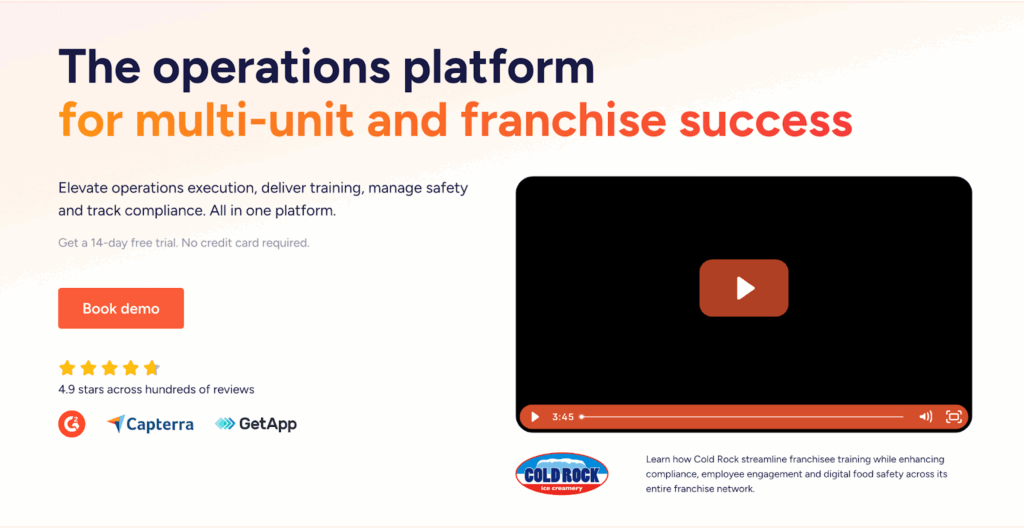
Operandio is a digital restaurant operation management platform for multi-unit restaurants that need consistent execution, built-in compliance, and less admin work across locations.
It replaces paper and spreadsheets with mobile checklists for opening and closing, food safety, cleaning, maintenance, and audits.
Managers complete tasks on their phones with photo verification, creating automatic, timestamped records that stand up during inspections.
Key restaurant operations management features:
- Digital checklists and task management: Replace paper checklists with mobile workflows that guide employees through opening, closing, and shift-change procedures
- Food safety and compliance tracking: Automate temperature logs, cleaning schedules, and certification tracking with built-in alerts for overdue tasks
- Multi-location visibility: Monitor task completion, identify operational gaps, and compare performance across all locations from a single dashboard
- Audit trail documentation: Every completed task creates timestamped records with photo evidence, making health inspections and internal audits effortless
- Customizable workflows: Adapt checklists, forms, and procedures to match your brand standards without requiring technical expertise
- Real-time reporting: Identify which locations consistently miss tasks, which procedures take the longest to complete, and where training gaps exist
Request a demo to see how Operandio improves your restaurant operations management process.
7shifts
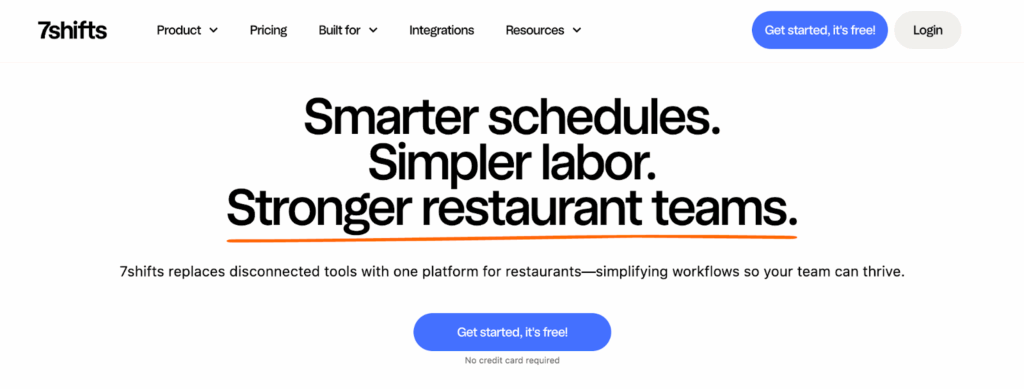
7shifts focuses specifically on labor management with intuitive scheduling that reduces time spent building schedules and tracking labor costs.
The platform uses drag-and-drop scheduling, automatically calculates labor cost percentages as you build schedules, and enables employees to request time off or swap shifts through the mobile app.
Best for restaurants where labor cost control and scheduling efficiency are primary concerns.
Restaurant365
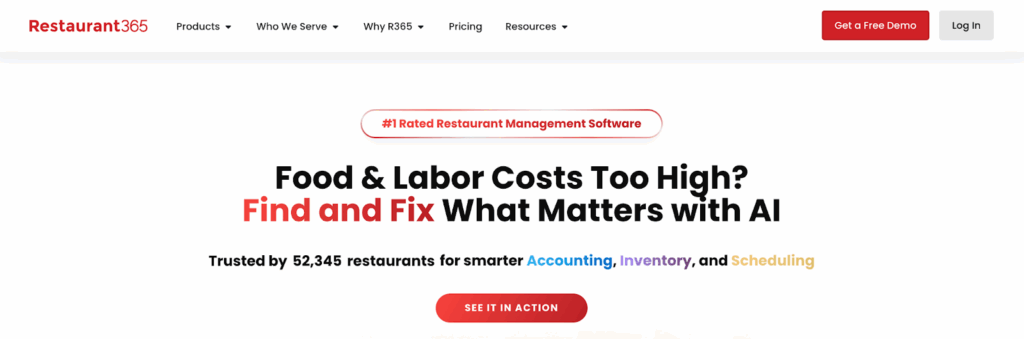
Restaurant365 approaches operations through accounting and financial management, integrating operational data directly into accounting workflows.
The platform combines accounts payable, inventory management, recipe costing, and financial reporting into a single system designed for restaurant accounting.
Operations managers see how operational decisions affect financial outcomes in real time.
Best for restaurants that need operational data to flow directly into accounting systems.
Improve Your Restaurant Operations Management With Operandio
Operandio digitizes the operational framework that protects your margins.
With Operandio, your managers can access checklists on their phones, complete tasks with clear metrics monitoring, and automatically generate compliance records.
It allows you to monitor performance across locations from a single dashboard and identify which procedures need to be revisited before they cause customer-facing problems.
Start your free trial of Operandio to strengthen the systems that drive profitability across your restaurant locations.