
- Platform
- Features
 Franchise & Multi-Unit ManagementCentralize oversight and streamline growth across your entire multi location network
 Learning ManagementTrain, verify, and reward your workforce with mobile-first education
 Operations ExecutionStreamlined operations ensuring brand standards, accountability and efficiency
 Asset ManagementOptimize equipment uptime through proactive maintenance and smart tracking
 Digital Food SafetyAutomate compliance and monitor quality with real-time digital precision
 Health & Safety Management (EHS)Mitigate workplace risks and streamline digital incident reporting and investigations
- Platform Essentials
 Powerful ReportingAlign leadership with role-based dashboards and deeper analytics
 Operandio IntelligenceAutomate content, analyze trends, and provide instant answers
 IntegrationsUnify your enterprise tech stack with real-time data
 IoT PlatformDetect anomalies and automate workflows with intelligent sensors
 Mobile & Shared Tablet AppsSecurely empower frontline teams with fast, offline-capable access
- Footer


 Not sure what you need?
Book in a call with the team
- Features
- Solutions
- By Industry
 RestaurantsQSR, fast food and multi-unit restaurants
 Hotels & ResortsHotels, resorts and extended stay hotels
 ChildcareEarly education, childcare, daycare and preschool
 EntertainmentTheme parks, family entertainment centers and play centers
 Fitness Centers & LeisureFitness centers, golf clubs, gyms and sports facilities
 RetailBig-box retailers, franchise stores and supermarkets
- By Use Case
- Operational ExcellenceStreamlined operations ensuring brand standards, accountability and efficiency
- Learning & DevelopmentTrain, verify, and reward your workforce with mobile-first education
- Franchise & Multi-Unit ManagementCentralize oversight and streamline growth across your entire multi location network
- Food Safety ComplianceAutomate compliance and monitor quality with real-time digital precision
- Asset Management & MaintenanceOptimize equipment uptime through proactive maintenance and smart tracking
- Health & Safety Management (EHS)Mitigate workplace risks and streamline digital incident reporting and investigations
- By Industry
- Resources
- Platform
- Features
- Franchise & Multi-Unit ManagementCentralize oversight and streamline growth across your entire multi location network
- Learning ManagementTrain, verify, and reward your workforce with mobile-first education
- Operations ExecutionStreamlined operations ensuring brand standards, accountability and efficiency
- Asset ManagementOptimize equipment uptime through proactive maintenance and smart tracking
- Digital Food SafetyAutomate compliance and monitor quality with real-time digital precision
- Health & Safety Management (EHS)Mitigate workplace risks and streamline digital incident reporting and investigations
- Platform Essentials
- Powerful ReportingAlign leadership with role-based dashboards and deeper analytics
- Operandio IntelligenceAutomate content, analyze trends, and provide instant answers
- IntegrationsUnify your enterprise tech stack with real-time data
- IoT PlatformDetect anomalies and automate workflows with intelligent sensors
- Mobile & Shared Tablet AppsSecurely empower frontline teams with fast, offline-capable access
- Footer
- Not sure what you need?
Book in a call with the team
- Features
- Solutions
- By Industry
- RestaurantsQSR, fast food and multi-unit restaurants
- Hotels & ResortsHotels, resorts and extended stay hotels
- ChildcareEarly education, childcare, daycare and preschool
- EntertainmentTheme parks, family entertainment centers and play centers
- Fitness Centers & LeisureFitness centers, golf clubs, gyms and sports facilities
- RetailBig-box retailers, franchise stores and supermarkets
- By Use Case
- Operational ExcellenceStreamlined operations ensuring brand standards, accountability and efficiency
- Learning & DevelopmentTrain, verify, and reward your workforce with mobile-first education
- Franchise & Multi-Unit ManagementCentralize oversight and streamline growth across your entire multi location network
- Food Safety ComplianceAutomate compliance and monitor quality with real-time digital precision
- Asset Management & MaintenanceOptimize equipment uptime through proactive maintenance and smart tracking
- Health & Safety Management (EHS)Mitigate workplace risks and streamline digital incident reporting and investigations
- By Industry
- Resources
3 Best Examples of Learning Management Systems (LMS) in 2026
Key Takeaways:
- Not all LMS platforms solve the same problem. Cloud-based LMS tools are well-suited to fast, standalone training. Open-source LMS platforms offer deep control but require technical resources. Integrated operations LMS connects training directly to daily work.
- Training only works when it fits your employees’ work schedules and culture. Frontline teams need mobile-first access, simple content, and systems that don’t pull them away from shifts.
- The biggest difference is execution, not features. Standalone LMS platforms track completion. Integrated LMS platforms reinforce behavior by tying training to tasks, checklists, audits, and compliance.
- Choosing the right LMS depends on scale and reality. Small teams may prioritize speed and simplicity. Larger or multi-location operations benefit most when training is integrated with operations, not in a separate portal that employees forget.
The success of your learning management system comes down to whether your employees actually use it or not.
When training courses get ignored or completion rates drop, it’s usually not a motivation problem. It’s the friction between the LMS and how your teams work.
So how do you choose an LMS that your staff will actually adopt?
This guide walks through three types of LMS platforms, with real examples, so you can see which options fit your team size, technical setup, and whether you need standalone training or training built into daily operations.
What Is an LMS System?
A learning management system (LMS) is a single platform for creating, delivering, and tracking training.
It keeps all your courses, certifications, and materials in one place, while automatically enrolling learners, tracking progress, and generating compliance reports.
Modern LMS platforms go beyond basic course delivery. By leveraging an AI LMS, companies can automatically tailor training to roles, suggest personalized learning paths, and identify specific skill gaps instead of just tracking whether someone checked a box.
Benefits of Using an LMS Platform
- Centralized Management: An LMS provides a single searchable repository for all training content, policies, and certifications, eliminating scattered files and inconsistent materials.
- Automated Compliance: Modern LMS platforms automate tracking of completion, quiz scores, and certification expirations, and make it easier to generate audit-ready reports without hours of manual work.
- Mobile Access: Training delivered via mobile devices is increasingly effective, with mobile learning shown to improve retention rates and engagement versus traditional methods.
- Time & Cost Efficiency: Online training typically reduces the time and cost required compared to traditional classroom training. . Beyond efficiency, the true purpose of Learning Management System is to ensure long-term knowledge retention and operational consistency across your entire team.
Studies show e-learning can require 40–60% less time, reducing training costs and getting employees back to work faster.
- Better Retention & Engagement: E-learning retention rates tend to be higher than in traditional settings, with learners remembering 25–60% more material when trained online, which supports stronger skill application and knowledge retention.
- Real-Time Visibility: Track which courses drive performance and spot employees falling behind before problems become retention risks. For restaurant training, this transforms theory into consistent execution.
Types of LMS Systems (With Examples)
Type #1: Cloud-Based LMS
Cloud systems run entirely online. The LMS handles hosting, maintenance, updates, and security coverage for you. All you need to do is log in via a web browser or download the app.
Operandio
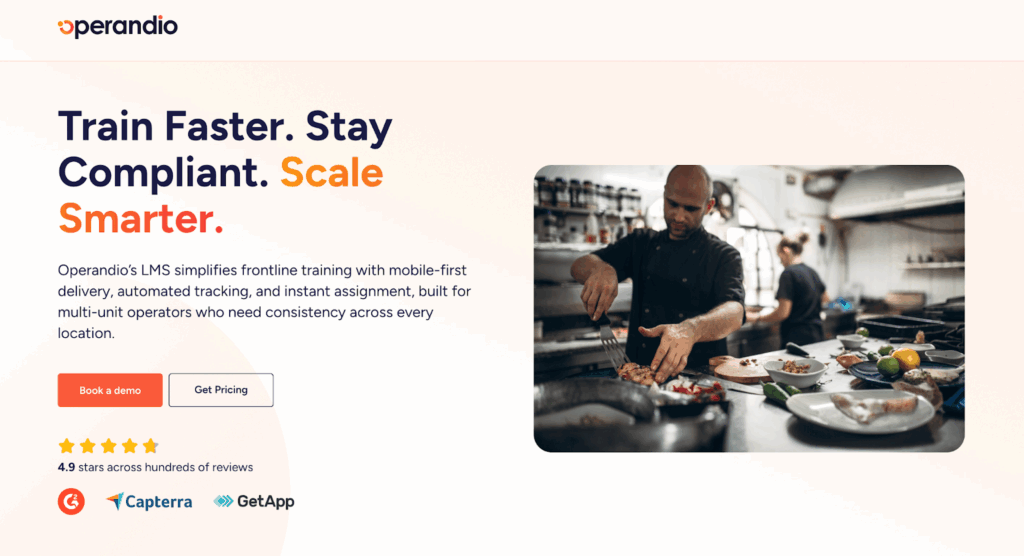
Operandio is an all-in-one cloud LMS platform built for frontline teams. This platform combines mobile-first training with task management, checklists, and compliance tracking.
So when you assign a food safety course, it connects directly to temperature monitoring and audit inspections.
This hospitality LMS shows staff exactly how theory applies to shift duties.
iSpring LMS
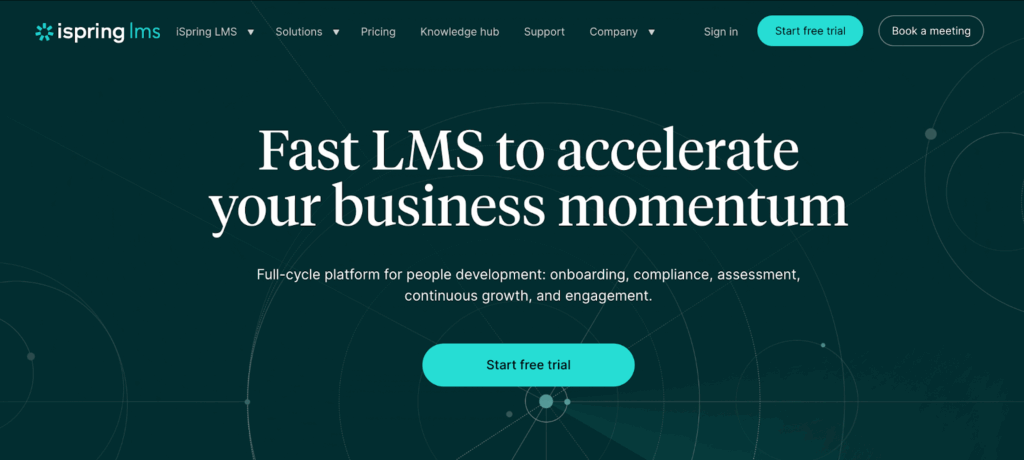
iSpring LMS is built on Amazon AWS for reliability. It combines training delivery with authoring tools and ready-made courses.
With this tool, your employees can access materials offline through the mobile app and sync their progress when connectivity returns.
Other features include 360-degree feedback, SCORM compliance, and iSpring Academy’s course library.
TalentLMS
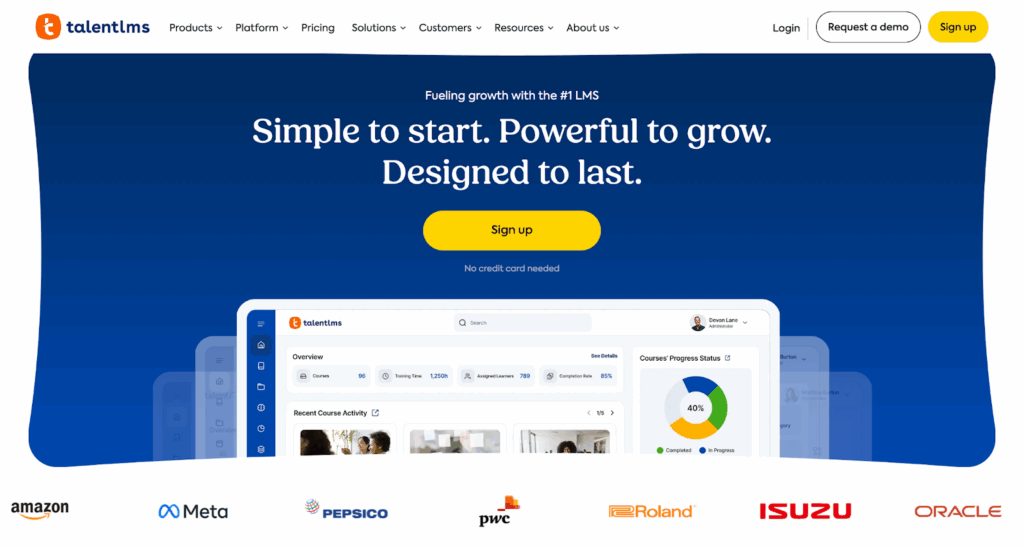
TalentLMS is built for teams that want to get training up and running quickly, without a long setup or technical headaches.
You can spin up courses fast, add light branding, and use simple gamification to keep people paying attention.
It works best when training is meant to stand on its own. Staff log in, complete a course, pass a quiz, and move on.
Type #2: Integrated Operations LMS
These systems combine training with operational tools like task management, audits, and compliance. Training lives alongside daily work, not in a separate portal.
Operandio (Frontline Operations)
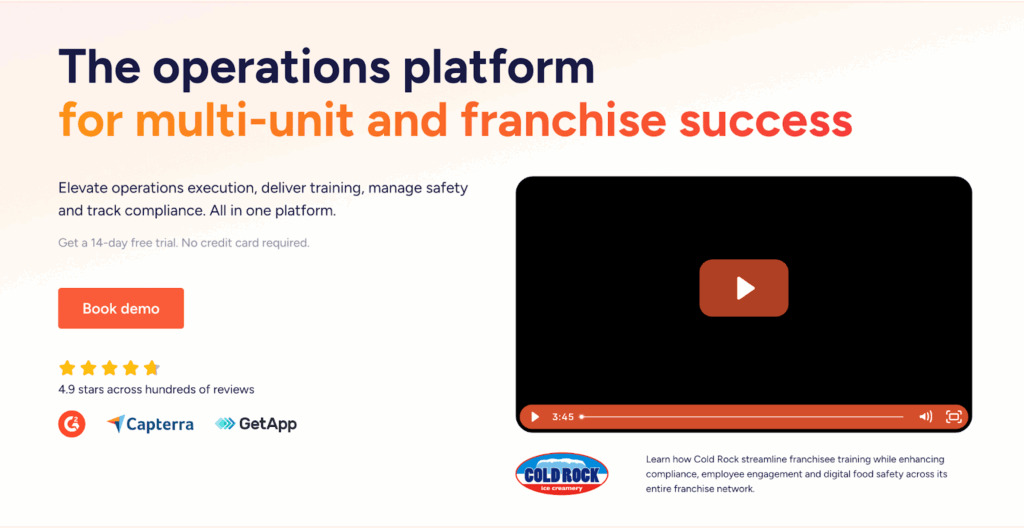
Operandio solves the problem of having your employee training in an isolated platform. This employee training software combines learning with checklists, safety incident management, temperature logs, and task management.
Because it ties learning directly to frontline execution, it works especially well as an LMS for retail training where consistency across locations matters.
For example, when a barista completes espresso training, the same screen displays their opening checklist and temperature reminders.
Staff apply knowledge immediately instead of forgetting concepts learned in separate portals. For multi-unit restaurant management, this means training translates into execution.
Operandio serves 5 to 50,000 employees across retail, restaurants, hotels, entertainment, and gyms with a 4.9/5 rating.
With push notifications, alert staff when you publish courses, automated reminders chase incomplete training, and dashboards show completion by brand, region, or store.
Zenput (Enterprise Operations-Led LMS)
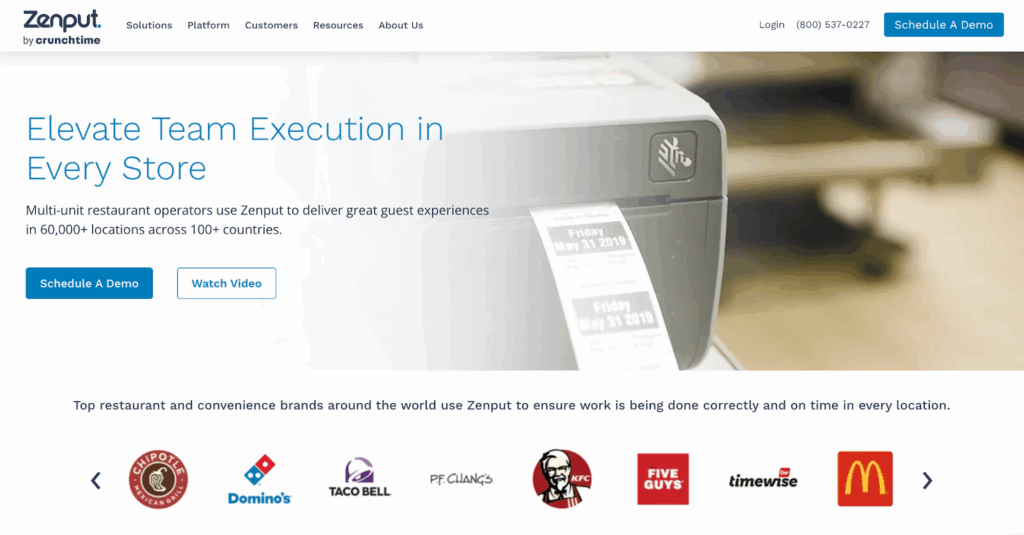
Zenput is built for large, multi-brand enterprises where training, tasks, and audits need to stay aligned across hundreds or thousands of locations.
Zenput ties learning to brand standards and field execution.
When a corporation updates a procedure, the change automatically flows into location-level tasks, checklists, and audits. Training reinforces what changed, and execution proves it happened.
And this works well when consistency matters more than flexibility in your team.
360 Learning (For Collaborative Enterprise Learning)
360Learning blends LMS and learning experience platform (LXP) features to support collaborative, expert-led learning at scale.
It leans into the idea that your best training content lives in the heads of your subject matter experts, not only in the L&D team.
Type #3: Open-Source LMS
Open-source platforms give you the source code to customize as you see fit. You control everything but handle installation, hosting, and maintenance.
Moodle
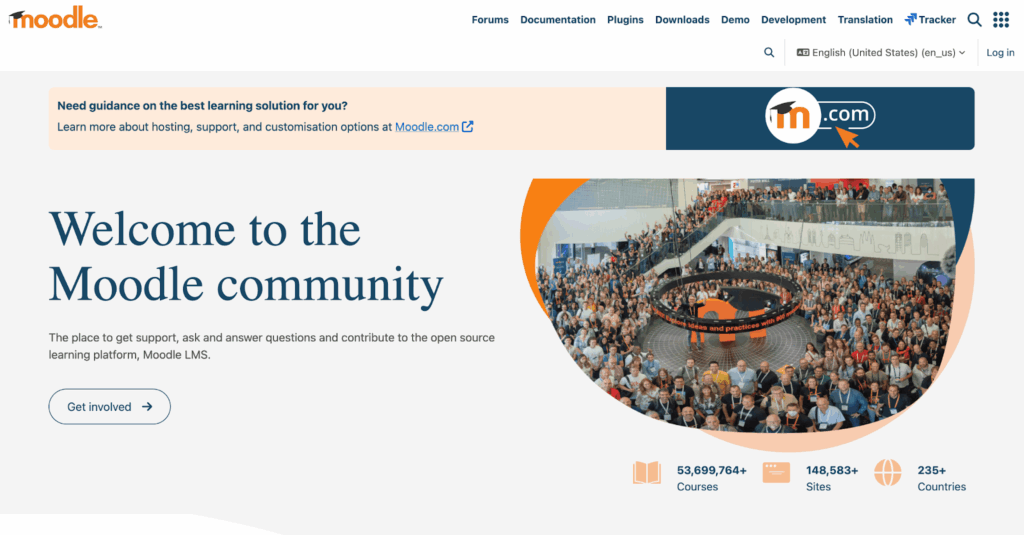
Moodle offers unmatched customization for educational institutions and nonprofits.
Its features include multimedia integration, assessments, and certification management that scales to thousands of users.
This is suitable for organizations that want complete control; choose Moodle, even if you require technical expertise.
Open edX
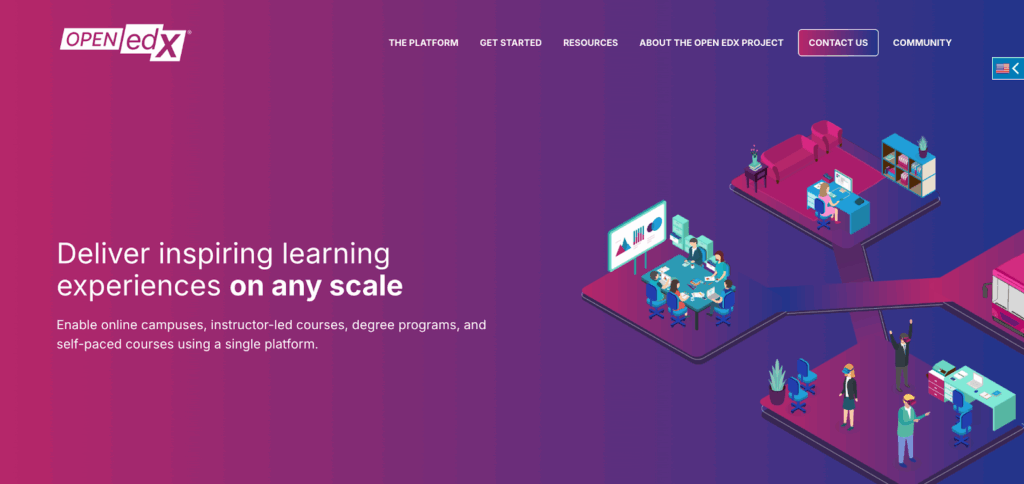
Open edX is a true open-source LMS originally developed by MIT and Harvard. It’s designed for large-scale online learning and supports video-based courses, assessments, certifications, and advanced analytics.
Organizations choose Open edX when they need deep customization and the ability to support thousands of learners at once
LearnDash
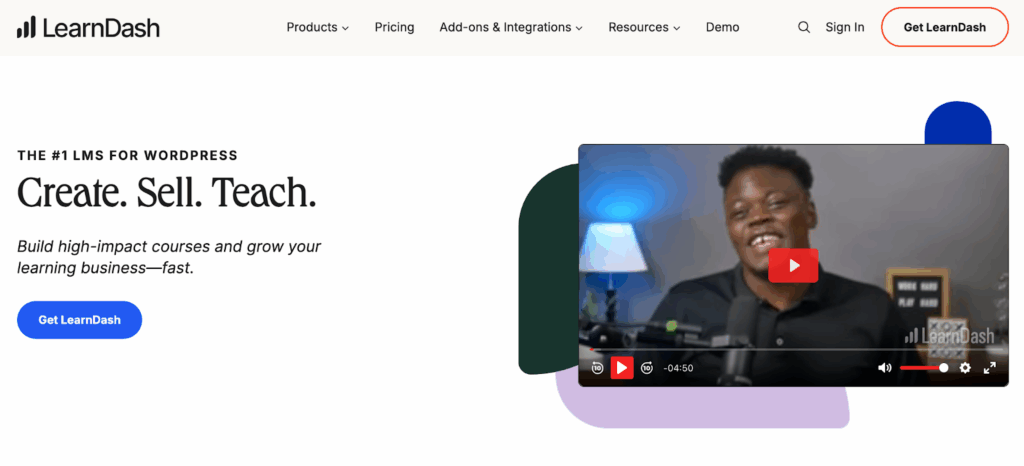
LearnDash is a WordPress plugin that builds learning platforms within existing websites. Drag-and-drop course builder works for non-technical users.
Real-time analytics and gamification make it popular with content creators monetizing courses.
How to Choose the Right LMS System
Match platform capabilities to your operational needs, not feature lists.
Mobile-First vs. Mobile-Compatible
Frontline teams work on their feet, not at computers. LMS platforms that are merely “mobile-compatible” create friction, leading to lower completion rates and abandoned training.
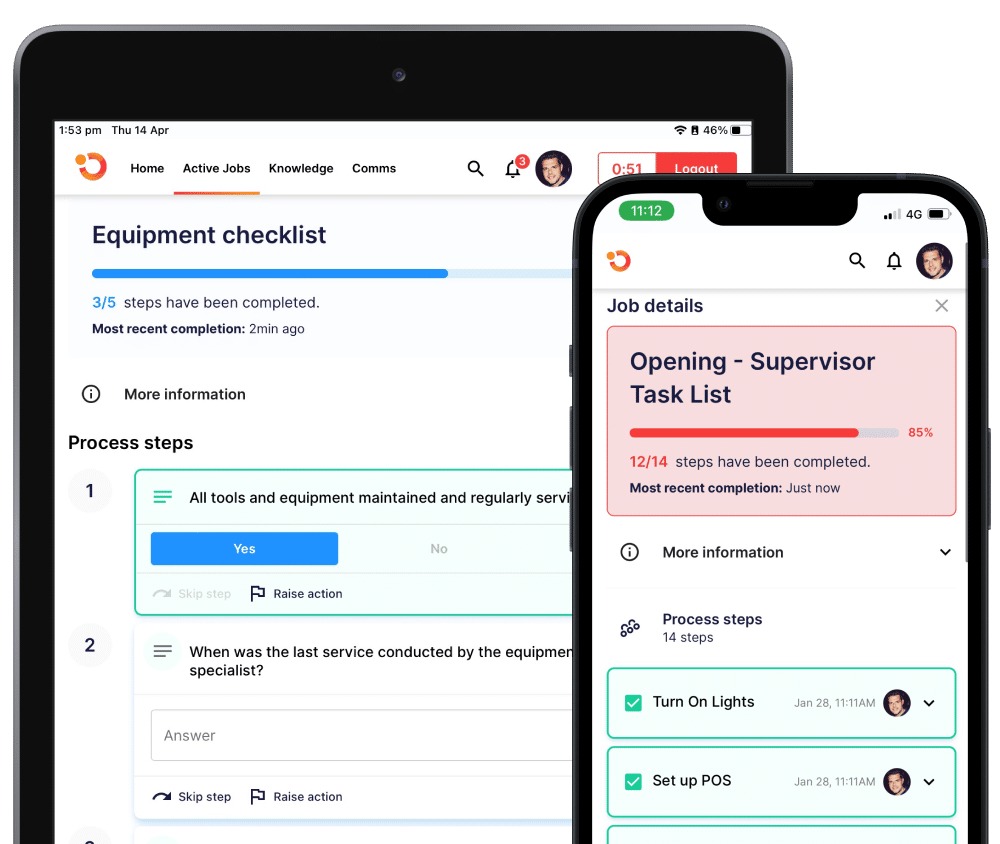
Look for platforms built on a mobile-first approach with clean interfaces, push notifications, and offline access.
Operandio designed its platform to be responsive on phones and tablets for use in busy operations.
Standalone vs. Integrated Systems
For restaurant management, combining learning with task management and audits means staff apply knowledge immediately.
SaaS learning management systems that integrate operations cut tool sprawl. One app for training, checklists, incident reporting, and communication keeps adoption high.
Cloud vs. On-Premise Hosting
Cloud systems eliminate IT costs, handle updates automatically, and work from anywhere.
On-premise installations give complete data control but need dedicated IT for maintenance and security.
Most organizations now choose cloud-based platforms over on-premise systems, prioritizing flexibility, faster deployment, and lower IT overhead over infrastructure control.
Conduct your online training with Operandio’s integrated platform.
Content Creation Capabilities
Enterprise organizations need robust authoring tools and course libraries. Smaller operations want fast deployment without complexity.
Operandio’s authoring tool lets managers create courses without technical expertise. This knowledge base approach documents procedures once, then turns content into training modules that staff can reference during shifts.
Reporting and Analytics
You can’t improve training without seeing completion rates, quiz scores, and knowledge gaps. Multi-location operations need reporting that aggregates by region but drills down to individual stores.
The right operational reporting software shows patterns; low scores on specific modules mean content needs work, not employee problems.
Integration with Existing Systems
Your LMS should connect with payroll, scheduling, and HR systems you already use. API integrations automate data flow,
Native integrations matter more than long lists. Verify your current platforms connect seamlessly with real-time syncing, not overnight batch updates.
Use Operandio to Make SOP-Based Training Fast
Operandio serves frontline operations needing training integrated with daily work. Create SOPs once, then turn content into modules with push notifications, automated reminders, and real-time tracking across locations.
When food safety training connects to temperature logs and cleaning checklists, staff learn rules and then immediately follow procedures.
This restaurant LMS transforms theory into consistent practice.
Ready to see integrated operations platforms in action? Operandio combines learning with task execution, asset management, and compliance tracking, so your teams use every shift.
Request a demo to get started.