
- Platform
- Features
 Franchise & Multi-Unit ManagementCentralize oversight and streamline growth across your entire multi location network
 Learning ManagementTrain, verify, and reward your workforce with mobile-first education
 Operations ExecutionStreamlined operations ensuring brand standards, accountability and efficiency
 Asset ManagementOptimize equipment uptime through proactive maintenance and smart tracking
 Digital Food SafetyAutomate compliance and monitor quality with real-time digital precision
 Health & Safety Management (EHS)Mitigate workplace risks and streamline digital incident reporting and investigations
- Platform Essentials
 Powerful ReportingAlign leadership with role-based dashboards and deeper analytics
 AI-Powered ToolsAutomate content, analyze trends, and provide instant answers
 IntegrationsUnify your enterprise tech stack with real-time data
 IoT PlatformDetect anomalies and automate workflows with intelligent sensors
 Mobile & Shared Tablet AppsSecurely empower frontline teams with fast, offline-capable access
- Footer


 Not sure what you need?
Book in a call with the team
- Features
- Solutions
- By Industry
 RestaurantsQSR, fast food and multi-unit restaurants
 Hotels & ResortsHotels, resorts and extended stay hotels
 ChildcareEarly education, childcare, daycare and preschool
 EntertainmentTheme parks, family entertainment centers and play centers
 Fitness Centers & LeisureFitness centers, golf clubs, gyms and sports facilities
 RetailBig-box retailers, franchise stores and supermarkets
- By Use Case
- Operational ExcellenceStreamlined operations ensuring brand standards, accountability and efficiency
- Learning & DevelopmentTrain, verify, and reward your workforce with mobile-first education
- Franchise & Multi-Unit ManagementCentralize oversight and streamline growth across your entire multi location network
- Food Safety ComplianceAutomate compliance and monitor quality with real-time digital precision
- Asset Management & MaintenanceOptimize equipment uptime through proactive maintenance and smart tracking
- Health & Safety Management (EHS)Mitigate workplace risks and streamline digital incident reporting and investigations
- By Industry
- Resources
- Platform
- Features
- Franchise & Multi-Unit ManagementCentralize oversight and streamline growth across your entire multi location network
- Learning ManagementTrain, verify, and reward your workforce with mobile-first education
- Operations ExecutionStreamlined operations ensuring brand standards, accountability and efficiency
- Asset ManagementOptimize equipment uptime through proactive maintenance and smart tracking
- Digital Food SafetyAutomate compliance and monitor quality with real-time digital precision
- Health & Safety Management (EHS)Mitigate workplace risks and streamline digital incident reporting and investigations
- Platform Essentials
- Powerful ReportingAlign leadership with role-based dashboards and deeper analytics
- AI-Powered ToolsAutomate content, analyze trends, and provide instant answers
- IntegrationsUnify your enterprise tech stack with real-time data
- IoT PlatformDetect anomalies and automate workflows with intelligent sensors
- Mobile & Shared Tablet AppsSecurely empower frontline teams with fast, offline-capable access
- Footer
- Not sure what you need?
Book in a call with the team
- Features
- Solutions
- By Industry
- RestaurantsQSR, fast food and multi-unit restaurants
- Hotels & ResortsHotels, resorts and extended stay hotels
- ChildcareEarly education, childcare, daycare and preschool
- EntertainmentTheme parks, family entertainment centers and play centers
- Fitness Centers & LeisureFitness centers, golf clubs, gyms and sports facilities
- RetailBig-box retailers, franchise stores and supermarkets
- By Use Case
- Operational ExcellenceStreamlined operations ensuring brand standards, accountability and efficiency
- Learning & DevelopmentTrain, verify, and reward your workforce with mobile-first education
- Franchise & Multi-Unit ManagementCentralize oversight and streamline growth across your entire multi location network
- Food Safety ComplianceAutomate compliance and monitor quality with real-time digital precision
- Asset Management & MaintenanceOptimize equipment uptime through proactive maintenance and smart tracking
- Health & Safety Management (EHS)Mitigate workplace risks and streamline digital incident reporting and investigations
- By Industry
- Resources
Hospitality Manager Training Needs: Practical Guide for 2026
Key Takeaways
- The cost of getting manager training wrong is high. In accommodation and food services, the quit rate was 3.9% in February 2026. Restaurant operators still report retention as a major challenge, and labor remains one of the biggest pressure points on margins.
- Strong manager training should start with a practical training needs analysis. The best process ties skill gaps to guest complaints, turnover, audit failures, incident data, and site-level performance.
- In hospitality, the fastest way to close gaps is to combine short training modules with live practice, observation, coaching, and proof of competence on the floor. Research from Cornell found that blended training changed employee behavior in ways guests noticed.
Hospitality manager training needs are broader than most operators expect. Many managers get promoted because they were strong on the floor or technically competent in one part of the operation.
Then they step into a role that suddenly requires coaching and commercial decision-making across an entire shift or site, and they are often underprepared for the challenge.
In this guide, we’ll look at the business cost of undertrained managers, then we’ll walk through a simple training needs analysis process, the core hospitality manager skills that usually need development, and a realistic way to build a training plan that actually closes the gaps.
The Business Impact of Undertrained Hospitality Managers
Undertrained hospitality managers hurt the business fast because they sit at the point where labor, service, compliance, and execution meet.
In restaurants, payroll and benefits represent a median 36.5% of sales in the full-service segment, and more than 9 in 10 operators say rising costs remain a significant challenge. The National Restaurant Association also reported that 42% of operators said their restaurant was not profitable last year.
Retention makes the issue worse. In February 2026, the quits rate in accommodation and food services sat at 3.9%, far above the total economy quits rate of 1.9%.
Separately, 77% of restaurant operators said retaining employees remains a significant challenge. When a manager cannot coach well, clarify expectations, or run a stable shift, the site feels chaotic. That drives avoidable turnover on top of an already high-churn environment.
The guest cost is just as serious.
When the person coordinating all of that is underprepared, guests feel it through slower service, poor recovery, inconsistent standards, and unresolved issues.
PwC found that 32% of customers would stop doing business with a brand they loved after one bad experience. In a sector built on repeat visits, reviews, and reputation, one poorly handled shift can cost more than the immediate refund or discount.
How to Conduct a Training Needs Analysis for Hospitality Managers
A hospitality manager training needs analysis should feel like an operating review, not an academic exercise.
You are trying to answer one question: where do managers lack the skills, judgment, or habits required to run the site to standard?
Step 1: Define the manager role by site type
Start by writing down what success looks like for the manager role in your actual business. A restaurant manager and franchise area manager do not carry the same day-to-day load.
Even within one brand, a flagship site and a smaller suburban site may need different strengths.
Use the role itself as your starting point.
BLS describes food service managers as responsible for:
- Staffing
- Training
- Guest satisfaction
- Food safety
- Budgets
- Payroll
- Inspections
- Performance standards
Your training needs analysis should reflect that full scope, not a narrow checklist.
Step 2: Pull the hard signals from the operation
Next, gather the signals that tell you where managers are struggling.
Look at:
- Staff turnover
- Guest complaints
- Failed audits
- Missed tasks
- Incident reports
- Service recovery logs
- Overtime
- Absenteeism
- Time-to-competence for new hires
Managers influence many of the outcomes operators care about most. If you only ask managers what training they want, you miss the gaps the business is already paying for.
Pro Tip: Do this by site, not only at the head-office level. One property may need stronger service recovery. Another may need better scheduling discipline.
Step 3: Observe managers in live operating conditions
Do not rely only on self-assessments. Shadow managers during a real shift.
Watch for:
- Pre-shift briefings
- Handovers
- Guest escalations
- Task delegation
- Stock checks
- Close-down routines
Most hospitality manager gaps show up in the moment. A manager may know the policy, pass the quiz, and still avoid hard feedback, miss a food safety correction, or fail to calm a guest complaint.
Live observation tells you whether the skill exists under pressure.
Step 4: Ask managers and teams separately
Interview managers, then interview the people who work with them.
Do not combine those conversations.
Teams will often reveal the execution reality, pay attention to things like:
- Inconsistent communication
- Unclear direction
- Weak follow-through
- Poor coaching
- Different standards by the shift leader
Many frontline managers are promoted quickly and have never formally learned how to lead people. SHRM points to this exact problem and highlights training in communication, people management, and culture-building as a proven response.
👉 Book a demo to see how Operandio helps hospitality and franchise operators standardize manager training, frontline execution, and compliance
The Six Core Training Needs of Hospitality Managers
Below is the framework you can use for most hospitality brands, especially restaurant groups, hotels, resorts, and multi-location operators.
1. People Leadership and Communication
This is one of the biggest hospitality manager training needs because many managers are promoted for being strong operators, not for leading people.
Managers need training on how to:
- Set clear expectations
- Delegate work properly
- Give direct, useful feedback
- Hold standards consistently across shifts
2. Guest Experience and Service Recovery
Frontline employees can solve many guest issues, but managers carry the more complex, high-stakes moments.
Managers need to know how to:
- Handle complaints professionally
- Make decisions under pressure
- Resolve issues without slowing service
- Support staff during difficult interactions
Cornell research has shown that training can change employee behavior in ways guests notice, improving perceived helpfulness.
3. Labor Planning, Scheduling, and Cost Control
Hospitality manager skills must include commercial judgment.
That means:
- Building smarter rosters
- Matching labor to expected demand
- Controlling overtime
- Watching productivity
- Understanding how operational discipline affects margin
Labor remains one of the biggest operating pressures in hospitality. AHLA-linked reporting in 2026 showed labor costs and staffing issues remain top concerns for owners and operators.
4. Compliance, Food Safety, and Workplace Safety
Managers need training on the compliance topics that sit inside daily work:
- Food safety
- Documentation
- Shift checks
- Hazard reporting
- Escalation
- Harassment response
- Legal training requirements that vary by location and brand segment
The FDA found that delis with better-developed food safety management systems controlled risk factors better, and locations with a Certified Food Protection Manager in charge showed stronger systems than those without one.
5. Coaching, Onboarding, and Training Delivery
Managers play a big role in how quickly new hires improve and how consistently teams perform. If they cannot coach well, training stays informal and standards vary too much from one shift to another.
Managers need to learn how to:
- Train new frontline staff properly
- Reinforce correct routines on shift
- Coach in the moment
- Build confidence without lowering standards
6. Digital Reporting and Operational Follow-Through
This is especially important in multi-location hospitality businesses. The manager’s job is no longer only to keep today’s shift moving.
They should know how to:
- Read audits, checklists, and training records
- Spot repeat issues early
- Follow through on corrective actions
- Use site data to improve performance
How to Build a Training Plan
A training plan needs to show managers what good looks like and make follow-through visible across locations.
Here’s how to make that happen:
Start With Clear Role-Based Training Paths
The first step is to stop treating manager training like one generic program. A venue manager, restaurant manager, hotel duty manager, and regional operator do not need the same learning in the same order.
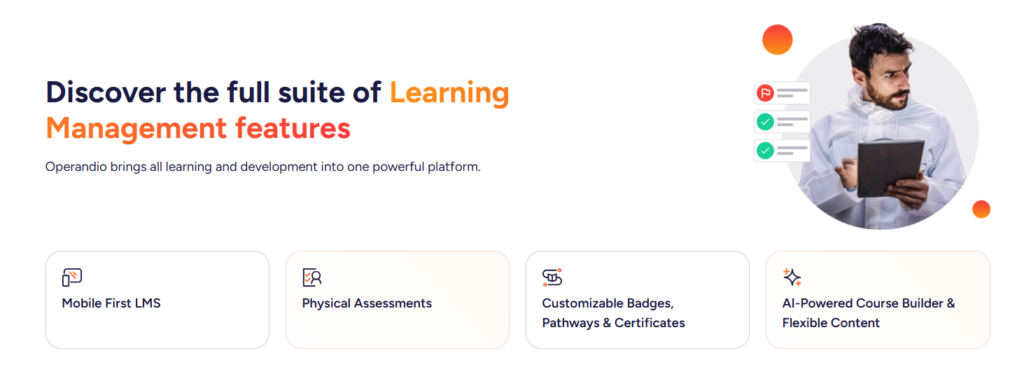
Operandio supports structured learning pathways, branded certificates, badges, and progress tracking across locations.
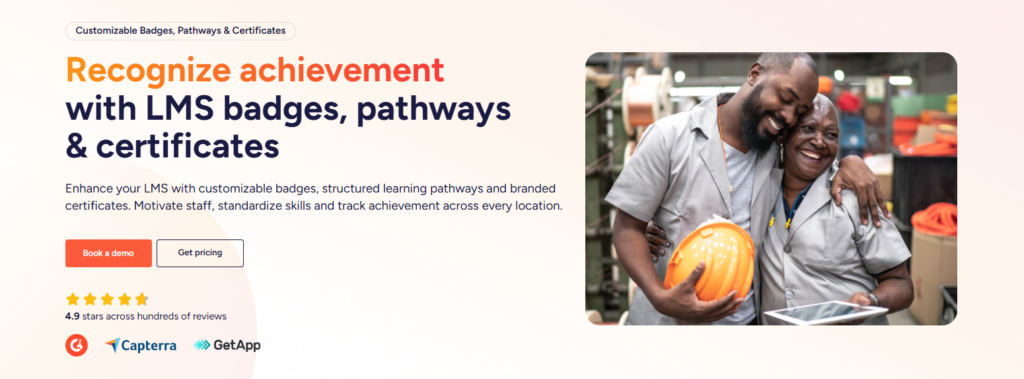
That makes it easier to build role-based development paths instead of dropping everyone into the same training bucket.
Keep Training, SOPs, and Policies in the Same Place
A lot of training plans break down because the learning sits in one system while the real operating standards sit somewhere else. Managers complete the module, then go back to chasing the latest SOP in a folder, chat thread, or shared drive.
Operandio helps solve that by combining the LMS with knowledge and document management.
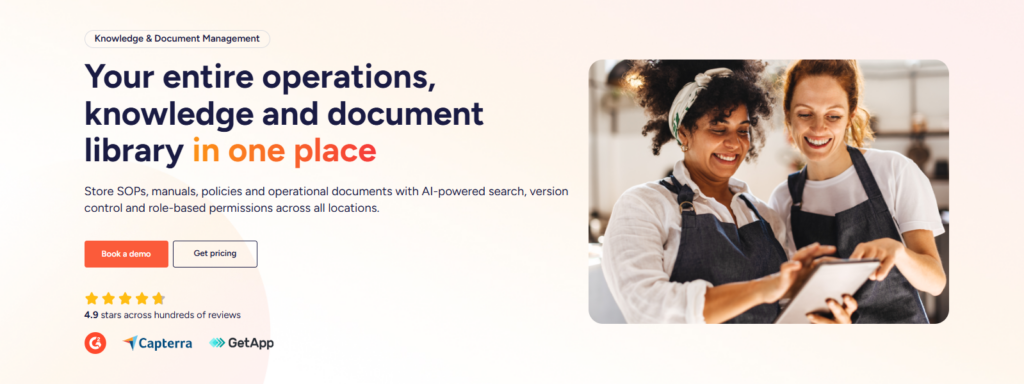
Courses, training materials, policies, procedures, and reference files can sit in one searchable library, with version control and role-based permissions across locations.
Put Training Into the Flow of Daily Work
Hospitality managers do not learn best when the training is easy to access during the rhythm of the job.
Operandio’s mobile-first setup is designed for training on any device, and its communication tools are built to reach teams on mobile or shared tablets where the work happens.
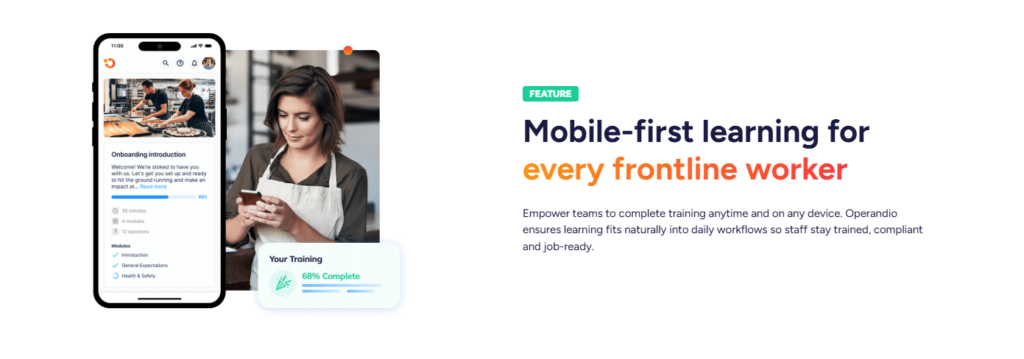
That makes training easier to reinforce during live operations instead of treating it like something separate from the shift.
Build Training That Is Easy to Update
Manager training content gets stale quickly. Procedures change, audits reveal new weak points, menu launches create new routines, and compliance requirements move.
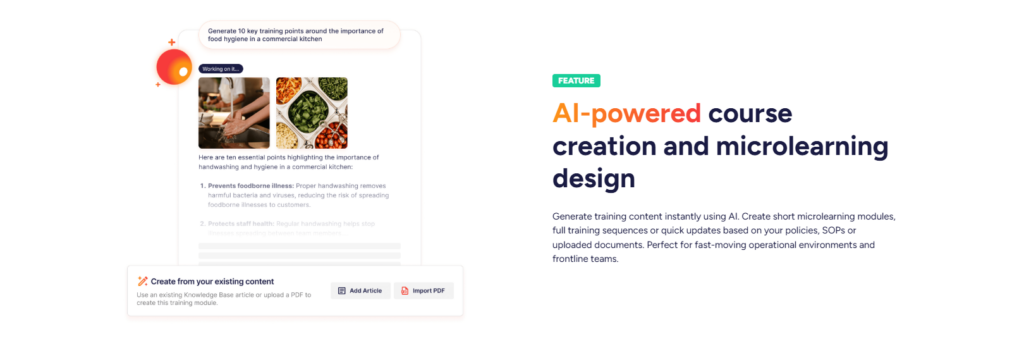
Operandio gives operators a more practical way to keep training current because its LMS supports easy course creation from existing documents, images, and videos, while its knowledge system adds AI-powered search and content generation for things like SOP drafts, checklists, summaries, and location-specific instructions.
That makes the training plan easier to maintain across a growing hospitality network.
Connect Training to Audits and Corrective Action
Training plans work better when they respond to real operational failures. If the same issue keeps showing up in audits, missed tasks, or incidents, that should shape what managers are retrained on next.
Operandio’s inspections and audits can capture rich evidence, and failed inspections can automatically trigger corrective actions with owners, due dates, and tracked resolution.
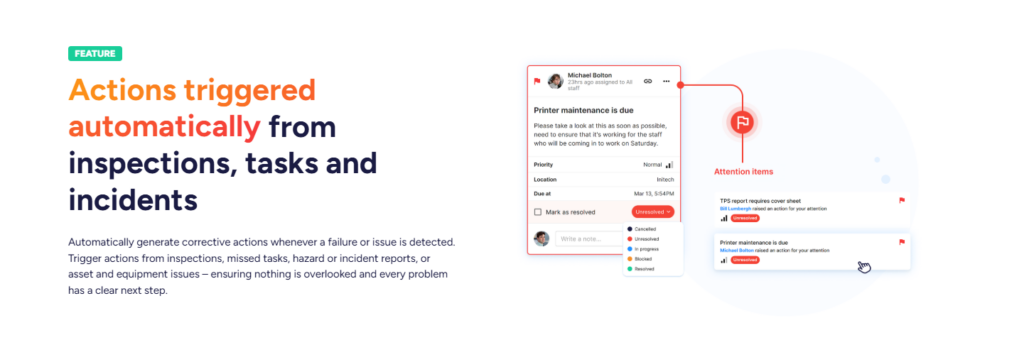
That creates a tighter loop between what the manager learns, what actually happens on site, and what needs to improve next.
Close Training Gaps Faster With Operandio
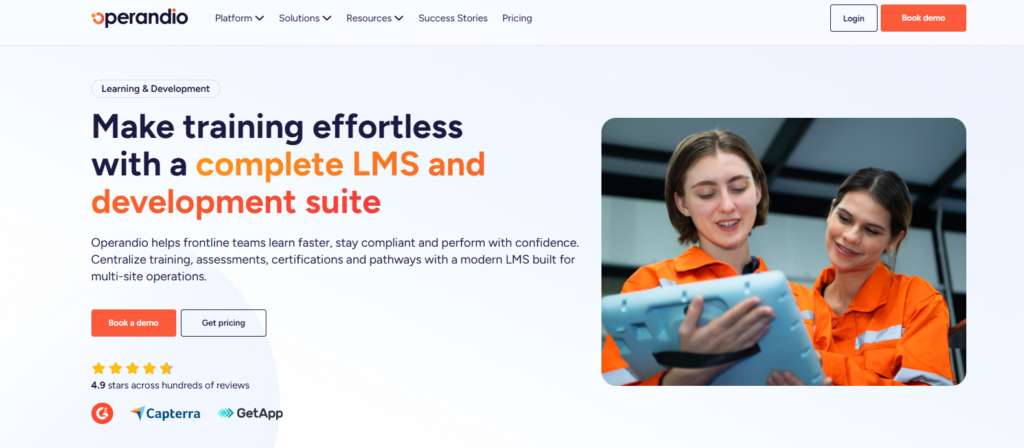
Manager training works best when it sits inside day-to-day operations instead of living in a separate system nobody opens during service.
Operandio combines mobile-first learning and reporting in one platform built for multi-unit and franchise businesses.
So if you are trying to close hospitality manager training needs at scale, the real win is one system that helps managers learn the standard, apply it on shift, prove it happened, and fix gaps quickly across every site.
👉 Book a demo to see how Operandio helps hospitality and franchise operators standardize manager training, frontline execution, and compliance
FAQs
What qualifications does a hospitality manager need?
Usually, hospitality managers need a mix of operational experience and supervisory ability. Formal education can help, but the role also requires practical skills in guest service, staffing, training, safety, and business performance. Legal requirements can vary by role, especially around food safety and workplace training.
How long does it take to train a hospitality manager?
Usually, it takes 30 to 90 days to build site-specific competence, then several more months to strengthen judgment, coaching, and commercial decision-making. Manager development should continue after onboarding, not stop once the checklist is done.
How do you measure the effectiveness of hospitality manager training?
Start with operational outcomes: turnover, guest complaints, audit scores, incident rates, corrective-action closure, time-to-competence for new hires, and labor performance. If those numbers do not move, the training likely is not changing behavior where it counts.
What is the biggest mistake in hospitality manager training?
The biggest mistake is assuming strong frontline performers already know how to lead. Many managers are promoted quickly and have never been formally trained in coaching, communication, performance management, or team culture.
Should manager training differ between restaurants, hotels, and other hospitality sites?
Yes. The leadership basics stay similar, but the operating realities differ. Restaurant managers may need deeper focus on labor deployment, food safety, and peak-shift control. Lodging managers often need stronger training in guest recovery, room standards, and cross-department coordination.