- Platform
- Features
 Operations ExecutionStreamlined operations ensuring brand standards, accountability and efficiency
 Learning ManagementTrain, verify, and reward your workforce with mobile-first education
 Franchise & Multi-Unit ManagementCentralize oversight and streamline growth across your entire multi location network
 Digital Food SafetyAutomate compliance and monitor quality with real-time digital precision
 Asset ManagementOptimize equipment uptime through proactive maintenance and smart tracking
 Health & Safety Management (EHS)Mitigate workplace risks and streamline digital incident reporting and investigations
- Platform Essentials
 AI-Powered ToolsAutomate content, analyze trends, and provide instant answers
 IntegrationsUnify your enterprise tech stack with real-time data
 Powerful ReportingAlign leadership with role-based dashboards and deeper analytics
 IoT PlatformDetect anomalies and automate workflows with intelligent sensors
 Mobile & Shared Tablet AppsSecurely empower frontline teams with fast, offline-capable access
- Footer


 Not sure what you need?
Book in a call with the team
- Features
- Solutions
- By Industry
 RestaurantsQSR, fast food and multi-unit restaurants
 Hotels & ResortsHotels, resorts and extended stay hotels
 ChildcareEarly education, childcare, daycare and preschool
 EntertainmentTheme parks, family entertainment centers and play centers
 Fitness Centers & LeisureFitness centers, golf clubs, gyms and sports facilities
 RetailBig-box retailers, franchise stores and supermarkets
- By Use Case
- Operational ExcellenceStreamlined operations ensuring brand standards, accountability and efficiency
- Learning & DevelopmentTrain, verify, and reward your workforce with mobile-first education
- Franchise & Multi-Unit ManagementCentralize oversight and streamline growth across your entire multi location network
- Food Safety ComplianceAutomate compliance and monitor quality with real-time digital precision
- Asset Management & MaintenanceOptimize equipment uptime through proactive maintenance and smart tracking
- Health & Safety Management (EHS)Mitigate workplace risks and streamline digital incident reporting and investigations
- By Industry
- Resources
- Platform
- Features
- Operations ExecutionStreamlined operations ensuring brand standards, accountability and efficiency
- Learning ManagementTrain, verify, and reward your workforce with mobile-first education
- Franchise & Multi-Unit ManagementCentralize oversight and streamline growth across your entire multi location network
- Digital Food SafetyAutomate compliance and monitor quality with real-time digital precision
- Asset ManagementOptimize equipment uptime through proactive maintenance and smart tracking
- Health & Safety Management (EHS)Mitigate workplace risks and streamline digital incident reporting and investigations
- Platform Essentials
- AI-Powered ToolsAutomate content, analyze trends, and provide instant answers
- IntegrationsUnify your enterprise tech stack with real-time data
- Powerful ReportingAlign leadership with role-based dashboards and deeper analytics
- IoT PlatformDetect anomalies and automate workflows with intelligent sensors
- Mobile & Shared Tablet AppsSecurely empower frontline teams with fast, offline-capable access
- Footer
- Not sure what you need?
Book in a call with the team
- Features
- Solutions
- By Industry
- RestaurantsQSR, fast food and multi-unit restaurants
- Hotels & ResortsHotels, resorts and extended stay hotels
- ChildcareEarly education, childcare, daycare and preschool
- EntertainmentTheme parks, family entertainment centers and play centers
- Fitness Centers & LeisureFitness centers, golf clubs, gyms and sports facilities
- RetailBig-box retailers, franchise stores and supermarkets
- By Use Case
- Operational ExcellenceStreamlined operations ensuring brand standards, accountability and efficiency
- Learning & DevelopmentTrain, verify, and reward your workforce with mobile-first education
- Franchise & Multi-Unit ManagementCentralize oversight and streamline growth across your entire multi location network
- Food Safety ComplianceAutomate compliance and monitor quality with real-time digital precision
- Asset Management & MaintenanceOptimize equipment uptime through proactive maintenance and smart tracking
- Health & Safety Management (EHS)Mitigate workplace risks and streamline digital incident reporting and investigations
- By Industry
- Resources
2026 Frontline Staff Training: Best Practices & Solutions
Key Takeaways
- Frontline staff training teaches customer-facing and site-based employees how to do their jobs safely and to brand standard. It works best when training is short, mobile-friendly, role-specific, and tied to real work.
- Strong frontline training improves service quality and staff retention. That matters even more for multi-location businesses where inconsistent training can quickly create brand and operational problems.
- The best frontline staff training solutions do more than deliver courses. They help businesses centralize SOPs, track progress, confirm understanding, and connect training to everyday operations across locations.
- For franchise and multi-unit operators, the strongest option is usually a platform like Operandio that combines training with tasks, audits, communication, and reporting.
Frontline staff training is the system you use to prepare frontline employees to do the job correctly.
In this guide, we’ll break down what it is, why it matters, what strong programs include, the biggest mistakes to avoid, and the training methods that work best in 2026.
Why Frontline Staff Training Is Important
Frontline teams shape the customer experience, carry a lot of the compliance risk, and often work in fast-moving environments where mistakes spread quickly, this is why you need to train them well.
Improved Consistency Across Locations
In multi-unit businesses, one weak location can damage the whole brand. Training helps every site follow the same standard and use the same process. That becomes more important as franchise and multi-site networks grow.
Operandio helps operators who need a single system to align locations, centralize communication, and maintain consistent standards across the network.
Retention and Engagement
Retention is still one of the biggest workforce concerns. LinkedIn’s Workplace Learning Report found that 90% of organizations were concerned about employee retention and identified learning opportunities as their top retention strategy.
At the same time, Gallup reported that U.S. employee engagement fell to 31% in 2024, the lowest level in a decade. Training will not solve every culture problem, but poor training almost always makes turnover worse.
Reduced Risk and Protected Standards
When staff do not know the correct process, problems show up as service failures, and poor audit results. In hospitality and other regulated environments, that can become expensive fast.
Strong training gives you a repeatable way to teach standards, verify knowledge, and show evidence during audits or reviews.
Key Components of an Effective Training Program
A strong frontline training program needs structure. It should help new hires learn faster, keep daily standards clear, and give managers proof that training actually happened and stuck.
Role-Specific Onboarding
Frontline employees do very different jobs, so training should reflect that. A cashier, cleaner, shift lead, and kitchen worker do not need the same learning path.
Good training programs assign content by role so employees only see what matters to their work.
Operandio offers centralized training, assessments, certifications, and pathways with a modern LMS and role-specific onboarding checklist.
Mobile Access and Ease of Use
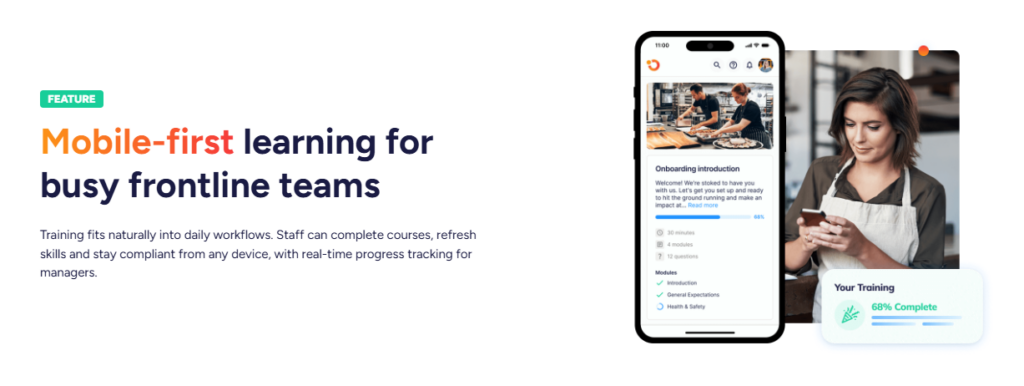
Frontline teams are rarely sitting at desks. Training needs to be easy to access on a phone or shared tablet, simple to complete during a shift, and clear enough to use without extra explanation.
SOPs, Knowledge, and Reinforcement
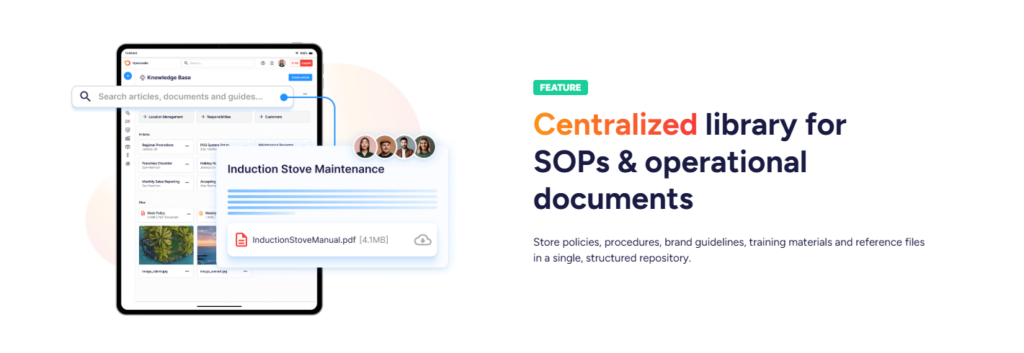
Training works better when employees can quickly check procedures after the lesson is done. That means SOPs, policies, and operational guides should sit alongside training content.
With Operandio, you can store policies, procedures, brand guidelines, training materials and reference files in a single, structured repository.
Assessments and Manager Follow-Up
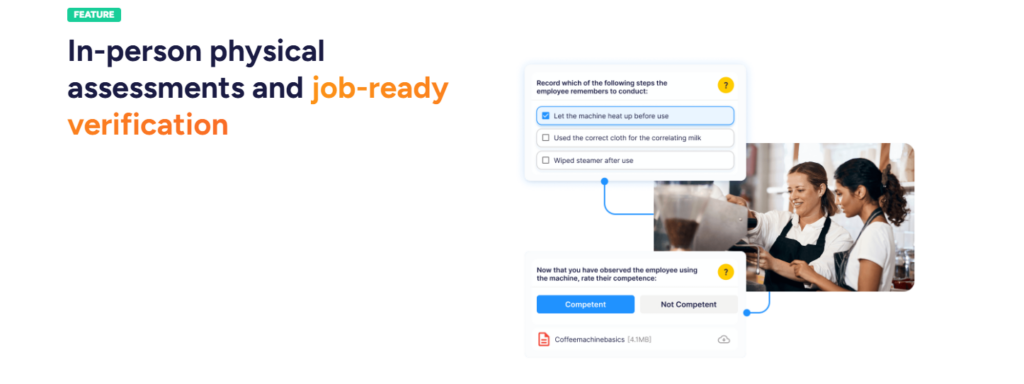
Completion alone is not enough. Good programs include quizzes, sign-offs, practical checks, and manager observations so businesses can confirm that staff understood the material and can apply it correctly on the job.
Common Challenges in Frontline Staff Training
Most frontline training problems come from the reality of the environment. Teams are busy, turnover is high, and important information often gets lost between head office and the people actually doing the work.
High Turnover and Repeated Onboarding
In many frontline businesses, managers are constantly training new hires. That creates pressure to move fast, which often leads to inconsistent onboarding and missed steps. Over time, that hurts standards, confidence, and retention.
Inconsistent Training Across Locations
When training depends too much on local managers, each site ends up teaching things a little differently. One manager explains the process clearly, another rushes it, and another skips parts entirely. That is how standards drift across a multi-location business.
Scattered Information and Missed Updates
A lot of businesses still keep training in one place, SOPs in another, and urgent updates in chat or email. That makes it harder for frontline staff to know where to look. It also makes it harder for leadership to know what employees actually saw and understood.
No Link Between Training and Daily Work
A lot of training is stored in separate systems with no connection to real execution. Staff complete a module, then go back to a shift where the checklists, audits, and daily tasks live somewhere else.
For multi-location brands, this is where an all-in-one platform makes a real difference. Operandio combines training, knowledge, communication, tasks, audits, corrective actions, and reporting in one system. For restaurants, hospitality groups, and franchise operators, that is a stronger model than treating training as a standalone tool.
Effective Frontline Staff Training Methods and Best Practices
The best methods are practical. They respect time pressure, reinforce the right behaviors, and connect learning to the job.
Use Short, Mobile Lessons Instead of Long Courses
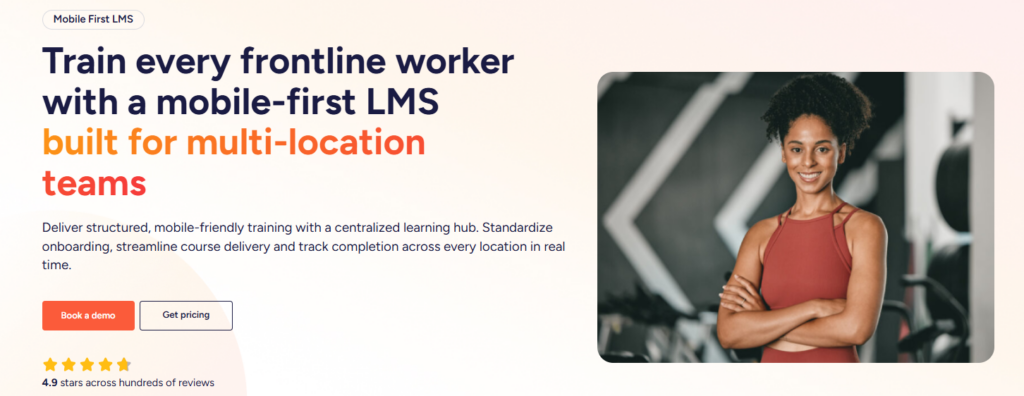
Microlearning works because it fits the frontline environment better. Research continues to show that short, repeated learning formats can improve knowledge retention and performance in applied settings.
For multi-unit operators, this is where a platform like Operandio makes sense.
Combine Digital Training With Manager Coaching
Digital training is great for speed and consistency. Managers are still critical for context, feedback, and habit-building. The strongest programs blend both:
- Staff learn the standard in the platform
- Managers observe the task in real life
- The business records completion and competency
That model works especially well for service behaviors, food safety compliance, equipment handling, and manager development.
Trigger Training From Real Events
Do not treat training as a one-time event. Trigger it when something changes:
- A new hire joins
- A promotion happens
- An audit fails
- A certification is about to expire
- A new product or menu launches
- A policy changes
This is one of the biggest advantages of using training inside an operations platform. The system can connect learning to the actual event instead of relying on someone to remember.
Keep Content Practical and Specific
Frontline staff do not need theory-heavy content. They need:
- What to do
- When to do it
- Why it matters
- What good looks like
- What mistakes to avoid
Use short videos, visuals, examples, checklists, and scenario-based questions. Cut the filler.
Measure More Than Completion
Track completion, but also track:
- Time to competence
- Audit scores
- Corrective actions
- Service quality metrics
- Certification status
- Location-level adoption
That gives L&D and operations leaders a more honest view of whether training is changing behavior.
Best Frontline Staff Training Solutions
The best frontline staff training solutions do more than host learning content. They help businesses train employees, keep procedures clear, track progress, and connect learning to day-to-day operational performance.
Look for More Than a Basic LMS
A standard LMS may cover lessons and quizzes, but frontline teams often need more than that. They need training tied to SOPs, audits, checklists, communications, and compliance tasks so learning supports the work happening on the ground.
Prioritize Multi-Location Visibility
For franchise and multi-unit businesses, leadership needs to see which locations are on track and which are falling behind. The strongest solutions give head office visibility into completions, overdue items, gaps by location, and proof of follow-through.
Choose Tools Built for Deskless Teams
Frontline staff need mobile-friendly tools, shared-device support, and simple interfaces. If the platform feels like office software repackaged for field teams, adoption usually suffers. Good frontline training software should fit how employees actually work.
Think in Terms of Operational Fit
The right solution depends on what problem you are solving. Some tools focus on course delivery. Others support broader operational control. Businesses with multiple locations usually get more value from platforms that combine training with execution, communication, and reporting.
Operandio
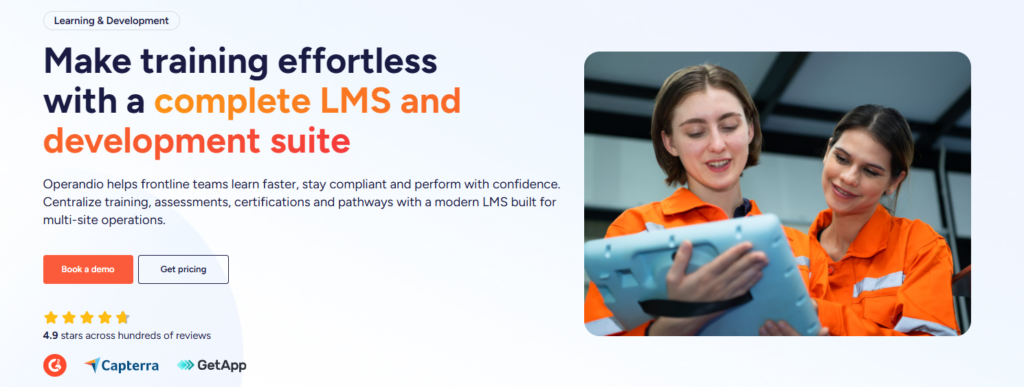
Operandio is the best frontline staff training solution for multi-location operators and franchise businesses that need more than a standalone LMS. It brings training, SOPs, audits, tasks, corrective actions, employee communication, and reporting into one platform. That makes it much easier to keep standards consistent across every location.
Built for Frontline and Multi-Location Teams
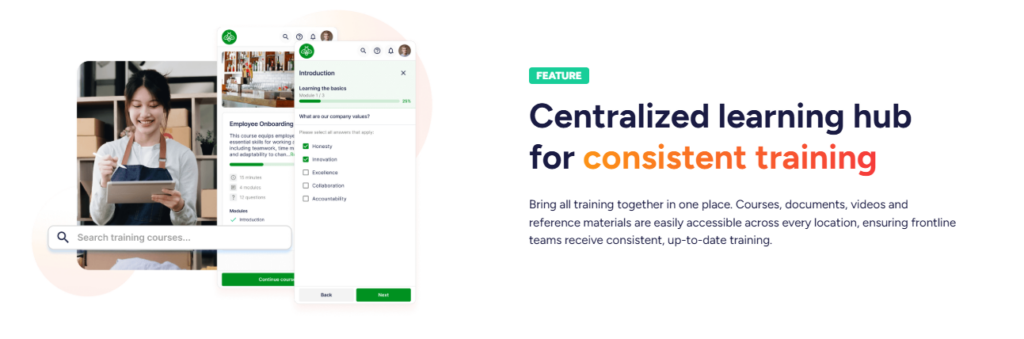
Operandio is designed for businesses where training needs to work in real operating conditions. Staff can access learning on mobile devices or shared tablets, managers can assign training by role or location, and head office can track progress across the network without relying on disconnected systems.
Combines Training With Daily Operations
This is where Operandio stands out. Training does not sit off to the side as a separate tool. It connects directly to the wider system teams use to run the business. That includes checklists, audits, incident reporting, corrective actions, food safety monitoring, and operational communication. For hospitality, retail, healthcare, gyms, childcare, and franchise groups, that is a much stronger setup.
Gives Leadership Clear Visibility
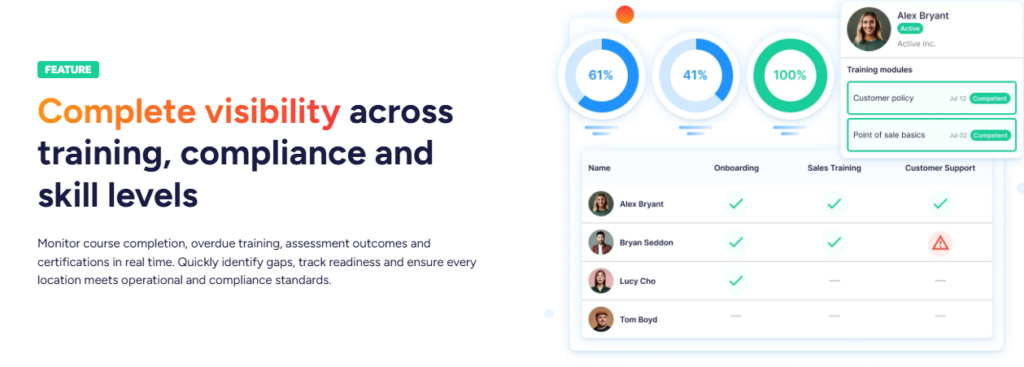
Operandio helps head office see who completed training, where gaps exist, and how training connects to broader operational performance. Instead of guessing whether standards are being followed, leaders get a clearer picture by location, team, or process.
Best for Businesses That Need One System
Operandio is a strong fit for operators who want one platform to run training, compliance, and day-to-day execution together. That is especially useful in businesses with high turnover, strict standards, and many locations to support.
Book a demo to see how Operandio helps you train frontline staff, standardize operations across locations, and keep compliance visible in one system.
TalentLMS
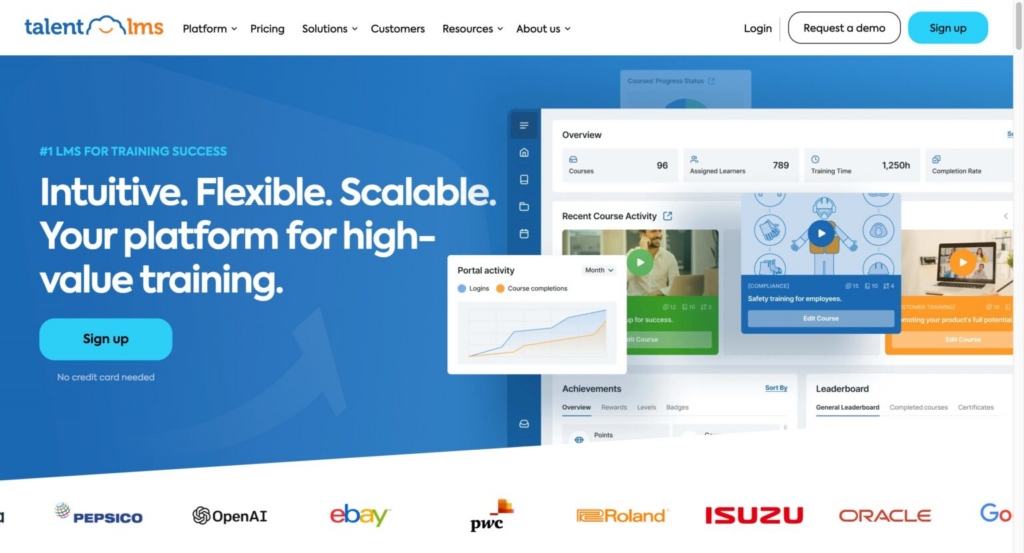
TalentLMS is a good choice for businesses that mainly want a traditional learning management system. It handles course delivery, quizzes, user management, and reporting well, which makes it useful for teams focused mainly on structured training content.
Strong for Core LMS Needs
TalentLMS works well when the priority is creating courses, enrolling users, and tracking completion. It is relatively flexible and easier to roll out than some heavier enterprise learning tools.
Better for Training Than Operations
The limitation is that it is primarily an LMS. Businesses that also need task management, audits, SOP control, and multi-location operational visibility may find that they still need other systems around it.
Axonify
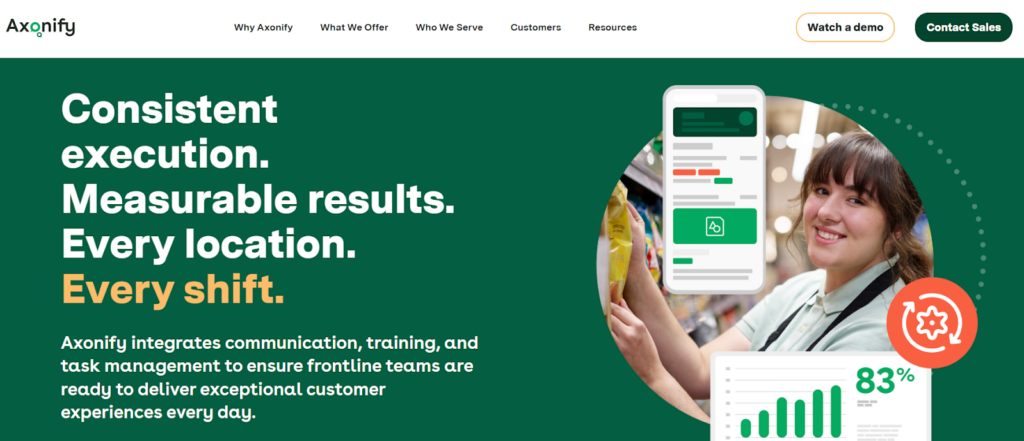
Axonify is known for short-form frontline learning, reinforcement, and daily knowledge checks. It is designed to improve retention and keep employees engaged through frequent, bite-sized training.
Good for Microlearning
Axonify is a solid option for companies that want to make frontline learning more continuous and habit-based. It fits businesses that value repetition, quick assessments, and regular reinforcement instead of longer training sessions.
Less Complete as an Operations Platform
Axonify is more focused on learning than full operational control. If the business needs training linked with audits, checklists, corrective actions, and location-wide execution, it may still need other tools to close those gaps.
Build a Stronger Frontline Team With Better Training
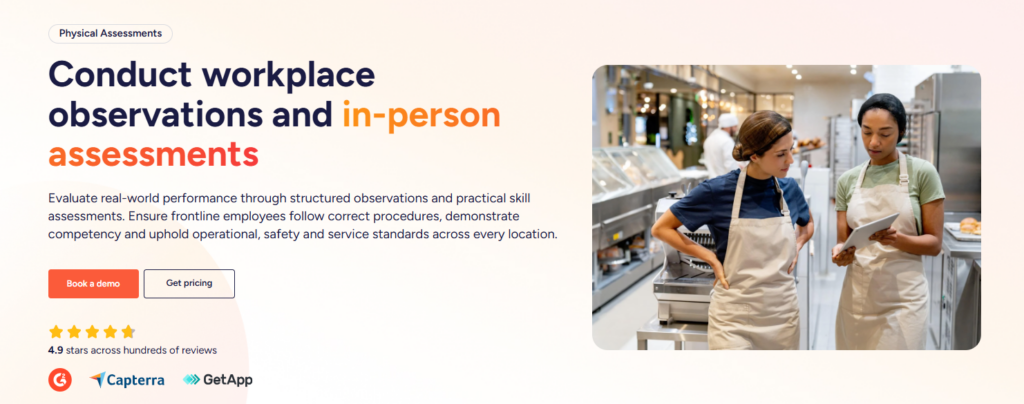
Frontline staff training works when it is clear, practical, mobile-friendly, and connected to real work. That is the difference between training that gets completed and training that actually changes performance.
If you run a multi-location business or franchise network, the smarter move is not to bolt on another standalone LMS. Use a platform that brings together learning, SOPs, tasks, audits, communication, and reporting in one place. That is how you keep standards consistent across every location.
Operandio is built for exactly that model, especially in hospitality, restaurants, and other frontline-heavy operations.
👉Book an Operandio demo to see it in action!