
- Platform
- Features
 Franchise & Multi-Unit ManagementCentralize oversight and streamline growth across your entire multi location network
 Learning ManagementTrain, verify, and reward your workforce with mobile-first education
 Operations ExecutionStreamlined operations ensuring brand standards, accountability and efficiency
 Asset ManagementOptimize equipment uptime through proactive maintenance and smart tracking
 Digital Food SafetyAutomate compliance and monitor quality with real-time digital precision
 Health & Safety Management (EHS)Mitigate workplace risks and streamline digital incident reporting and investigations
- Platform Essentials
 Powerful ReportingAlign leadership with role-based dashboards and deeper analytics
 Operandio IntelligenceAutomate content, analyze trends, and provide instant answers
 IntegrationsUnify your enterprise tech stack with real-time data
 IoT PlatformDetect anomalies and automate workflows with intelligent sensors
 Mobile & Shared Tablet AppsSecurely empower frontline teams with fast, offline-capable access
- Footer


 Not sure what you need?
Book in a call with the team
- Features
- Solutions
- By Industry
 RestaurantsQSR, fast food and multi-unit restaurants
 Hotels & ResortsHotels, resorts and extended stay hotels
 ChildcareEarly education, childcare, daycare and preschool
 EntertainmentTheme parks, family entertainment centers and play centers
 Fitness Centers & LeisureFitness centers, golf clubs, gyms and sports facilities
 RetailBig-box retailers, franchise stores and supermarkets
- By Use Case
- Operational ExcellenceStreamlined operations ensuring brand standards, accountability and efficiency
- Learning & DevelopmentTrain, verify, and reward your workforce with mobile-first education
- Franchise & Multi-Unit ManagementCentralize oversight and streamline growth across your entire multi location network
- Food Safety ComplianceAutomate compliance and monitor quality with real-time digital precision
- Asset Management & MaintenanceOptimize equipment uptime through proactive maintenance and smart tracking
- Health & Safety Management (EHS)Mitigate workplace risks and streamline digital incident reporting and investigations
- By Industry
- Resources
- Platform
- Features
- Franchise & Multi-Unit ManagementCentralize oversight and streamline growth across your entire multi location network
- Learning ManagementTrain, verify, and reward your workforce with mobile-first education
- Operations ExecutionStreamlined operations ensuring brand standards, accountability and efficiency
- Asset ManagementOptimize equipment uptime through proactive maintenance and smart tracking
- Digital Food SafetyAutomate compliance and monitor quality with real-time digital precision
- Health & Safety Management (EHS)Mitigate workplace risks and streamline digital incident reporting and investigations
- Platform Essentials
- Powerful ReportingAlign leadership with role-based dashboards and deeper analytics
- Operandio IntelligenceAutomate content, analyze trends, and provide instant answers
- IntegrationsUnify your enterprise tech stack with real-time data
- IoT PlatformDetect anomalies and automate workflows with intelligent sensors
- Mobile & Shared Tablet AppsSecurely empower frontline teams with fast, offline-capable access
- Footer
- Not sure what you need?
Book in a call with the team
- Features
- Solutions
- By Industry
- RestaurantsQSR, fast food and multi-unit restaurants
- Hotels & ResortsHotels, resorts and extended stay hotels
- ChildcareEarly education, childcare, daycare and preschool
- EntertainmentTheme parks, family entertainment centers and play centers
- Fitness Centers & LeisureFitness centers, golf clubs, gyms and sports facilities
- RetailBig-box retailers, franchise stores and supermarkets
- By Use Case
- Operational ExcellenceStreamlined operations ensuring brand standards, accountability and efficiency
- Learning & DevelopmentTrain, verify, and reward your workforce with mobile-first education
- Franchise & Multi-Unit ManagementCentralize oversight and streamline growth across your entire multi location network
- Food Safety ComplianceAutomate compliance and monitor quality with real-time digital precision
- Asset Management & MaintenanceOptimize equipment uptime through proactive maintenance and smart tracking
- Health & Safety Management (EHS)Mitigate workplace risks and streamline digital incident reporting and investigations
- By Industry
- Resources
Why Quality Management Is Important in Multi Location Teams
Key Takeaways
- Quality management is extremely important in multi-location businesses, where standards often don’t translate to sites or shifts. ISO says quality management systems create structure and continual improvement.
- PwC found that 52% of consumers stopped buying from a brand after a bad product or service experience, which shows how fast quality issues can turn into lost revenue.
- In frontline industries, quality management works best when SOPs, training, audits, checklists, corrective actions, and reporting are tied into one system instead of scattered documents.
Quality management gives your business a system for doing work the right way, spotting gaps early, and improving before those gaps impact your customers or regulators. ISO 9001 helps organizations deliver consistent products and services, improve efficiency, and meet customer and regulatory expectations.
6 Reasons Quality Management Is Important in Business
Quality management turns quality from a vague goal into a repeatable operating system. That matters in every business. It matters even more when you have multiple locations, rotating staff, compliance pressure, and a frontline workforce.
| Problem | Business Impact | What Quality Management Fixes |
| Tasks done differently by site or shift | Inconsistent service, customer complaints, higher rework | Standardized processes and clear accountability |
| Missing records or poor follow-up | Audit stress, compliance gaps, weak visibility | Documented workflows, records, and corrective actions |
| Training varies by manager | Slow onboarding, uneven execution | Role-based training tied to procedures |
| Leaders rely on gut feel | Slow decisions, blind spots, recurring issues | Data, reporting, and evidence-based improvement |
| Growth adds complexity | Standards slip as locations scale | Repeatable systems across every site |
*This table reflects the core benefits ISO, FDA, and McKinsey associate with structured quality systems.
1. It Reduces Errors, Defects, and Rework
When work is inconsistent, teams waste time fixing preventable mistakes. Good quality management means fewer:
- Missed prep checks in a restaurant
- Incomplete opening procedures in a hotel
- Policy misses in childcare
- Repeat tasks caused by unclear instructions in retail
Every avoided error protects your margin.
For multi-location teams, one weak site can create extra work for the head office. Quality management makes the right process easier to follow the first time.
2. It Protects Customer Satisfaction and Revenue
Your customers rarely separate quality problems from brand problems. They do not care whether the failure came from a weak SOP, poor handoff, or missing check. They only see the result.
PwC’s Customer Experience Survey found that more than half of consumers (52%) stopped using or buying from a brand because they had a bad experience with its products or services.
Strong quality management protects the customer experience by reducing variation before customers notice it.
3. It Makes Execution Repeatable Across Every Location
Many companies think they have a quality system when what they really have is a folder full of documents. That is not enough.
ISO’s quality management principles include
- Customer focus
- Leadership
- Engagement of people
- Process approach
- Improvement
- Evidence-based decision making
- Relationship management
Those principles can be tailored to organizations of all sizes, types, and locations.
The real importance of quality management is consistency. A multi-location management needs repeatable execution.
Gallup found that only about half of employees strongly agree that they know what is expected of them at work. When expectations are unclear, performance becomes a problem.
4. It Helps You Stay Compliant and Reduce Risk
The importance of quality becomes much more obvious in regulated industries. In food service, for example, the CDC estimates that 48 million people get sick from foodborne illness each year, with 128,000 hospitalizations and 3,000 deaths.
The FDA says inspections are an important part of the food safety program and are used to verify compliance and assess risk.
5. It Gives Leaders Real Visibility Into What Is Happening
McKinsey notes that manual observation goes only so far and that new data and analytics create more objective, useful insight into operations. It also says transparency in operations is vital for identifying inefficiencies and opportunities for improvement.
That is one of the most overlooked reasons why quality management is important. It turns quality from opinion into evidence.
ISO includes evidence-based decision-making as one of its core quality principles. Leaders should not have to guess which location skips steps, which task fails most often, or where training gaps are showing up.
When quality management is structured well, leaders can see:
- Completion data
- Audit trends
- Failed checks
- Overdue corrective actions
- Recurring weak points
That gives them a cleaner way to coach teams, improve processes, and decide where to focus support.
6. It Creates a Stronger Foundation for Growth
The more locations, shifts, managers, and employees you add, the harder it becomes to maintain standards through informal habits alone.
Operandio’s Abacus Dining Group case study shows what this looks like in practice. As the group expanded to multiple venues, it struggled with fragmented spreadsheets, paper records, inconsistent training, and uneven standards. After centralizing operations in Operandio, the group improved checklist use, training, communication, reporting, and cross-venue standardization.
That is the importance of quality management in a business that wants to grow without losing control.
If your business runs across multiple locations, quality management should live inside daily work.
That means:
- Audits
- Checklists
- SOPs
- Training
- Corrective actions
- Reporting
All of it should connect in one place instead of sitting across paper, spreadsheets, and disconnected apps.
Operandio is built for that model across restaurants, hospitality, retail, childcare, healthcare, and other frontline-heavy operations.
Book a demo to see how Operandio can handle your quality management across every site.
Why Many Quality Initiatives Fail
Most quality initiatives fail because the rollout is inconsistent, the system is too hard to follow, or the standard never becomes part of daily work. The problem is implementation.
Businesses may launch a quality initiative with the right intentions, but without clear ownership, usable workflows, reinforcement, and visibility, the effort quickly loses momentum.
1. Quality Is Treated Like a Side Project
Leadership may announce a new standard, run a short rollout, or assign ownership to one person, but the work itself stays unchanged.
This creates a gap between policy and practice. The quality initiative exists, but it does not shape real execution.
Note: Quality needs to be built into task management. Teams should see it in checklists, audits, task completion, follow-up actions, and reporting, not only in meetings or policy documents.
2. SOPs Exist, but They Are Hard to Use
Many companies document procedures and assume that documentation alone will fix inconsistency. It rarely does. If SOPs are too long, too vague, or outdated, they will not guide real behavior.
Teams may technically have standards, but those standards are not accessible at the moment of work. Staff then fall back on memory, shortcuts, or whatever the local manager prefers.
Pro Tip: Make standards usable. Break procedures into clear, repeatable steps and keep documentation and knowledge management tied to execution.
3. Training Is Not Reinforced on the Job
A business may run onboarding, hold refresher sessions, or distribute new materials, but once the shift gets busy, teams return to old habits. Without reinforcement in the day-to-day process, training fades fast.
This is especially common in multi-location teams with turnover, shift changes, and varied manager styles. Even good training loses value when there is no operational system backing it up.
Note: Businesses need to connect training to execution. Structured, mobile-friendly training with a centralized learning hub can help employees adopt training faster.
4. There Is No Clear Ownership or Follow-Through
Teams may spot issues during audits or inspections, but nothing forces action afterward. Over time, staff stop taking the initiative seriously because they know issues are unlikely to be resolved.
This weakens accountability and creates the feeling that quality work is just administration.
Pro Tip: Every issue should trigger a corrective action. A quality initiative becomes much stronger when teams know that failed checks lead to real follow-up.
5. Leaders Lack Visibility
A quality initiative is hard to sustain when leadership cannot see adoption clearly. Managers only hear about quality issues through complaints, sporadic site visits, or anecdotal feedback.
This is a major implementation challenge in multi-location businesses. One site may follow the process closely while another might be failing, but leadership has no easy way to tell.
Note: Businesses need visibility into compliance, completion, recurring failures, and performance trends. This is why reporting plays a huge role in quality management.
6. Quality Is Not Reviewed and Improved Over Time
Some businesses launch a quality initiative once and then leave it alone for too long. Processes change, teams grow, regulations shift, and location needs evolve, but the quality system does not keep up.
This makes the initiative feel disconnected from reality. Staff stop trusting it because it no longer reflects how the business operates.
Note: Businesses should update SOPs, refine training, look at audit trends, and improve weak points continuously.
Here’s how to Maintain High Restaurant Standards.
Steps to Strengthen Quality Management in Your Organization
You do not need a bloated program to improve quality. You need a working system that people can follow every day.
1. Map Your Critical Processes
Start with the routines that most affect customer experience, compliance, safety, and margin. Focus first on areas like opening and closing, handoffs, cleaning, food safety, incident handling, onboarding, and location audits.
2. Turn SOPs Into Working Tools
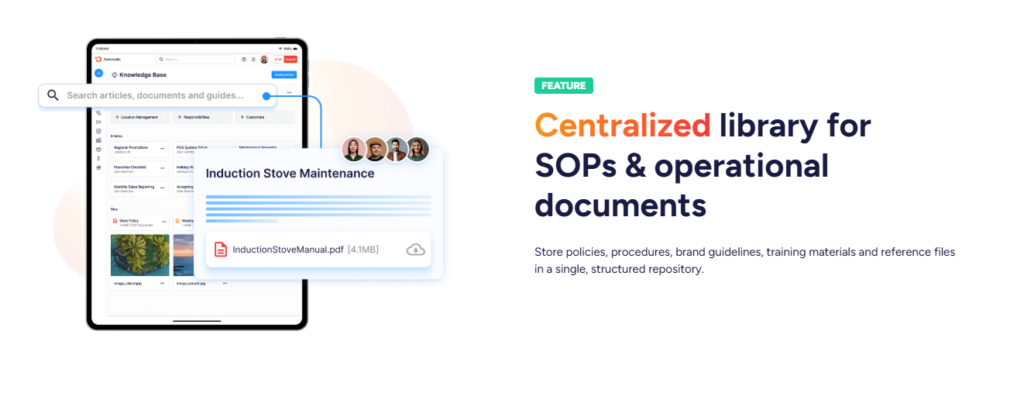
Do not leave SOPs as static documents. Break them into usable checklists, required fields, task flows, and verification steps.
A frontline team is much more likely to follow a task flow on a phone or shared tablet than search for the right document under pressure.
3. Standardize Training by Role and Location
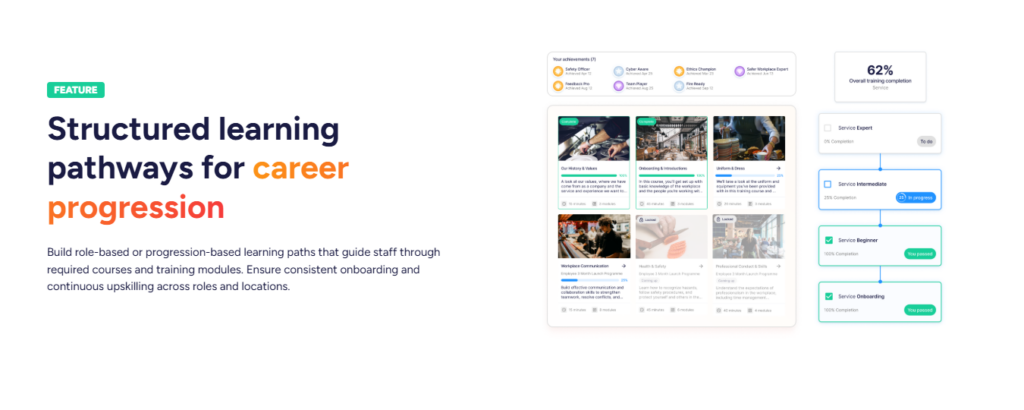
Train people on the exact version of the process they are expected to execute. Operandio’s LMS is designed for mobile-first frontline staff training with automated tracking and instant assignment across locations.
4. Track Adherence With Evidence
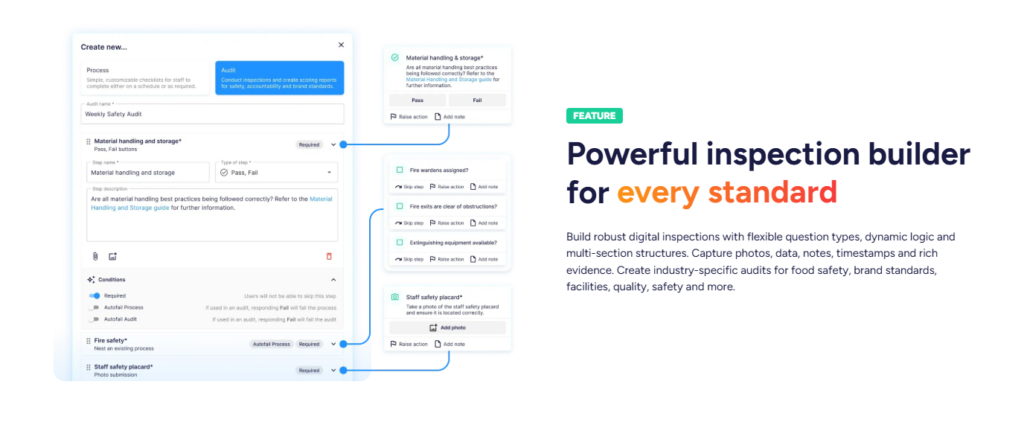
You need to know whether the task was done correctly, on time, and with proof where needed.
For restaurant operations, include timestamped records and photo verification that support inspections and internal review.
This is where quality management stops being a theory and becomes a measurable operating discipline.
5. Build Corrective Action Into the Process
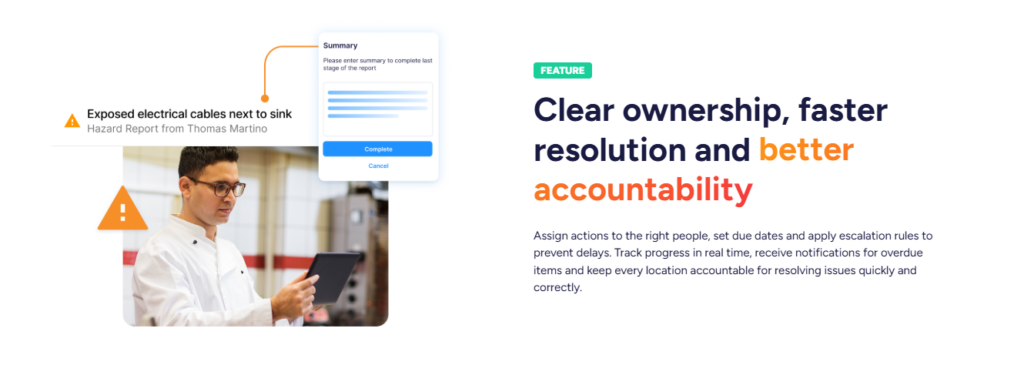
When something fails, the process should trigger follow-up, ownership, and verification. With corrective actions tied to audits, food safety, and compliance workflows.
That closed loop is one of the clearest signs of a serious quality system.
Pro Tip: Operandio gives multi-location operators a way to connect SOPs, frontline training, digital checklists, audits, food safety, corrective actions, and reporting in one place.
How to Choose the Right QMS to Improve Your Business Quality
If you run a multi-location business with frontline teams, you usually need more than that. You need a system that helps people execute the standard, not only read it.
1. For Multi-Location Operations That Need Audits, Checklists, and Follow-Up
If your main problem is execution drift across locations, look for a quality management system that connects audits, recurring tasks, and corrective actions in one workflow.
What to look for:
- Easy audit builder
- Recurring digital checklists
- Required evidence capture
- Corrective action workflows
- Cross-location dashboards
2. For Frontline Teams That Need Training Tied to the Job
Your system should connect training to the exact procedures staff must follow each day. That matters in industries with high turnover, location growth, or mixed experience levels.
- Role-based onboarding
- Course assignment by site or role
- Completion tracking
- SOP access during the shift
- Clear connection between training and execution
3. For Hospitality and Food-Heavy Businesses That Need Quality and Compliance Together
In restaurants, hospitality, and food-led operations, quality management often overlaps with food safety, records, and audit readiness.
What to look for:
- Food safety logs and monitoring
- Audit-ready records
- Alerts for missed checks
- Labeling and traceability support
- One system across operations and compliance
Note: Operandio’s digital food safety software includes digital HACCP checklists, automated temperature logs, prep labeling, corrective actions, and exportable records.
See How Operandio Helps Your Frontline Teams
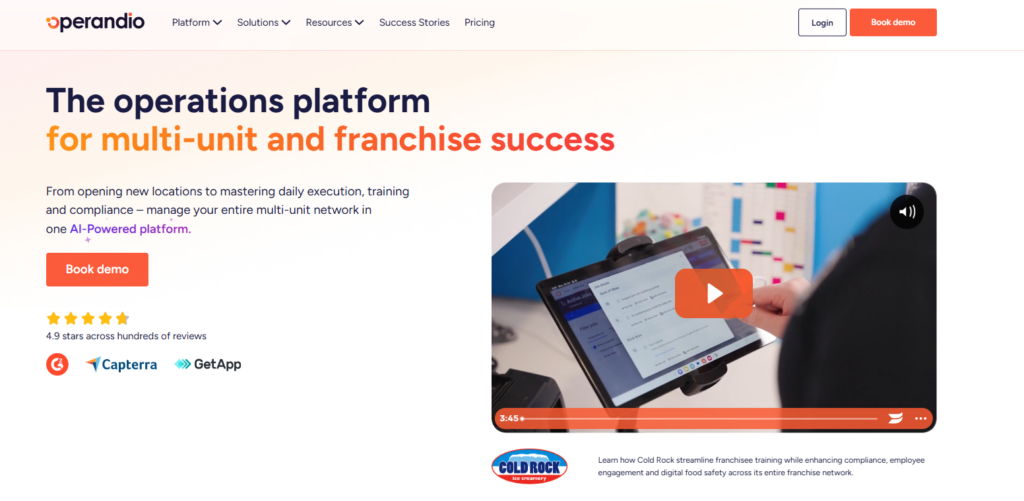
Operandio combines frontline training, digital SOP access, audits, checklists, corrective actions, food safety workflows, communication, and reporting inside one system for multi-unit operators.
Ready to improve quality across every location?
Book a demo and see how Operandio helps frontline teams follow standards, complete critical checks, and give your head office clear operational visibility.

FAQs
What Is Quality Management?
Quality management is the system a business uses to deliver consistent results, improve processes, meet requirements, and keep improving over time.
Why Is Quality Management Important for Multi-Location Teams?
Because multiple sites create more variation. Quality management helps standardize work, training, visibility, and follow-up across every location.
Is Quality Management Only for Manufacturing?
No. ISO says ISO 9001 is used across manufacturing, services, healthcare, education, construction, technology, and public administration.
Does Training Alone Solve Quality Problems?
No. Training helps, but quality improves faster when training, SOPs, checklists, audits, and corrective actions work together.
What Should a Good QMS Include?
A good QMS should include documented processes, clear expectations, training, records, audits, and corrective action, all tied to continual improvement.