- Platform
- Features
 Franchise & Multi-Unit ManagementCentralize oversight and streamline growth across your entire multi location network
 Learning ManagementTrain, verify, and reward your workforce with mobile-first education
 Operations ExecutionStreamlined operations ensuring brand standards, accountability and efficiency
 Asset ManagementOptimize equipment uptime through proactive maintenance and smart tracking
 Digital Food SafetyAutomate compliance and monitor quality with real-time digital precision
 Health & Safety Management (EHS)Mitigate workplace risks and streamline digital incident reporting and investigations
- Platform Essentials
 Powerful ReportingAlign leadership with role-based dashboards and deeper analytics
 Operandio IntelligenceAutomate content, analyze trends, and provide instant answers
 IntegrationsUnify your enterprise tech stack with real-time data
 IoT PlatformDetect anomalies and automate workflows with intelligent sensors
 Mobile & Shared Tablet AppsSecurely empower frontline teams with fast, offline-capable access
- Footer


 Not sure what you need?
Book in a call with the team
- Features
- Solutions
- By Industry
 RestaurantsQSR, fast food and multi-unit restaurants
 Hotels & ResortsHotels, resorts and extended stay hotels
 ChildcareEarly education, childcare, daycare and preschool
 EntertainmentTheme parks, family entertainment centers and play centers
 Fitness Centers & LeisureFitness centers, golf clubs, gyms and sports facilities
 RetailBig-box retailers, franchise stores and supermarkets
- By Use Case
- Operational ExcellenceStreamlined operations ensuring brand standards, accountability and efficiency
- Learning & DevelopmentTrain, verify, and reward your workforce with mobile-first education
- Franchise & Multi-Unit ManagementCentralize oversight and streamline growth across your entire multi location network
- Food Safety ComplianceAutomate compliance and monitor quality with real-time digital precision
- Asset Management & MaintenanceOptimize equipment uptime through proactive maintenance and smart tracking
- Health & Safety Management (EHS)Mitigate workplace risks and streamline digital incident reporting and investigations
- By Industry
- Resources
- Platform
- Features
- Franchise & Multi-Unit ManagementCentralize oversight and streamline growth across your entire multi location network
- Learning ManagementTrain, verify, and reward your workforce with mobile-first education
- Operations ExecutionStreamlined operations ensuring brand standards, accountability and efficiency
- Asset ManagementOptimize equipment uptime through proactive maintenance and smart tracking
- Digital Food SafetyAutomate compliance and monitor quality with real-time digital precision
- Health & Safety Management (EHS)Mitigate workplace risks and streamline digital incident reporting and investigations
- Platform Essentials
- Powerful ReportingAlign leadership with role-based dashboards and deeper analytics
- Operandio IntelligenceAutomate content, analyze trends, and provide instant answers
- IntegrationsUnify your enterprise tech stack with real-time data
- IoT PlatformDetect anomalies and automate workflows with intelligent sensors
- Mobile & Shared Tablet AppsSecurely empower frontline teams with fast, offline-capable access
- Footer
- Not sure what you need?
Book in a call with the team
- Features
- Solutions
- By Industry
- RestaurantsQSR, fast food and multi-unit restaurants
- Hotels & ResortsHotels, resorts and extended stay hotels
- ChildcareEarly education, childcare, daycare and preschool
- EntertainmentTheme parks, family entertainment centers and play centers
- Fitness Centers & LeisureFitness centers, golf clubs, gyms and sports facilities
- RetailBig-box retailers, franchise stores and supermarkets
- By Use Case
- Operational ExcellenceStreamlined operations ensuring brand standards, accountability and efficiency
- Learning & DevelopmentTrain, verify, and reward your workforce with mobile-first education
- Franchise & Multi-Unit ManagementCentralize oversight and streamline growth across your entire multi location network
- Food Safety ComplianceAutomate compliance and monitor quality with real-time digital precision
- Asset Management & MaintenanceOptimize equipment uptime through proactive maintenance and smart tracking
- Health & Safety Management (EHS)Mitigate workplace risks and streamline digital incident reporting and investigations
- By Industry
- Resources
Franchise Technology: Smarter Systems for Franchises (2026)
Key Takeaways
- Franchise technology covers the tools that keep every location running the same way, including training, audits, tasks, corrective actions, and reporting.
- The goal is operational control, not more software. The best tech stack reduces variability, shows what’s happening across locations, and closes the loop when something goes wrong.
- Mobile-first wins in real life. Frontline staff complete more training and daily routines when they can do it on a phone or shared tablet, not a back-office computer.
- 2026 franchising keeps growing, which raises the stakes. As networks add units and headcount, you need better visibility and proof of compliance across every site.
Franchise operations have been changing fast in the last couple of years. Digital ordering keeps pushing more volume through non-traditional channels. Loyalty has turned into a real growth lever, and AI now shows up inside everyday workflows. At the same time, the core problem hasn’t changed – as you add locations, consistency gets harder to maintain.
Most franchise networks struggle because their tools don’t connect to the way work actually happens. That gap creates drift, missed steps, and weak accountability across the network.
In this article, you’ll learn:
- What franchise technology includes today: The categories that matter most for multi-location consistency
- The rollout traps that kill adoption: Tool overload, unclear ownership, and check-the-box behavior
- What to prioritize first: Based on whether you’re opening new units, tightening compliance, or trying to improve standards across existing locations
- How modern platforms bring it together: Connected audits, tasks, corrective actions, training, communications, and reporting so the head office can see reality and fix issues faster
What Is Franchise Technology?
Franchise technology is the software and systems that help you run the same standards across every location. It gives head office visibility, helps locations stay consistent, and creates proof that the work actually happened.
Read our Complete Guide on Improving Franchise Operations in 2026.
Why Franchise Technology Matters
Scale multiplies risk. Every new location adds more shifts, more managers, and more chances for standards to drift. The right systems turn standards into daily routines you can track, verify, and improve, instead of hoping consistency happens on its own. Implementing these systems is a critical step for those who want to grow franchise business sustainable across multiple regions.
Standards Slip Faster Than You Think
When a key manager leaves, a new location opens, or the rush hits, process gaps show up immediately. Operators talk about this as the moment the cracks show, because the business relied on memory instead of a system.
Technology matters because it turns standards into visible workflows: assigned, due, completed, and verified.
Visibility Protects the Brand (and Reduces Risk)
Franchising grows steadily in 2026, and growth multiplies oversight needs. IFA’s 2026 outlook projects increases in output, establishments, employment, and franchise GDP, which means more locations to govern and more teams to keep aligned.
Without real visibility, most brands find issues late: after an audit fails, after customer complaints, or after a safety event.
Training Needs Proof, Not Good Intentions
Training in franchise systems often fails predictably; training was sloppy, the team got busy, and knowledge never turned into consistent behavior. Mobile delivery helps because it meets teams where work happens. One survey cited in a 2025 frontline training trends recap reports that 60% of frontline workers prefer accessing training on a mobile device.
Pro tip: Treat training as part of the operating system. If training sits in a silo, it doesn’t change behavior during a shift. If training connects to tasks, audits, and coaching, it sticks.
Core Franchise Technology Tools Franchisors Should Use
Franchisors need the right categories, implemented with clear standards and real accountability. Here are the core tool buckets that usually matter most.
Operations Execution (Tasks, Checklists, and Audits)
This is the backbone: the system that makes sure teams do the right work, at the right time, to the right standard.
What to look for:
- Digital inspections and audits: Photo evidence, scoring, and standardized templates by location or concept.
- Recurring tasks and shift checklists: Opening/closing, cleaning, food safety checks, brand standards, facility routines.
- Corrective actions: When an audit fails or a task gets missed, the system assigns follow-up with owners and due dates.
Important nuance: A checklist alone won’t save you. A Stanford/King County natural experiment on food safety enforcement found that checklists weren’t a magic fix by themselves and pointed to prioritization and simplification as the real drivers. Use tech to focus attention on what matters most, then coach it.
Operandio is an Operations Execution Platform for Frontline Teams that combines everything you need to run a successful franchise business in one place.
Training and Franchise LMS
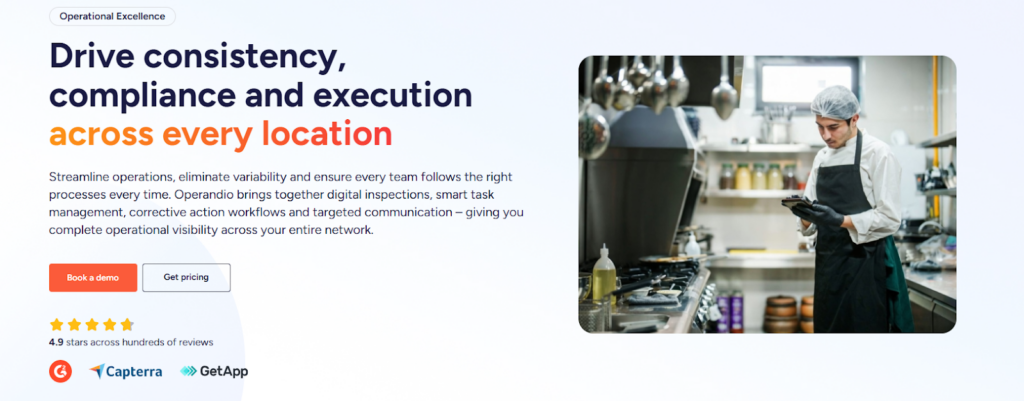
Franchise-ready training needs to roll out consistently, track completion by location, and validate job readiness.
What to look for:
- Mobile-first LMS delivery: Training that works on phones and shared tablets.
- Quizzes and short modules: To confirm learning, not “exposure.”
- Skills verification: Hands-on assessments where the role requires it.
- Version control for SOPs and training: So every location trains on the current standard.
Pro tip: If you want your teams to learn faster, stay compliant, and perform with confidence. You need a system with centralized training, assessments, and certifications.
Communications and Acknowledgements
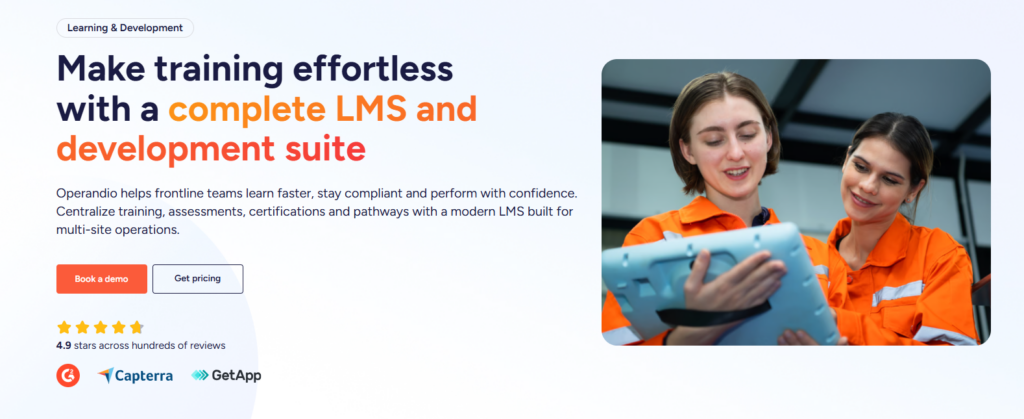
Franchises lose time and consistency when updates live in scattered channels. You want a system that delivers the right update to the right roles and locations, then confirms that people actually saw it.
What to look for:
- Targeted announcements: By role, region, and location.
- Read receipts or acknowledgements: For critical changes, policy updates, and compliance notices.
Reporting, Dashboards, and BI
If leadership can’t see what’s happening, they can’t manage it. Reporting should show performance by location and highlight exceptions automatically.
What to look for:
- Cross-location dashboards: Audit scores, overdue tasks, training completion, incident trends.
- Exports and reporting packs: For franchise reviews, compliance, and leadership rhythms.
- BI integrations: Connecting operational data to Power BI/Tableau when needed.
With Operandio, you can track performance across every brand, location, and team. View real-time dashboards, role-based insights and BI-connected analytics.

Workforce Systems That Support Frontline Reality
Scheduling, time clocks, and workforce tooling matter, but they should support execution instead of becoming another disconnected tool.
What to look for:
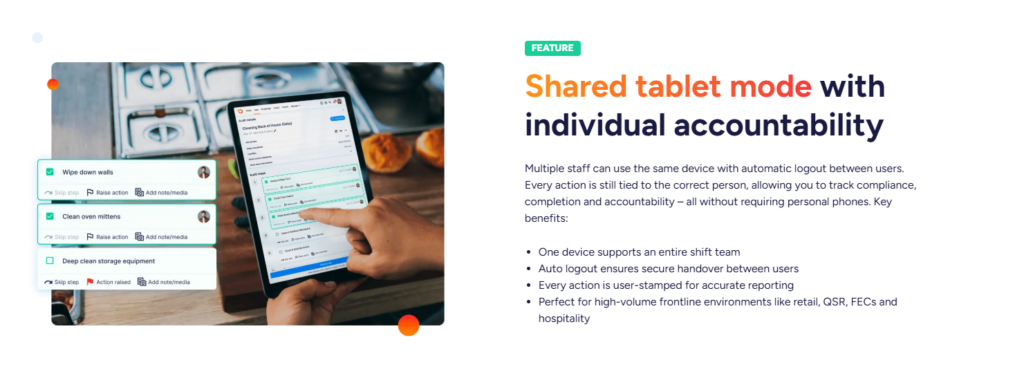
- Shared-device workflows: Kiosks and tablets for teams without individual logins.
- Simple onboarding access: New hires should get working access quickly without IT drama. One common failure mode in growing orgs is assuming every app supports SSO/provisioning cleanly.
You can streamline multi-unit operations with the Operandio mobile app and use shared tablet mode with individual accountability.
Food Safety and Condition Monitoring (When Relevant)
For restaurants, hotels, healthcare kitchens, and regulated environments, sensors and digital food safety systems reduce risk and manual logging.
What to look for:
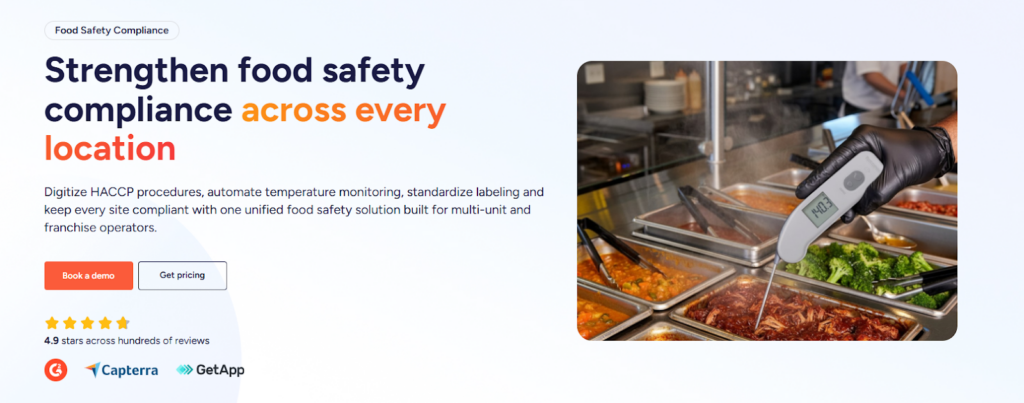
- Automated temperature monitoring: Logged readings, alerts, and audit-ready history.
- IoT monitoring for critical conditions: Temperature, humidity, leaks, door status, equipment conditions.
Did you know: Review platforms often highlight hours saved when teams replace paper logs with digital checklists and real-time dashboards, especially for compliance-heavy workflows.
👉Now you can digitize HACCP procedures, automate temperature monitoring, standardize labeling, and keep every site compliant with Operandio. Just book a demo and see the impact.
Common Challenges in Adopting Franchise Technology
Most franchise tech rollouts fail because the system doesn’t fit the reality of frontline work, or because the rollout adds complexity instead of removing it. If teams have to jump between tools, duplicate updates, or guess what matters most, adoption drops and standards slip again.
This section covers the most common pitfalls.
Tool Sprawl Creates “Compliance Theater”
When teams juggle too many apps, they start doing the minimum to look compliant: checking boxes late, duplicating entries, or skipping evidence. It’s not laziness. It’s friction.
You fix this by consolidating where it matters: execution + training + proof + reporting in fewer systems.
Franchisee Buy-In Breaks When Tech Feels Like Surveillance
If franchisees think tech only exists to “catch them,” adoption stalls. The strongest rollouts position technology as a support system:
- Clear standards: Less ambiguity
- Faster help: Issues routed and tracked
- Less admin work: Fewer spreadsheets and paper logs
Data Fragmentation Kills Decision-Making
When audits live in one tool, training in another, and corrective actions in email, leadership can’t answer basic questions quickly:
- Which locations keep failing the same audit areas?
- Which managers need coaching?
- Did training completion actually change behavior?
You need connected workflows and a single view of performance.
Franchise Technology Solutions for Operational Control
Operational control means you can run standards across every location and make sure they are followed. A well-built franchise operating system sets clear expectations, ensures locations complete the work, lets managers verify it, and tracks fixes until they’re done.
Here’s how to make that happen:
Unify Execution, Evidence, and Follow-Through
Operational control comes from closing loops:
- A standard exists
- The team executes it
- The system verifies it
- Issues trigger follow-up
- Reporting shows what changed
Platforms designed for franchise multi-unit execution do this by combining inspections/audits, task management, corrective actions, and frontline communications in one place.
👉If you want one platform to standardize daily execution, digitize audits, automate tasks, and track follow-through across every location, book a demo with Operandio.
Tie Training to the Work That Happens on Shift
Mobile access improves completion, but “completion” isn’t the goal. Job readiness is. That’s why modern franchise training software systems pair:
- Microlearning and quizzes
- Role-based learning paths
- Skills verification
- Training visibility by location
This matches how frontline teams actually learn and perform.
Build Leader Visibility With Dashboards That Drive Action
Reporting should not exist as a monthly PDF that arrives too late. It should drive weekly coaching and fast intervention:
- Exceptions and overdue items
- Trends by location/region
- Comparison views across concepts
- Exports for operational reviews
That’s how you keep standards consistent as the network grows.
How Technological Innovation Is Shaping the Future of Franchising
Franchise tech keeps moving in the same direction: less manual work, faster rollouts, clearer proof, and fewer surprises. The biggest shift in 2026 is that “innovation” no longer sits in a side project. It shows up inside the daily routines that protect the brand across every location.
AI is Moving to the Mainstream
AI adoption started in franchise development, and it’s accelerating fast. In the 2026 Annual Franchise Development Report, 52% of respondents said they use AI in some capacity for franchise development, up from 23% in 2025.
In practice, development teams use AI to move faster on the work that already exists:
- Territory evaluation and prioritization: Sorting markets based on internal performance, demographics, competition, and sales potential.
- Lead and candidate scoring: Ranking prospects so teams spend time on better-fit candidates.
- Content and follow-up speed: Drafting outreach, responses, and summaries faster, so reps stay consistent.
The IFA also points to AI enabling predictive insights and ROI analysis in development workflows, which pushes franchisors toward tighter, more data-driven decisions about where to focus effort.
Reuters reported McDonald’s uses AI to verify orders at hundreds of restaurants, with an expectation to expand that capability broadly by 2027. The company’s Google Cloud partnership describes the same theme – using edge computing to spot equipment performance issues, reduce disruptions, and remove complexity for crews.
What AI tends to do well for multi-location operations right now:
- Exception handling: Flagging patterns like repeated misses on the same audit items.
- Faster manager workflows: Summarizing issues, drafting action plans, and speeding up reporting.
- Early warning signals: Surfacing issues before they turn into failed inspections, bad reviews, or spoiled inventory.
This is where platforms built for multi-unit operations gain an edge. When audits, tasks, corrective actions, training, and communications live in one system, AI has cleaner inputs to work with, and leaders get outputs they can act on.
IoT Turns Compliance From Manual Logging Into Automated Proof
Sensors and automated monitoring change the nature of compliance. That matters most in regulated environments, especially hospitality.
Temperature monitoring provides a clear example. Operandio’s temperature monitoring describes real-time alerts via SMS, email, or in-app notifications when conditions move out of range, plus automated corrective actions and escalation workflows.
You also see this in broader temperature and humidity monitoring use cases, like alerts for cooler warming, freezer failure, a walk-in door left open, and cloud-based logs that support inspection-ready records.
Teams use IoT for more than food safety:
- Equipment monitoring: Detect issues earlier and reduce downtime.
- Facility risk: Track conditions that create safety or quality problems.
- Evidence: Keep records that don’t depend on handwriting or memory.
Digital Ordering and Self-Service Become an Ops Lever
Digital ordering keeps growing, and it changes how franchises run the floor. When a meaningful share of orders comes through digital channels, you need tighter menu governance, better prep workflows, and clearer handoff standards so speed does not destroy quality. QSR reporting highlights how large operators now see digital orders as a major share of the business, which signals that digital has moved into core operations.
Kiosks follow the same pattern. The newest wave ties self-service to upsell logic, personalization, and operational insights, which makes it useful for both revenue and execution control.
Loyalty and Personalization Turn Into a Growth System
Loyalty programs now drive behavior, not just discounts. Recent reporting shows Gen Z leading restaurant loyalty sign-ups and pushing brands toward better mobile experiences, faster rewards, and personalization that feels immediate.
Operators also push personalization engines that use purchase history to recommend items and offers. That shifts marketing tech into the core franchise stack because it affects menu performance, staffing, and demand patterns.
Sensors and Automated Monitoring Replace Manual Logs
Multi-location brands keep moving away from handwritten logs. They want continuous monitoring, instant alerts, and audit-ready records.
That shows up most clearly in temperature and humidity monitoring. Operandio offers wireless sensors that automatically log readings and remove manual checks while keeping records secure and inspection-ready.
Executive Reporting Gets Connected to BI
Franchise ops data becomes more valuable when leadership can combine it with sales, HR, and finance. BI integrations let teams pull audit performance, overdue actions, and training completion into the same dashboards as revenue and labor metrics.
Operandio supports connecting operational data to Power BI and Tableau so leaders can build executive reporting that blends ops with the rest of the business.
Access Control and Identity Become Part of Scale
As networks grow, onboarding and offboarding across tools becomes a risk area. Franchises increasingly expect cleaner identity management so the right people get access fast, and the wrong people lose access immediately. SSO also reduces login friction for shared-device environments.
What This Means for Franchisors in 2026
- Standardize the workflow first: AI and sensors amplify whatever process already exists.
- Consolidate where it counts: Fewer systems create clearer data and higher adoption.
- Prioritize proof: Audits, follow-through, and logs matter when you need answers fast.
- Keep humans in control: Teams use AI to speed up decisions, not to hand decisions away.
- Roll out in real operations: Pilot in a region, fix friction, expand with a playbook.
Operandio AI Capabilities Built for Multi-Unit Teams
Operandio uses embedded AI to remove busywork from franchise operations, so standards roll out faster and teams get answers without chasing managers. It focuses on the work that actually breaks in multi-location businesses: SOP drift, inconsistent training, missed follow-ups, and slow visibility.
AI-Powered Search Across Your Knowledge Base
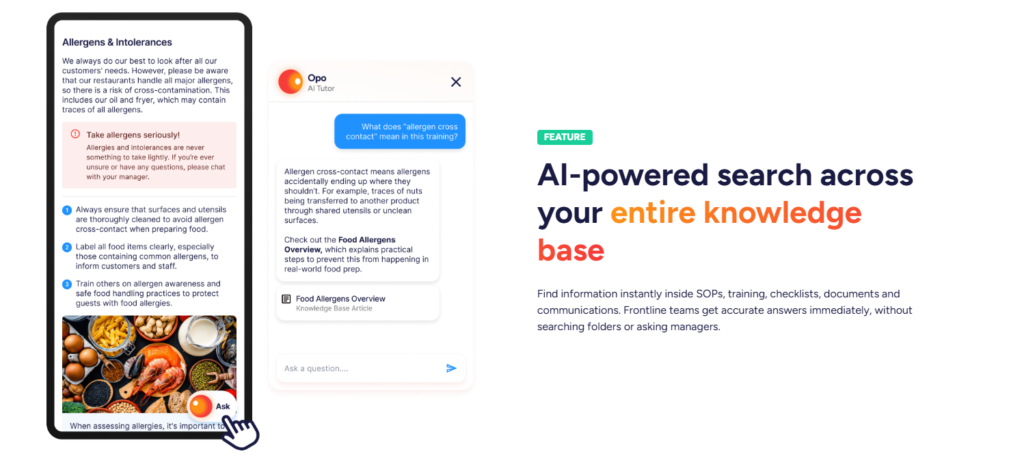
Frontline teams can ask a question and get an instant answer pulled from your SOPs, training, checklists, documents, and internal communications. This matters when a shift hits a problem and nobody has time to dig through folders or message a manager.
AI Content Generation for SOPs, Checklists, and Training
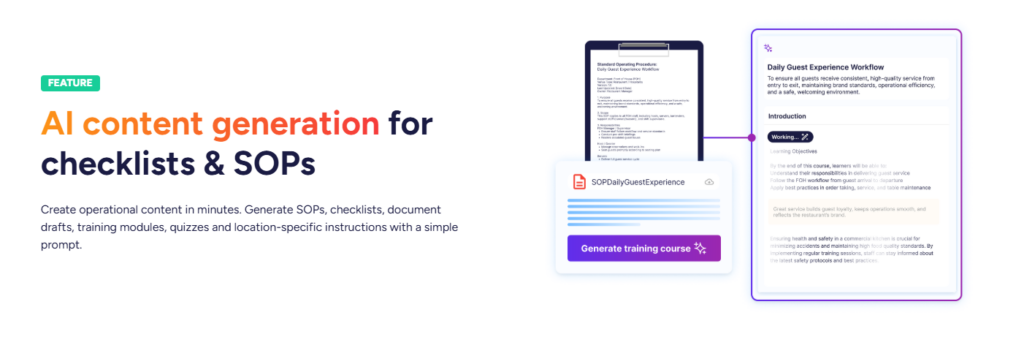
Operandio lets you generate operational content quickly using prompts, including SOPs, checklists, document drafts, training modules, quizzes, and location-specific instructions. Use this when you need to roll out a standard fast, like a new process, a compliance update, or a seasonal menu change.
AI-Enhanced Training Builder That Turns Documents Into Courses
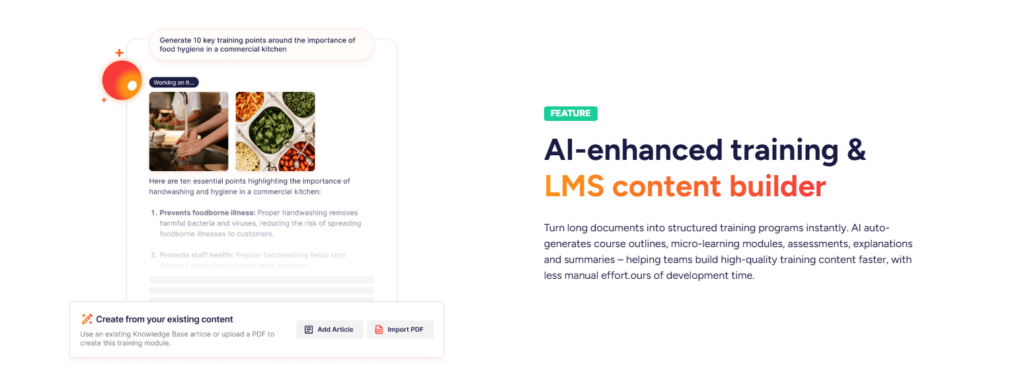
You can turn long policies and SOPs into structured training programs, microlearning modules, assessments, explanations, and summaries.
Operandio also supports fast localization for diverse teams, including one-click AI translation for training content.
AI Automation for Tasks and Corrective Actions
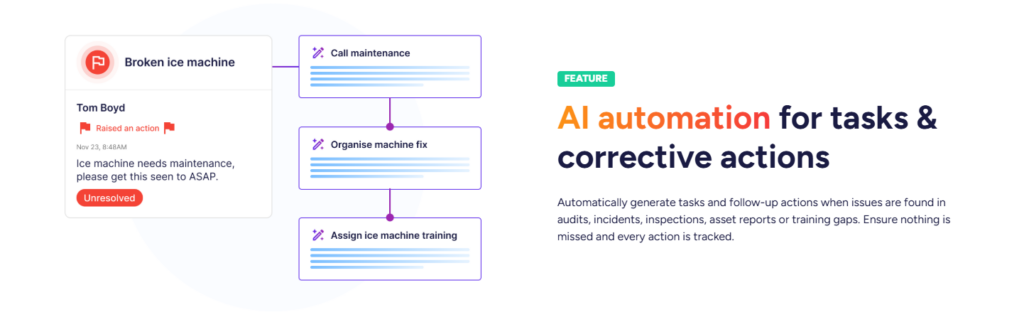
When an audit, inspection, incident report, asset issue, or training gap flags a problem, Operandio can auto-generate tasks and follow-up actions so nothing slips through. The platform tracks those actions to completion and gives proof when you need it.
AI Insights That Surface Trends Across Locations
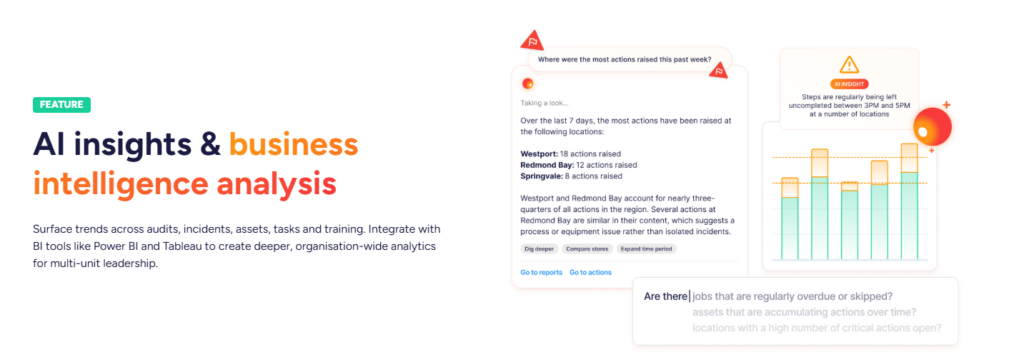
Operandio’s AI can surface trends across audits, incidents, assets, tasks, and training. It also supports deeper analytics through BI integrations like Power BI and Tableau, which helps leadership spot repeat failure points and target coaching where it will change outcomes.
What This Means for Your Operation
Operandio AI helps you move faster in the moments that usually create inconsistency:
- Standard changes: You generate updated SOPs, checklists, and training without rebuilding from scratch.
- Shift-level problem solving: Staff get answers instantly, without escalating every question.
- Follow-through: The system creates corrective actions automatically when something fails, so issues don’t die in a spreadsheet.
Operandio is built to keep AI inside the workflows your network already relies on.
Build a Smart Franchise System With Operandio
Operandio gives franchise and multi-unit operators a single system to run standards at scale and strengthen franchise brand management across every location. It replaces scattered checklists, audits, training docs, and follow-ups with connected workflows that teams actually use on shift.
You get consistent execution across every location, clear evidence of compliance, and real-time reporting that shows where standards slip before it becomes a bigger problem.
👉If you want fewer surprises and tighter control across the network, book a demo and see how Operandio supports audits, tasks, corrective actions, training, and frontline communication in one platform.