
- Platform
- Features
 Franchise & Multi-Unit ManagementCentralize oversight and streamline growth across your entire multi location network
 Learning ManagementTrain, verify, and reward your workforce with mobile-first education
 Operations ExecutionStreamlined operations ensuring brand standards, accountability and efficiency
 Asset ManagementOptimize equipment uptime through proactive maintenance and smart tracking
 Digital Food SafetyAutomate compliance and monitor quality with real-time digital precision
 Health & Safety Management (EHS)Mitigate workplace risks and streamline digital incident reporting and investigations
- Platform Essentials
 Powerful ReportingAlign leadership with role-based dashboards and deeper analytics
 Operandio IntelligenceAutomate content, analyze trends, and provide instant answers
 IntegrationsUnify your enterprise tech stack with real-time data
 IoT PlatformDetect anomalies and automate workflows with intelligent sensors
 Mobile & Shared Tablet AppsSecurely empower frontline teams with fast, offline-capable access
- Footer


 Not sure what you need?
Book in a call with the team
- Features
- Solutions
- By Industry
 RestaurantsQSR, fast food and multi-unit restaurants
 Hotels & ResortsHotels, resorts and extended stay hotels
 ChildcareEarly education, childcare, daycare and preschool
 EntertainmentTheme parks, family entertainment centers and play centers
 Fitness Centers & LeisureFitness centers, golf clubs, gyms and sports facilities
 RetailBig-box retailers, franchise stores and supermarkets
- By Use Case
- Operational ExcellenceStreamlined operations ensuring brand standards, accountability and efficiency
- Learning & DevelopmentTrain, verify, and reward your workforce with mobile-first education
- Franchise & Multi-Unit ManagementCentralize oversight and streamline growth across your entire multi location network
- Food Safety ComplianceAutomate compliance and monitor quality with real-time digital precision
- Asset Management & MaintenanceOptimize equipment uptime through proactive maintenance and smart tracking
- Health & Safety Management (EHS)Mitigate workplace risks and streamline digital incident reporting and investigations
- By Industry
- Resources
- Platform
- Features
- Franchise & Multi-Unit ManagementCentralize oversight and streamline growth across your entire multi location network
- Learning ManagementTrain, verify, and reward your workforce with mobile-first education
- Operations ExecutionStreamlined operations ensuring brand standards, accountability and efficiency
- Asset ManagementOptimize equipment uptime through proactive maintenance and smart tracking
- Digital Food SafetyAutomate compliance and monitor quality with real-time digital precision
- Health & Safety Management (EHS)Mitigate workplace risks and streamline digital incident reporting and investigations
- Platform Essentials
- Powerful ReportingAlign leadership with role-based dashboards and deeper analytics
- Operandio IntelligenceAutomate content, analyze trends, and provide instant answers
- IntegrationsUnify your enterprise tech stack with real-time data
- IoT PlatformDetect anomalies and automate workflows with intelligent sensors
- Mobile & Shared Tablet AppsSecurely empower frontline teams with fast, offline-capable access
- Footer
- Not sure what you need?
Book in a call with the team
- Features
- Solutions
- By Industry
- RestaurantsQSR, fast food and multi-unit restaurants
- Hotels & ResortsHotels, resorts and extended stay hotels
- ChildcareEarly education, childcare, daycare and preschool
- EntertainmentTheme parks, family entertainment centers and play centers
- Fitness Centers & LeisureFitness centers, golf clubs, gyms and sports facilities
- RetailBig-box retailers, franchise stores and supermarkets
- By Use Case
- Operational ExcellenceStreamlined operations ensuring brand standards, accountability and efficiency
- Learning & DevelopmentTrain, verify, and reward your workforce with mobile-first education
- Franchise & Multi-Unit ManagementCentralize oversight and streamline growth across your entire multi location network
- Food Safety ComplianceAutomate compliance and monitor quality with real-time digital precision
- Asset Management & MaintenanceOptimize equipment uptime through proactive maintenance and smart tracking
- Health & Safety Management (EHS)Mitigate workplace risks and streamline digital incident reporting and investigations
- By Industry
- Resources
Digital Operations Management: Complete 2026 Guide
Key Takeaways
- Operations leaders need to move faster with better visibility. PwC found that 82% struggle to balance short-term needs with long-term change, and 92% said their operations tech investments have not fully delivered expected results, often because of integration complexity and data issues.
- Strong digital operations solutions connect standards to real work: recurring checklists, inspections, incident reporting, frontline training, acknowledgments, dashboards, and alerts.
- The best rollout starts with high-risk workflows, assigns clear ownership, ties training to live work, and measures completion, exceptions, and follow-through by site or region. LinkedIn found that 49% of L&D professionals say executives worry employees do not have the right skills to execute business strategy.
This guide breaks down what digital ops is, why it matters, what strong systems include, where rollouts fail, and how multi-location businesses can implement it without adding more chaos.
What Is Digital Operations Management?
Digital operations management is the system a business uses to run operational work through digital operations tools instead of manual, disconnected processes.
That includes:
- Assigning work
- Checking completion
- Capturing evidence
- Training staff
- Sharing updates
- Managing incidents
- Reporting on results from one connected setup
In plain terms, if someone asks what digital operations is or what digital ops means, the answer is simple: it is the shift from reactive, manual management to structured, trackable execution.
For multi-location and franchise businesses, digital operations services usually go beyond software setup.
They often include:
- Process design
- Mobile workflows
- Permissions by role
- Implementation support
- Staff training
- Reporting frameworks so standards reach every location
Why Is Digital Operations Management Important?
Digital operations management matters because manual operations do not scale well. As locations grow, managers spend more time chasing updates, fixing misses, and reacting late.
It Improves Visibility
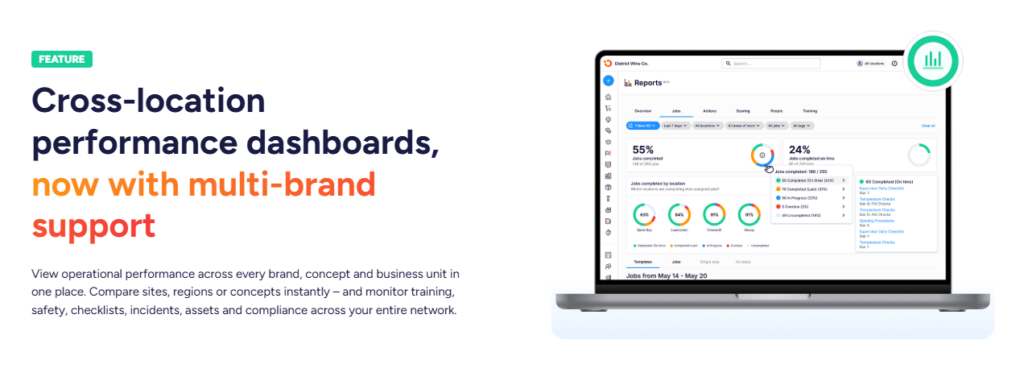
The first problem in most operations teams is blind spots. Leaders often cannot see overdue tasks, repeat failures, missed training, incident patterns, or which locations need help until the damage is already done. PwC reports that digital tools improved visibility into end-to-end operations in pharma and life sciences, and 96% of tech and telecom respondents said digital tools improved visibility into supply chain costs.
With integrated reporting, your head office will always be able to track across all locations from a single dashboard. Implementing a robust franchise intelligence system ensures that this multi-unit data turns into actionable insight rather than just numbers on a screen.
It Helps Teams Adapt Faster
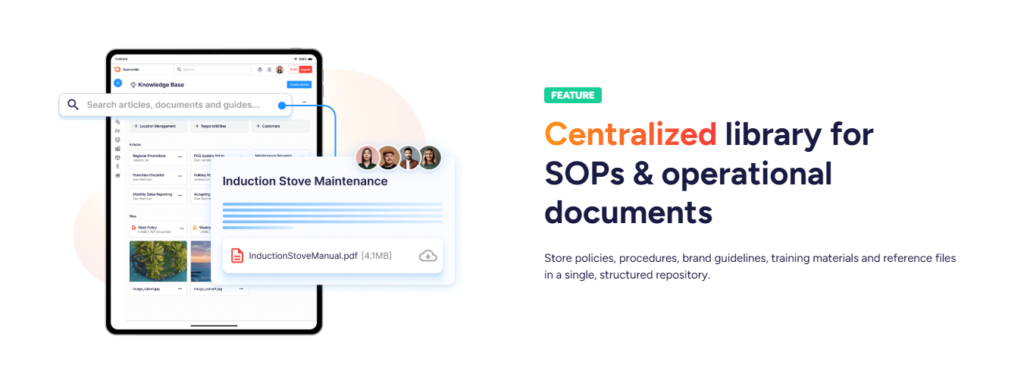
Operations leaders are under pressure to solve today’s problems while changing how the business runs. Digital workflows help because you can update standards once, push them out quickly, and verify who completed them instead of hoping every site manager got the message.
With a central document library, this becomes even easier.
It Makes Productivity Less Fragile
Productivity drops when employees lack clarity, support, and follow-through. Gallup says disengagement cost the world economy $438 billion in lost productivity in 2024. LinkedIn also found that only 15% of employees said their manager helped them build a career plan in the past six months. Digital operations management helps by turning expectations into visible routines, linking them to training, and giving managers a simpler system to coach from.
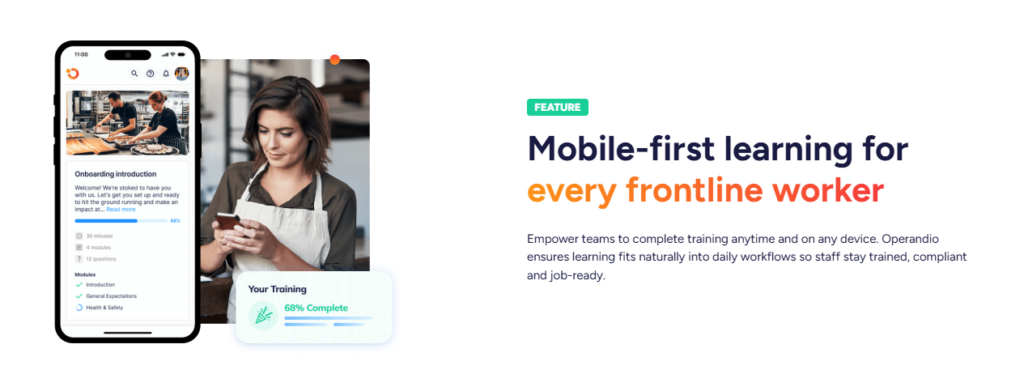
A mobile-first LMS takes your training even further, and you can deliver training with a centralized learning hub, standardize onboarding, streamline course delivery, and track completion across every location in real time.
Key Components and Examples of Digital Operations Management
Strong digital operations solutions connect the daily work, the standards behind it, and the follow-up after something goes wrong.
| Component | What it does | Example |
| Tasks and checklists | Schedules recurring work and tracks completion | Opening, closing, cleaning, or stock checks |
| Audits and corrective actions | Finds gaps and assigns follow-up work | Brand audit creates a corrective action for a failed item |
| Training and SOPs | Gives staff the right guidance at the right time | New starter completes a role-based food safety module |
| Communication and acknowledgments | Pushes updates and confirms teams saw them | Site teams acknowledge a new allergen procedure |
| Reporting and alerts | Shows trends, exceptions, and real-time issues | Fridge temperature alert creates a task for the duty manager |
Tasks, Checklists, and Workflow Automation
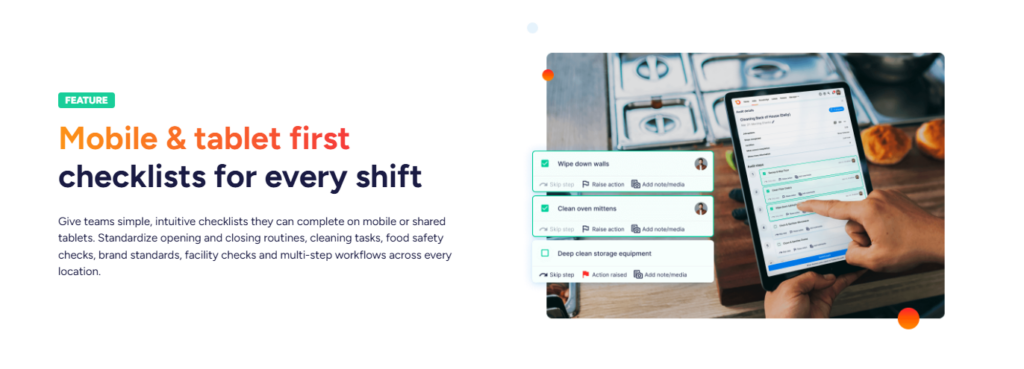
This is usually the foundation. Teams need recurring work assigned by role, shift, or location with clear deadlines and proof of completion. In restaurants, that could mean opening checks, food prep checks, handover routines, and end-of-day close. In healthcare or childcare, it could mean compliance checks, room readiness, or incident logs.
The real value comes when those workflows are standardized across every site. So you can automate recurring tasks and ensure every team and location follows the right process at the right time.
Audits, Incidents, and Corrective Actions
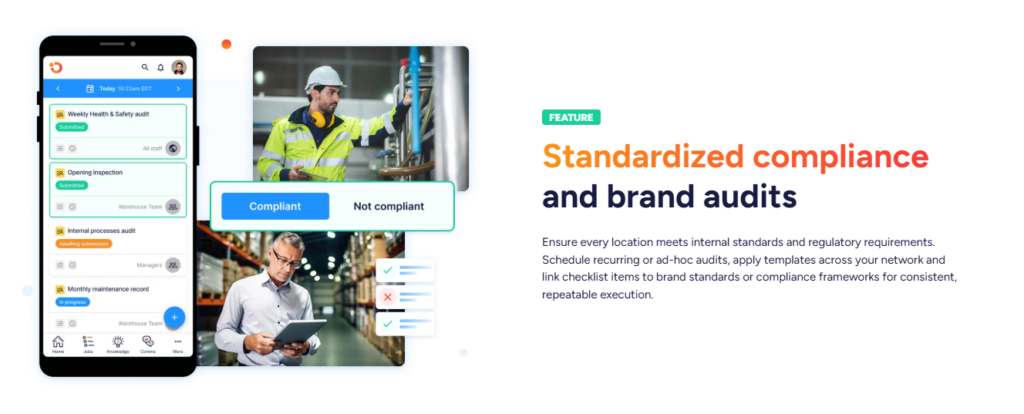
Digital audits help businesses move from vague feedback to clear evidence. Managers can complete inspections on mobile, capture photos, flag failures, and assign corrective actions immediately. That matters in hospitality, retail, healthcare, gyms, and other regulated settings where standards must be verified, not assumed.
This is also where digital operations management starts to protect margins. Small misses stop turning into repeat failures.
Training, SOPs, and Communication
Strong digital ops keeps SOPs, training, assessments, and communication close to the work itself.
That is especially important for franchise and multi-unit businesses with frequent staff turnover. New employees need short, role-specific training. Existing employees need refreshers. Managers need a fast way to confirm who completed what and who still needs support.
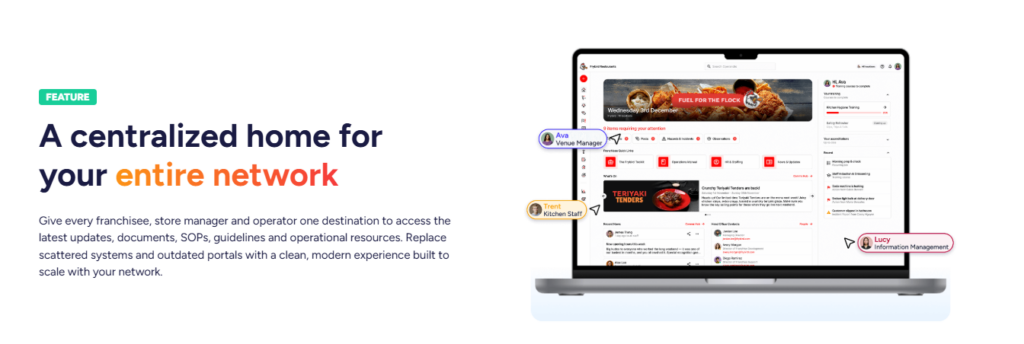
A central command center supports modern teams in the best way. Here you can share announcements, resources, quick links, and operational updates in one place accessible to every franchisee, manager, and frontline team.
Reporting, Analytics, and Connected Devices
Once the operational data is in one place, leaders can stop guessing. They can see which tasks are missed most often, which audits fail by region, how fast corrective actions close, which teams have overdue training, and where service or compliance issues keep repeating.
In food-led operations, connected devices can take this further with temperature monitoring, automated alerts, and faster escalation when something drifts out of range.
Pro Tip: Do not digitize a messy process and expect software to fix it. Clean up the owners, deadlines, and decision points first.
Challenges of Implementing Strong Digital Operations
Most digital operations projects do not fail because the idea is wrong. They fail because the rollout is fragmented.
Too Many Tools and Weak Integration
PwC found that 92% of leaders said their operations tech investments have not fully delivered expected results. The top reasons were integration complexity at 47% and data issues at 44%. That is what happens when tasks live in one app, audits in another, training in a third, and reporting in a fourth. Teams do more clicking, not better work.
Weak Frontline Adoption
Buying software is the easy part. Getting frontline teams and site managers to use it consistently is harder. Hiring skilled talent and targeted training are still the most common ways companies build a digital-ready workforce.
Workplace observations and in-person assessments can help evaluate real-world performance through structured observations and practical skill assessments.
No Clear Ownership or Measurement
Digital operations projects stall when nobody owns the rollout or the scorecard. Deloitte says the main headwinds include leadership buy-in, resource constraints, change management and adoption, and value tracking. It also found that 51% of respondents said operations leaders own these transformation efforts, which is exactly where ownership should sit. This work has to stay tied to daily execution, not drift into a side project.
Expert Insight: The pattern across PwC, Deloitte, LinkedIn, and McKinsey is consistent. The technology is rarely the whole problem. Integration, skills, manager support, and measurement decide whether digital operations actually improve performance.
How to Implement Digital Operations Management
The best rollouts are practical. They start small, focus on the highest-risk routines, and expand once teams trust the system.
Start With Your Highest-Risk Workflows
Do not begin by digitizing everything. Start with the work that creates the biggest operational risk or waste: opening and closing tasks, safety checks, incident reporting, compliance audits, equipment issues, or onboarding. That gives you a tighter rollout, faster feedback, and a clearer before-and-after result.
Choose One Platform That Connects the Work
For multi-location and franchise businesses, the biggest win comes from consolidating the operating system, not adding another point solution. Operandio is built for that. It connects audits and inspections, recurring tasks and checklists, corrective actions, employee communication, SOPs, document control, built-in LMS, reporting, and food safety tools such as temperature monitoring and labeling.
That matters because digital operations management should do more than store procedures. It should make standards show up in live work across every site.
Tie Training to the Work, Not to a Separate Silo
Training only works when it changes behavior on shift. LinkedIn found that 49% of learning leaders see a skills crisis, and McKinsey says frontline tech investments need matching investment in human capabilities. In practice, that means role-based onboarding, short mobile training, assessments, refreshers after failed audits, and SOP access inside the workflows employees already use.
Measure Execution, Not Just Activity
The goal is not more completed clicks. The goal is better execution. Track task completion rates, overdue items, failed audit trends, corrective action closure times, training completion by role, acknowledgment rates, incident volume, and location-to-location variance.
Future Trends in Digital Operations Management
Digital operations is moving from digitization to intelligence. The next phase is faster decision-making, better data flows, and tighter links between work, training, and automation.
AI Moves Into Everyday Operational Work
AI in operations has moved past theory. Microsoft reports that 82% of leaders say this is a pivotal year to rethink strategy and operations. The practical shift is not magic automation. It is better prioritization, faster analysis, smarter alerts, and less admin work for managers.
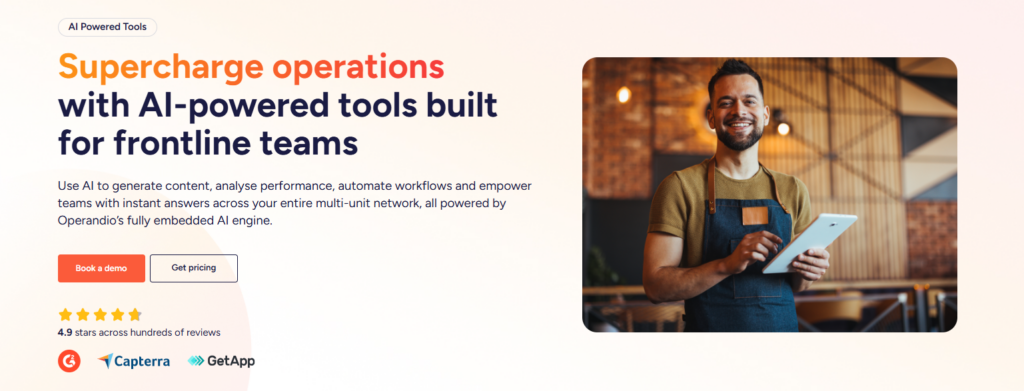
Companies use AI-powered tools to generate content, analyse performance, automate workflows, and empower teams with instant answers.
Connected Devices Feed Real-Time Operational Data
Digital operations management is moving beyond forms and dashboards. Only 33% of respondents use IoT-enabled supply chain capabilities, yet 52% of those users say they are very effective in creating value. In hospitality and food-led businesses, that points to more live temperature monitoring, automated alerts, and tighter links between sensors and corrective action workflows.
Skills and Manager Enablement Become Part of the System
The next wave of digital ops will connect process management with learning more tightly. Organizations with mature career development programs are more confident in profitability, talent attraction, talent retention, and AI adoption. The companies that win here will not treat LMS, SOPs, and daily execution as separate systems. They will run them as one operating model.
Take Control of Your Operations With Operandio
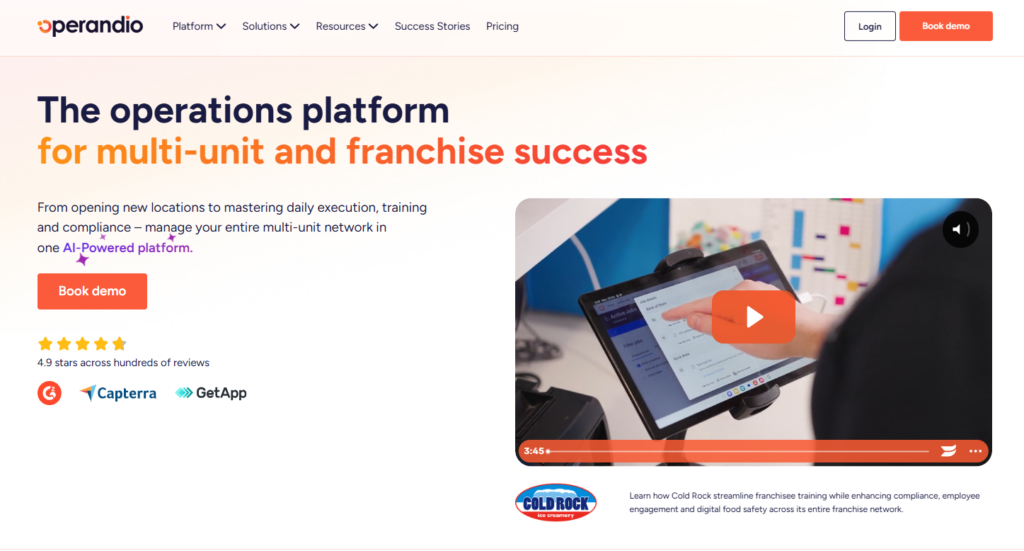
If you run a multi-location or franchise business, digital operations management works best when operations, training, compliance, communication, and reporting are connected.
Operandio helps teams standardize work across every site with audits, checklists, corrective actions, SOPs, frontline staff training, communication, reporting, and food safety tools built for real operational use.
👉Book a demo to see how it can help you roll out standards faster, track adoption clearly, and get real visibility across your network.
