





Key Takeaways
- An EcoSure inspection is a third-party assessment conducted by Ecolab’s EcoSure division for brands and organizations that contract an EcoSure program. It is separate from a government health inspection, and EcoSure assessors do not issue regulatory fines or closure orders.
- Food safety assessments can cover employee hygiene, time and temperature control, cross-contamination, allergens, sanitation, equipment, pest control, documentation, and how employees follow procedures during everyday operations.
- There is no universal EcoSure passing score. Scoring, violation tiers, visit frequency, and corrective-action requirements are customized by program. One published Hilton program, for example, starts at 100 points and considers 83 or higher passing.
- A poor result typically triggers corrective action under the organization’s EcoSure program. Teams can prepare by running mock audits, maintaining accurate food-safety records, training employees, and correcting recurring issues before the next assessment.
An EcoSure inspection is a third-party assessment conducted by Ecolab’s EcoSure division for organizations that contract an EcoSure brand-protection program. It is separate from a government health inspection, and EcoSure assessors do not have regulatory enforcement authority.
For restaurant teams, however, the assessment can still expose serious gaps in day-to-day food safety and trigger corrective action under the brand’s program.
This guide explains what EcoSure assessors check, how EcoSure differs from a health department inspection, how scoring and violations can work, what happens after a poor result, and how to prepare using a practical inspection checklist.
What Is an EcoSure Inspection?
An EcoSure inspection is an on-site third-party assessment carried out by Ecolab’s EcoSure division as part of a contracted brand-protection program.
EcoSure works with brands and other organizations to define their program priorities, assessment criteria, scoring, reporting, and follow-up. Food safety programs are built around Food Code principles, HACCP, and industry practices, but an assessment can also cover areas such as public health, brand standards, product quality, workplace safety, and guest experience.
That means there is no single EcoSure inspection that applies identically to every restaurant brand.
EcoSure also does not inspect every food business. A location receives an EcoSure assessment when its brand, franchisor, institution, or operator participates in an EcoSure program. An independent restaurant without such a program would instead be subject to the inspections required by its regulatory jurisdiction.
The distinction from a government inspection is important:
| EcoSure Inspection | Health Department Inspection | |
|---|---|---|
| Who conducts it | EcoSure field advisors from Ecolab | Inspectors from the relevant state or local regulatory authority |
| Who commissions and pays for it | The participating brand, franchisor, institution, or operator | Conducted through the applicable government inspection program |
| Purpose | Assess food safety and other agreed brand or operational standards and identify improvement opportunities | Verify compliance with applicable food-safety laws and regulations |
| Advance notice | Depends on the individual EcoSure program; assessments may be scheduled or unannounced | Often unannounced, depending on the jurisdiction and inspection type |
| Frequency | Set by the organization’s EcoSure program | Set by the regulatory authority, often based on local rules and risk or inspection history |
| What a poor result triggers | Brand-specific corrective action, coaching, internal escalation, or follow-up assessment | May trigger violations, fines, reinspection, permit action, or closure under the applicable regulations |
| Output | Assessment score/report, findings, data, and corrective-action requirements defined by the program | Official regulatory inspection report, which may also produce a public score or grade |
The FDA’s Food Code is a model used by state, local, tribal, and territorial regulators to develop food-safety requirements. It does not mean the FDA conducts EcoSure inspections.
Who gets EcoSure inspections? Only locations covered by an organization’s EcoSure program[cite: 1]. EcoSure assessments are not routine government inspections that every restaurant receives[cite: 1].
Why Is an EcoSure Inspection Important?
EcoSure gives participating organizations an independent view of how food-safety standards are actually being followed at individual locations, not simply whether the correct policies exist on paper.
Identify Food Safety Risks Before They Become Incidents
Day-to-day routines can normalize problems that managers stop noticing.
An assessment can surface issues such as unsafe food temperatures, poor handwashing, cross-contamination, weak sanitation, damaged equipment, or incomplete food-safety records. Identifying these gaps gives teams an opportunity to correct them before they contribute to a larger food-safety incident.
Ecolab reports in an internal study that EcoSure customers saw a 16.2% decrease in normalized critical findings after four years.
Keep Standards Consistent Across Locations
A multi-location brand needs the same food-safety expectations to translate into everyday behavior across every site.
A common assessment framework lets the organization compare recurring findings, identify locations or processes that need additional attention, and see whether standards are being applied consistently.
This is especially useful for franchise and multi-unit businesses where operating conditions, management teams, and employee experience can vary significantly between locations.
Create Accountability for Corrective Action
Finding a problem is only useful if someone fixes it.
EcoSure programs combine assessment results with reporting, coaching, and corrective action. Depending on the program, locations may need to document what was corrected, identify the responsible person, and complete follow-up within a specified timeframe.
That creates a clearer audit trail between the original finding and its resolution instead of relying on an informal promise that the problem has been handled.
Strengthen Food Safety Culture
Assessors can observe how employees actually work during normal operations, including handwashing, food handling, temperature checks, sanitation, and contamination controls.
This helps reveal the gap between knowing a procedure and following it consistently during a busy shift.
Regular assessment, coaching, and follow-up also reinforce that food safety is part of everyday work rather than something employees only prepare for when an inspection is expected.
What Does an EcoSure Audit Cover?
The exact EcoSure audit checklist depends on the program agreed with the organization. Ecolab says its food-safety assessments can be customized around Food Code principles, HACCP, brand requirements, and other operational priorities.
Here are 14 areas relevant to restaurant EcoSure preparation, grouped into various audit categories:
- Personal hygiene and handwashing: Proper handwashing and correct use of gloves or utensils.
- Time and temperature control: Proper food storage and labeling, plus food-preparation and temperature-log standards. Under the current FDA Food Code model, cold TCS food is generally held at 41°F or below and hot TCS food at 135°F or above.
- Cross-contamination and allergen control: Safe food handling, separation of raw and cooked foods, and allergen management.
- Cleaning, sanitation, and facility condition: Appropriate kitchen layout, correct use of cleaning chemicals, and proper waste disposal and back-of-house organization.
- Pest control: Measures to prevent, identify, and respond to pest activity.
- Equipment condition: Clean, maintained, and properly functioning food-service equipment.
- Documentation: Complete and accurate food-safety records, including relevant logs and checklists.
- Food safety culture: Employee training, awareness, and ability to follow food-safety procedures during actual operations.
Assessors are not simply looking at whether the facility appears clean. They can observe employee behavior while service is underway and review recent operational records to see whether safe practices are consistently followed.
Depending on the program and applicable standards, preparation should also account for manager food-safety certification, sanitizer concentration checks, employee illness procedures, and other current food-safety controls. The 2026 FDA Food Code, for example, added a requirement for a written employee illness policy in the model code.
For internal preparation, digital inspections and audits can help teams assess these same operating areas consistently across locations before an external assessment takes place.
How EcoSure Scoring and Violations Work
There is no universal EcoSure passing score.
EcoSure programs are customized for individual organizations, so the scoring model, violation classifications, passing threshold, corrective-action timeline, and follow-up process can differ by brand.
A published Hilton EcoSure program manual, for example, uses a 100-point starting score:
- Critical finding: 5 points deducted
- Major finding: 3 points deducted
- Minor finding: 1 point deducted
- Passing score in that program: 83 or higher
The same example requires immediate corrective action for critical findings and a corrective-action plan within seven calendar days after results are issued.
These figures are useful for understanding how one EcoSure program works, but they should not be treated as universal EcoSure rules. Always use your brand’s current program documents as the authority.
| Violation Tier | Typical Examples | What It Can Trigger | Recommended Fix |
|---|---|---|---|
| Critical | Unsafe holding temperatures, cross-contamination, serious handwashing or employee-health failures | Immediate correction and documented follow-up under the program | Remove the immediate food-safety risk, document the action taken, and investigate the cause |
| Major | Significant failure to follow an established food-safety procedure or operating standard | Corrective action within the program’s required timeframe | Assign an owner and deadline, correct the process, and verify completion |
| Minor | Lower-risk cleaning, maintenance, documentation, or facility issues | Corrective action and tracking, particularly if the issue repeats | Correct the condition and monitor it so it does not become recurring |
Failing an EcoSure assessment therefore does not automatically mean a government fine or legal shutdown. EcoSure is a third-party assessment program. A poor result may instead trigger corrective action, additional training, internal escalation, or a follow-up assessment according to the organization’s program.
For example, Stony Brook University says its food-service operations receive third-party food-safety audits twice annually and use a formal corrective-action process following audit findings. New units are audited within 90 days of opening.
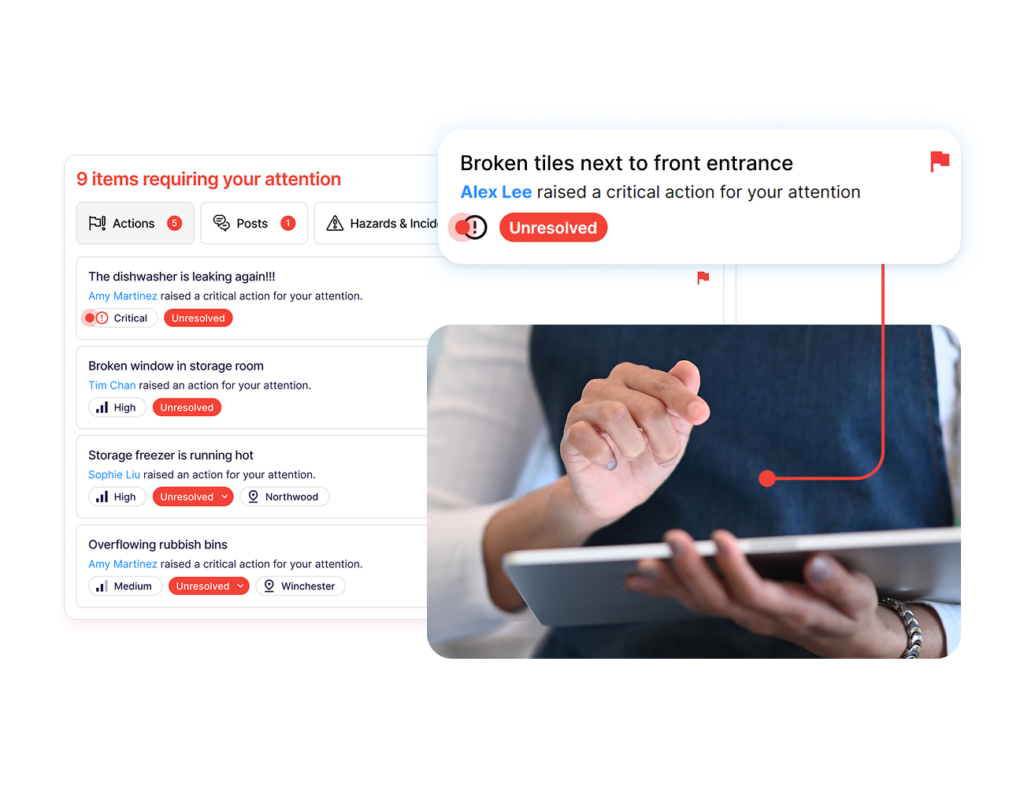
When managing findings internally, Operandio’s corrective action software can assign each issue to an owner, set a deadline, attach photos or other evidence, and preserve the resolution history for later review.
How to Prepare for an EcoSure Inspection
Let’s see a step-by-step breakdown on how to build confidence on command for your next inspection.
Step 1: Always Have an Audit Checklist in View (And Know It)
Audit checklists are simple guides that help your team focus on areas like food safety, facility hygiene, and operational compliance. Pairing one with the right safety audit software makes it easier to track completion, assign issues, and stay on top of requirements across every shift.
Having a checklist with an operational reporting system gets you familiar with all the requirements.
Step 2: Run Routine Mock Inspections
Run internal audits often enough that employees follow food-safety standards every day, rather than switching into “inspection mode” when a visit is expected.
A practical baseline is a full mock audit monthly, supported by shorter weekly checks in higher-risk areas. Increase the frequency after a poor assessment, staffing change, menu change, or recurring finding.
Use the same categories every time, observe employees during normal service, review recent records, and document both compliant and failed items. Assign corrective actions immediately and recheck them before closing the audit.
For a broader framework, Operandio’s restaurant audit guide explains how to structure internal inspections consistently.
Step 3: Review Temperature Log Standards
Temperature control is one of the clearest ways to show that time and temperature control for safety (TCS) foods are being managed consistently.
Under the current FDA Food Code model, cold TCS food should generally be held at 41°F or below, while hot TCS food should be held at 135°F or above. Food being cooled should move from 135°F to 70°F within 2 hours, then to 41°F or below within another 4 hours.
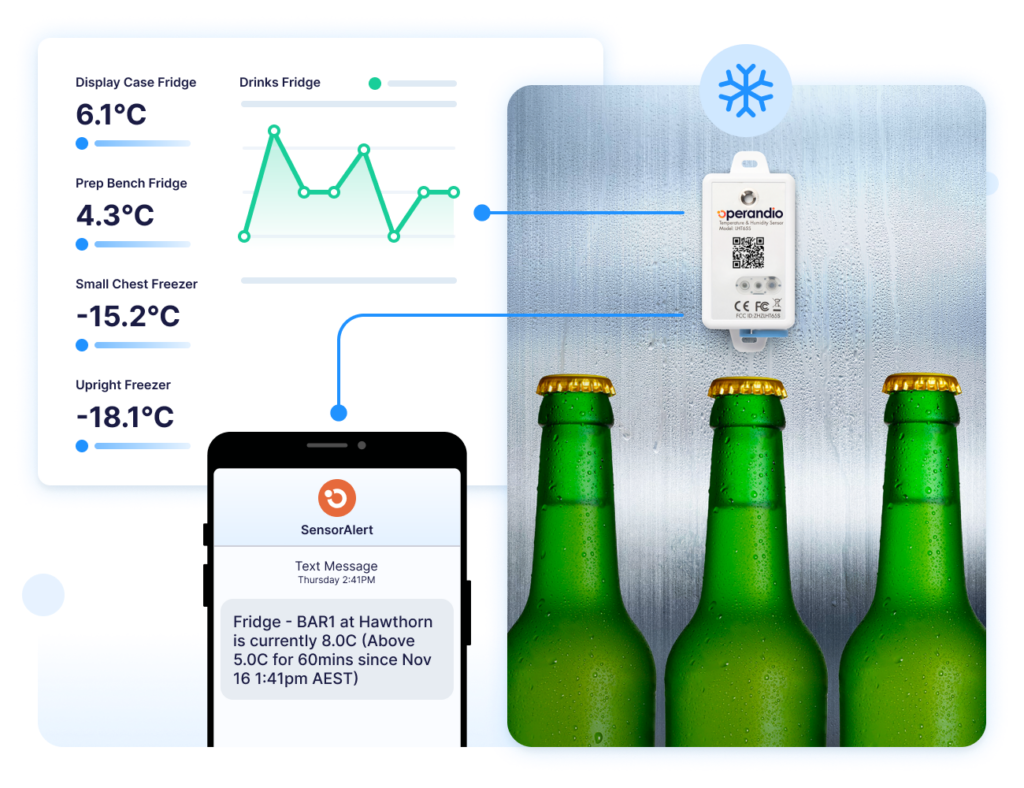
Keep temperature records complete and respond to deviations when they happen. Operandio’s temperature monitoring can automatically log equipment readings and make records available for later review.
Step 4: Train, Train and Retrain Your Team
Employees need to understand the food-safety procedure and demonstrate it correctly during everyday work.
Include food safety, handwashing, allergen controls, temperature checks, cleaning procedures, employee illness rules, and inspection expectations in onboarding. Then reinforce higher-risk topics through recurring refresher training instead of treating training as a one-time event.
Managers should also track overdue training and expiring certifications. Operandio’s Learning Management System lets multi-location teams assign training and monitor completion and certification status from one place.

Step 5: Maintain a Rigorous Cleaning Culture
A kitchen can look clean while still hiding food debris, grease, poor sanitizer control, or contamination risks in less visible areas.
Build cleaning around clear frequencies, owners, and verification rather than asking employees to clean “when needed.” Include food-contact surfaces, prep areas, drains, floors, storage spaces, under and behind equipment, dishwashing areas, and waste zones.
Managers should also verify that approved chemicals are used correctly and sanitizer concentration is checked with suitable test strips. Documenting completion makes it easier to spot missed or repeatedly failing areas.
Step 6: Fix Faulty Equipment Quickly
Damaged equipment can turn into a food-safety finding when it affects refrigeration, cooking, cleaning, handwashing, or safe food storage.
Ask employees to report broken seals, leaking refrigeration, damaged food-contact surfaces, malfunctioning thermometers, plumbing issues, and other defects as soon as they appear.
Then document who owns the repair and when it is due. Preventive maintenance also helps catch deterioration before equipment fails during service or an assessment.
The goal is not simply to show that a problem was reported. You should be able to demonstrate that it was repaired, verified, and closed.
Step 7: Have a Pest Control Plan
Pest control should combine prevention, monitoring, professional treatment where required, and documentation.
Inspect doors, drains, delivery areas, storage rooms, waste areas, and other potential entry points. Watch for droppings, gnaw marks, damaged packaging, nesting material, and insect activity.
Keep food and waste properly contained, clean spills quickly, seal structural gaps, and maintain current pest-control records.
If employees notice evidence of activity, establish a clear process for reporting it immediately rather than waiting for the next scheduled pest-control visit.
Step 8: Have Standard Food Preparation and Cooking Protocols
Food preparation procedures should reduce the chance of cross-contamination and make critical controls repeatable between employees and shifts.
Define how raw and ready-to-eat foods are separated, which utensils or preparation areas are used, how allergens are handled, and how cooking and cooling temperatures are verified.
Color-coded equipment can help teams separate food types, but the system only works when employees understand and consistently follow it.
Use written procedures, training, temperature checks, and manager verification so food-safety controls remain consistent even during busy service periods.
Step 9: Tighten Up Waste Management Practices
Poor waste handling attracts pests, creates contamination risks, and can quickly undermine otherwise strong sanitation practices.
Use leak-resistant containers with lids, empty bins before they overflow, and keep waste away from food-preparation and storage areas. Clean and sanitize containers and surrounding areas regularly.
Grease, used oil, and external waste areas also need defined procedures and collection schedules.
Make responsibility clear by shift or role. If waste handling is left as a general team responsibility, it is much easier for overflowing bins, spills, odors, or dirty disposal areas to go unnoticed.
EcoSure Inspection Checklist
Use this checklist as an internal preparation tool and adapt it to your brand’s current EcoSure program requirements. For more detailed self-auditing resources, see Operandio’s commercial kitchen inspection checklist and restaurant inspection checklist.
| Category / Checklist Item | YES | NO | N/A |
|---|---|---|---|
| Personal Hygiene and Handwashing | |||
| Manager food-safety certification is current and available | ☐ | ☐ | ☐ |
| Written employee illness policy is available and followed | ☐ | ☐ | ☐ |
| Proper handwashing techniques are practiced | ☐ | ☐ | ☐ |
| Gloves, utensils, and hair restraints are used appropriately | ☐ | ☐ | ☐ |
| Employees demonstrate good personal hygiene | ☐ | ☐ | ☐ |
| Time and Temperature Control | |||
| Temperature logs and critical control point records are complete | ☐ | ☐ | ☐ |
| Cold TCS food is held at 41°F or below and hot TCS food at 135°F or above | ☐ | ☐ | ☐ |
| Calibrated thermometers are available and used correctly | ☐ | ☐ | ☐ |
| Cooling follows 135°F to 70°F within 2 hours, then to 41°F within another 4 hours | ☐ | ☐ | ☐ |
| Stored food is correctly labeled and dated | ☐ | ☐ | ☐ |
| Cross-Contamination and Allergen Control | |||
| Raw and ready-to-eat foods are separated correctly | ☐ | ☐ | ☐ |
| Allergen information and labels are accurate | ☐ | ☐ | ☐ |
| Employees are trained to prevent allergen cross-contact | ☐ | ☐ | ☐ |
| Cleaning, Sanitation, and Facility Condition | |||
| Approved cleaning agents and sanitizers are used correctly | ☐ | ☐ | ☐ |
| Sanitizer concentration is verified with appropriate test strips | ☐ | ☐ | ☐ |
| Food-contact and non-food-contact areas are cleaned to schedule | ☐ | ☐ | ☐ |
| Waste is kept in sealed containers and handled appropriately | ☐ | ☐ | ☐ |
| Different waste streams are separated where required | ☐ | ☐ | ☐ |
| Pest Control | |||
| There are no signs of pests or rodents | ☐ | ☐ | ☐ |
| Pest-control records and preventive measures are current | ☐ | ☐ | ☐ |
| Equipment Condition | |||
| Kitchen equipment is inspected and maintained regularly | ☐ | ☐ | ☐ |
| Damaged or faulty equipment is repaired or replaced promptly | ☐ | ☐ | ☐ |
| Documentation and Food Safety Culture | |||
| Required food-safety records are complete and accessible | ☐ | ☐ | ☐ |
| Employees follow the applicable food-safety standards during normal operations | ☐ | ☐ | ☐ |
| Training and certification records are current | ☐ | ☐ | ☐ |
| Previous corrective actions have been documented and closed | ☐ | ☐ | ☐ |
Common Mistakes to Avoid During an EcoSure Audit
Most audit problems are easier to prevent when managers treat them as daily operating issues rather than last-minute inspection preparation.
Mistake 1: Incomplete or Missing Documentation
Missing temperature logs, cleaning records, pest-control reports, training evidence, or corrective-action records make it difficult to show that food-safety controls were consistently followed.
Set clear owners and completion times for each required record. Review them routinely rather than waiting for an assessment.
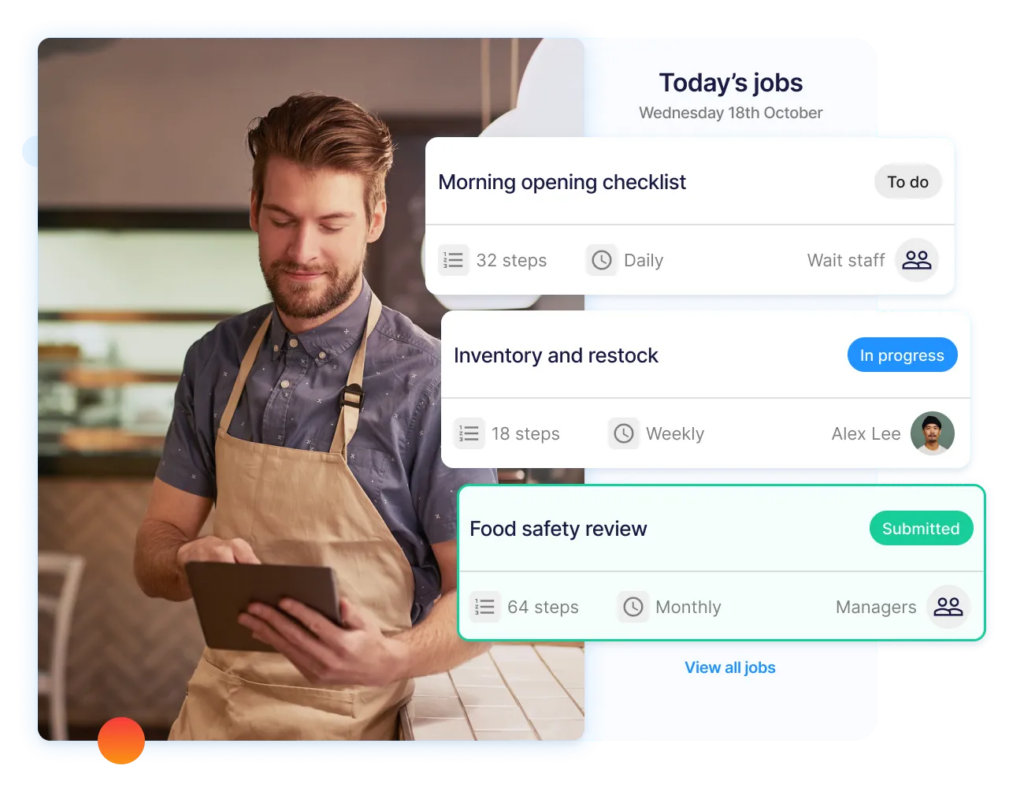
Digital food safety workflows can automatically preserve completed checks and create an exportable history across locations, reducing the risk of lost or incomplete paper records.
Mistake 2: Poor Staff Training on Safety Protocols
Employees may know a rule in theory but apply it incorrectly during a busy shift.
Use onboarding plus regular refresher training for handwashing, food temperatures, allergens, sanitation, employee illness, and other high-risk procedures. Managers should also observe employees performing the task rather than relying only on completed courses.
Track training completion and certification status so gaps can be corrected before an assessment identifies them.
Mistake 3: Poorly Maintained Equipment
Broken seals, failing refrigeration, damaged food-contact surfaces, inaccurate thermometers, and plumbing problems can create food-safety risks and visible audit findings.
Use scheduled preventive maintenance and give frontline employees a quick way to report faults when they notice them.
Each issue should have an owner, repair deadline, and completion record. If a defect affects food safety, take the affected equipment or product out of use until the risk is controlled.
Mistake 4: Ignoring Cleaning Schedules
Cleaning only when an area appears dirty leaves high-risk or hard-to-see areas vulnerable.
Define daily, weekly, and deep-cleaning tasks with clear owners. Include drains, equipment undersides, refrigeration seals, shelving, dishwashing areas, and other places easily missed during routine wiping.
Managers should verify completion and correct recurring failures. A checklist is more useful when it records who completed the work and when rather than functioning as an unsigned cleaning list.
Mistake 5: Overlooking Pest Control Gaps
A pest problem may show up through evidence rather than a visible pest.
Check for droppings, gnaw marks, damaged packaging, gaps around doors or pipes, dirty waste areas, and outdated pest-control records.
Keep entry points sealed, storage areas dry and organized, and external waste zones clean. Employees should know how and where to report activity immediately so the response is documented instead of waiting for the next routine service visit.
Mistake 6: Poor Allergen Management
Unclear labels, shared utensils, contaminated preparation areas, or employees who do not know the allergen procedure can create serious customer risk.
Keep allergen information current, separate tools or preparation areas where required, and train employees on preventing cross-contact.
Test the process during mock audits by asking employees how they would handle an allergen-sensitive order. If the answer differs by employee or location, the procedure needs to be clarified and retrained.
Mistake 7: Failing to Close Previous Corrective Actions
Fixing the visible problem without documenting the response can leave the same issue open on paper and allow it to recur.
Every finding should have a clear owner, deadline, required evidence, and verification step. Managers should also review repeated failures to understand the underlying cause instead of repeatedly fixing the symptom.
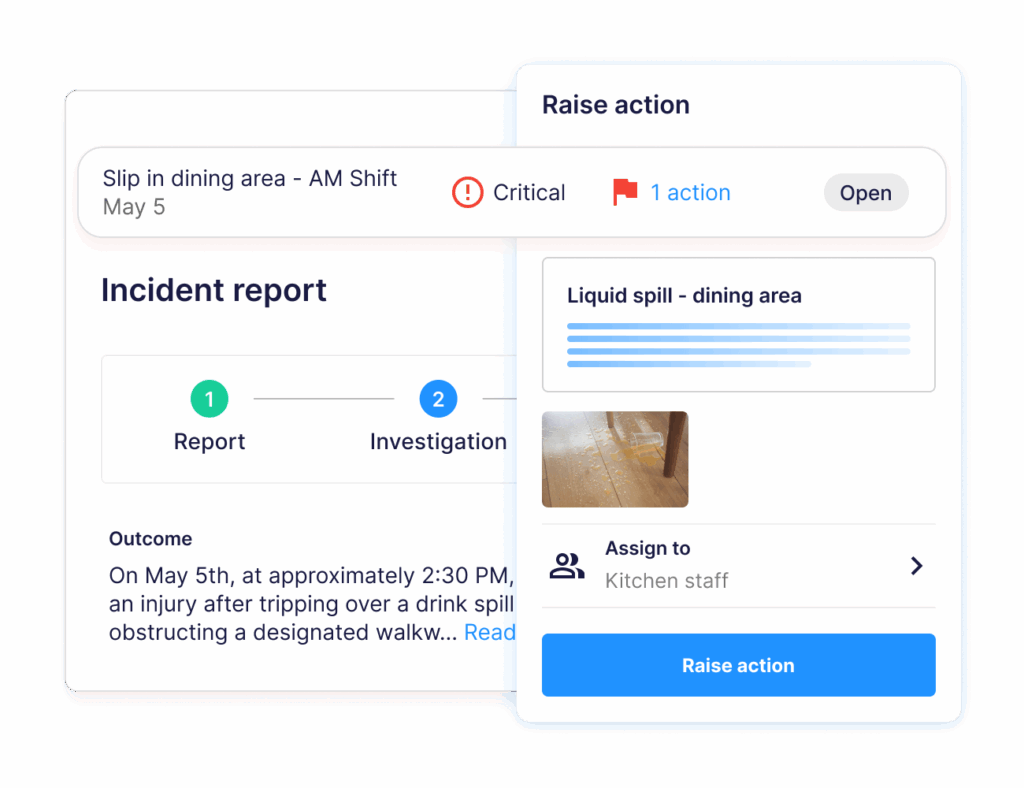
Operandio’s corrective action workflows can automatically turn failed checks into assigned actions, collect photos and comments as evidence, and preserve a record of who resolved the issue and when.
Use Operandio to Stay Ready for EcoSure Inspections
Operandio does not conduct EcoSure assessments. It gives franchise and multi-unit teams digital tools to maintain food-safety standards, records, and follow-up between external audits.
Run Consistent Mock Inspections Across Locations
Operandio’s Inspections & Audits lets teams build standardized digital audits, schedule recurring checks, capture photos and notes, and compare results across locations.
Using the same internal audit format across the network helps head office identify repeat failures and see which locations require additional attention before the next external assessment.
Turn Findings Into Trackable Corrective Actions
A failed inspection point should create a clear next step.
Operandio can automatically generate corrective actions from failed checks, assign an owner and deadline, escalate overdue work, and store supporting evidence.
This closes the gap between identifying a problem and proving that it was corrected, which is particularly useful when an EcoSure program requires documented follow-up after an assessment.
Keep Food Safety Records Ready for Review
Operandio combines audits with temperature monitoring, training records, HACCP checks, labeling, and other food safety compliance workflows.
Temperature readings can be logged automatically, training completion remains visible, and completed checks are stored in an audit history rather than scattered across paper files.
For multi-location operators, that creates one place to review food-safety performance and supporting records before an EcoSure visit.
If you want to standardize food-safety preparation and corrective action across your locations, request a demo.
FAQs
What is the passing score for an EcoSure inspection?
There is no universal passing score. EcoSure programs are customized by organization. One published Hilton program uses 83 or higher as passing, but your brand’s current program requirements are the authority.
What happens if you fail an EcoSure inspection?
It depends. A poor result may trigger corrective actions, additional training, internal escalation, or a follow-up assessment. EcoSure itself does not issue government fines or legal closure orders.
Is an EcoSure inspection the same as a health inspection?
No. EcoSure is a private third-party assessment program run by Ecolab. Health department inspections are regulatory inspections conducted by government authorities.
Does EcoSure come on weekends?
Sometimes. EcoSure scheduling rules depend on the individual brand program. Published program documentation shows that assessments can occur on weekends in some programs.
Are EcoSure inspection results public?
Usually not. EcoSure assessment reports are generally produced for the participating organization. Government health inspection results may be public depending on the jurisdiction.
How often does EcoSure inspect a restaurant?
It varies. Frequency is set by the participating organization’s EcoSure program. Some published programs use two assessments per year, but there is no universal EcoSure schedule.
Can an EcoSure inspection be scheduled in advance?
Yes. Some EcoSure programs use scheduled assessments, while others may use unannounced visits. Follow your organization’s current EcoSure program rules rather than assuming every visit is a surprise.