



Key Takeaways
- A HACCP plan is a written document based on the seven HACCP principles that explains how a food operation will identify, monitor, and control significant food-safety hazards.
- The complete plan-development process has 12 steps: five preliminary FDA tasks followed by the seven HACCP principles.
- Most restaurants do not need to submit a formal HACCP plan for ordinary cooking, cooling, and holding. Specialized processes such as curing, certain reduced oxygen packaging, or acidification may require one under the locally adopted Food Code.
- Below, you’ll find a 12-step process, a worked house-chili example, and a copyable HACCP plan format.
Food-safety controls are easier to manage when everyone knows where a hazard can occur, what limit applies, who checks it, and what happens when the limit is missed.
A HACCP plan is the written document, based on HACCP principles, that sets out those procedures.
This 2026 guide explains whether your restaurant needs a formal HACCP plan, the seven principles behind it, how to build one in 12 steps, and how to apply the process using a real restaurant example and template.
What Is a HACCP Plan?
The FDA defines a HACCP plan as a written document based on Hazard Analysis and Critical Control Point (HACCP) principles that sets out the procedures to be followed.
HACCP is the broader food-safety system. The HACCP plan is the document that describes how your operation will apply that system.
The approach focuses on identifying and controlling significant:
- Biological hazards, such as pathogenic bacteria
- Chemical hazards, such as cleaning chemicals or undeclared allergens
- Physical hazards, such as glass or metal fragments
HACCP was developed in the 1960s through work involving the Pillsbury Company, NASA, and U.S. Army Laboratories as a way to prevent food-safety failures in food prepared for space missions.
Today, HACCP principles are used throughout food production and food service to identify where meaningful food-safety risks occur and establish controls before a problem reaches the customer.
A HACCP plan can sit within a wider food safety management system covering training, sanitation, supplier controls, employee practices, monitoring, and other prerequisite programs.
Does Your Restaurant Need a HACCP Plan?
Most restaurants do not need to submit a formal HACCP plan simply because they cook, cool, reheat, or hold food.
Under the FDA’s 2026 Food Code, a food establishment must submit a HACCP plan to its regulatory authority when the operation requires one by law, uses certain processes requiring a variance, or performs qualifying reduced oxygen packaging under §3-502.12.
Examples include specialized preservation processes and some forms of sous vide, cook-chill, curing, smoking, and acidification.
| Activity | HACCP Plan Required Under the FDA Model Food Code? | Food Code Basis | Typical Examples |
|---|---|---|---|
| Specialized processing that requires a variance | Yes, with the variance | §3-502.11; §8-201.13(A)(2) | Smoking for preservation, curing, acidifying food to render it non-TCS |
| Reduced oxygen packaging under §3-502.12 without a variance | Yes | §3-502.12; §8-201.13(B) | Sous vide, cook-chill, qualifying in-house vacuum packaging |
| Certain raw or undercooked animal-food processes requiring a variance | Yes, with the variance | §3-401.11(D)(4); §8-201.13(A)(2) | A regulator-approved process that does not meet the standard cooking requirements |
| Molluscan shellfish life-support display tanks | Yes, when operated under the applicable variance | §4-204.110(B); §8-201.13(A)(2) | Display tanks holding live oysters, clams, or mussels for customer service |
| Standard cooking, cooling, reheating, and holding | Generally no separate HACCP-plan submission | FDA retail food-service process approach | Burgers, soups, salads, sauces |
A restaurant may still use HACCP principles voluntarily even when a formal submission is not required. Those same controls, including safe cooking temperatures, cooling, holding, monitoring, corrective actions, and records, are central to day-to-day kitchen compliance.
Other parts of the food industry have separate federal HACCP requirements. For example, USDA FSIS regulates HACCP requirements for meat and poultry processing establishments, while FDA has specific HACCP regulations for seafood and juice processors.
One more distinction is important for 2026.
The current FDA Food Code includes a requirement for a written Food Safety Management System within four years after a regulatory authority adopts that Code, with exceptions possible for establishments considered minimal risk. That requirement is not the same as requiring every restaurant to have a HACCP plan.
The FDA Food Code is a model code. States and local jurisdictions decide whether and how to adopt it, so check with your health department before introducing a specialized process or relying on a particular section of the model Code.
Why HACCP Is Important for Multi-Unit Restaurants
Running 10, 20, or 50 restaurant locations means managing different staff, experience levels, kitchens, and local operating conditions under one brand.
A food-safety failure at one site can affect how customers view the entire network. Health department results, foodborne-illness incidents, and public complaints are attached to the brand customers recognize, regardless of which individual location caused the problem.
For multi-unit operators, consistent HACCP audits and food-safety controls help make sure every location works from the same expectations. This means using:
- Consistent checklists and monitoring procedures
- Agreed critical limits and corrective actions
- Clear staff responsibilities
- Current training
- Accessible records
- Network-level visibility into missed checks and repeat problems
Paper logs can still form part of a valid food-safety process, but they are harder for head office to review quickly across dozens of locations. A digital system can make records, exceptions, and follow-up easier to see across the network.
What a Unified Brand HACCP Checklist Looks Like
For a multi-unit restaurant group, a practical structure is to maintain one brand-level standard and verify the site-specific details at each location.
The brand-level standard can define:
- Menu process groups
- Hazard-analysis approach
- Brand critical limits where the process is the same
- Required monitoring fields
- Corrective-action procedures
- Training and record requirements
Each location then confirms its own:
- Equipment and kitchen layout
- Actual food flow
- Flow diagram verified during service
- Site-specific CCPs where processes differ
- Locally adopted Food Code and applicable variances
- Named people responsible for monitoring and verification
Update the site-level information when a location opens, equipment or food flow changes, the menu changes materially, or the local regulatory requirements change.
FDA’s HACCP guidance supports this site-level verification because flow diagrams must reflect what actually happens in the operation, and CCPs can differ when equipment, layout, ingredients, or processes differ.
Cold Rock Ice Creamery, for instance, manages food-safety compliance and franchisee training across 70+ franchise stores using Operandio, giving the brand a consistent digital operating system while individual locations carry out the required work.
This approach lets head office standardize the food-safety framework without assuming every kitchen operates identically.
The 7 HACCP Principles
The seven HACCP principles explain how to identify significant food-safety hazards, decide where control is essential, set measurable limits, monitor those controls, and prove that the system is working.
FDA’s HACCP Principles & Application Guidelines provide the framework used below.
Principle 1: Conduct a Hazard Analysis
Start by identifying the biological, chemical, and physical hazards that could occur at each stage of the process.
Then decide which hazards are significant enough to require control based on their likelihood and severity.
Examples include:
- Pathogenic bacteria surviving an inadequate cook step
- Bacterial growth during slow cooling
- Undeclared allergens
- Chemical contamination
- Glass, metal, or other foreign material
The goal is not to list every theoretical problem. Focus on hazards that are reasonably likely to occur and need specific preventive control.
Principle 2: Determine Critical Control Points (CCPs)
A critical control point (CCP) is a step where control is essential to prevent, eliminate, or reduce a significant food-safety hazard to an acceptable level.
Cooking may be a CCP when it’s the step that destroys a pathogen. Cooling may be a CCP where controlling bacterial growth is essential.
But not every safety control is a CCP. Cleaning schedules, approved suppliers, employee hygiene, and other prerequisite programs can control risks without becoming CCPs in the HACCP plan.
FDA provides a CCP decision tree as a tool, but the final decision still depends on the actual food, process, equipment, and hazard analysis.
Principle 3: Establish Critical Limits
Every CCP needs a critical limit that separates acceptable operation from an unsafe deviation. Critical limits must be measurable and supported by a regulatory, scientific, or otherwise validated basis.
Common examples include:
- Temperature
- Time
- pH
- Water activity
- Concentration
For example, ground or otherwise non-intact meat can be cooked to 155°F for 17 seconds under the FDA Food Code.
Avoid setting a limit simply because “that is how the kitchen has always done it.” The value needs a defensible food-safety basis.
Principle 4: Establish Monitoring Procedures
Monitoring tells you whether a CCP is staying within its critical limit during operations.
For every CCP, define:
- What will be checked
- How it will be measured
- How often it will be checked
- Who is responsible
For a cooking CCP, that might mean probing the center of every batch with a calibrated thermometer and recording the result.
Monitoring should happen often enough to detect a deviation while there is still time to respond. Continuous monitoring is preferable where practical, but staff still need a defined response when the system detects an exception.
Principle 5: Establish Corrective Actions
Corrective actions should be decided before a critical limit is missed.
The procedure should explain:
- Who responds
- How the cause of the deviation is corrected
- What happens to the affected food
- What gets documented
- Whether additional follow-up is required
For example, if a batch fails to reach its required cooking temperature, the procedure may require continued cooking until the critical limit is met and a new temperature is recorded.
Predetermined actions prevent employees from improvising during a busy shift.
Principle 6: Establish Verification Procedures
Verification checks whether the HACCP system itself is valid and being followed as designed. It’s different from monitoring.
Monitoring asks: Did this CCP meet its critical limit?
Verification asks: Is our HACCP plan working, and are employees following it correctly?
Verification can include:
- Reviewing monitoring and corrective-action records
- Observing employees performing checks
- Calibrating thermometers or other instruments
- Confirming critical limits are scientifically valid
- Reviewing the plan when processes change
This is how managers confirm that good records reflect a working food-safety system rather than paperwork alone.
Principle 7: Establish Record-Keeping
Records provide evidence that monitoring happened, deviations were handled, and the plan is being verified.
Depending on the plan, records may include:
- Hazard-analysis documentation
- CCP monitoring logs
- Temperature records
- Corrective actions
- Equipment calibration
- Verification reviews
- Training records
- Changes to the HACCP plan
Records should be easy for staff to complete and easy for managers or regulators to retrieve.
For multi-location operators, digital HACCP management can also make incomplete records and recurring exceptions easier to identify across locations.
How to Create a HACCP Plan in 12 Steps
The full HACCP plan-development process has 12 steps. Steps 1-5 are FDA’s preliminary tasks. Steps 6-12 apply the seven HACCP principles to the food and processes in your operation.
Step 1: Assemble Your HACCP Team
Build a team that understands both food safety and how the restaurant actually operates.
Depending on the business, that may include:
- Kitchen or operations managers
- Food-safety or quality staff
- Chefs
- Maintenance or facilities staff
- Training leaders
- Employees who perform the process every day
A multi-unit operator can develop much of the framework centrally, but location-level input is still useful because equipment, kitchen layout, and food flow can differ.
The team should have enough knowledge to identify hazards accurately and enough operational experience to create procedures employees can realistically follow during service.
Step 2: Describe Your Menu and Processes
Document the foods and processes covered by the plan.
Include information relevant to safety, such as:
- Main ingredients
- Preparation method
- Cooking or processing
- Cooling and reheating
- Storage
- Packaging
- Distribution or service
You do not necessarily need a separate HACCP analysis for every menu item.
Foods that move through the kitchen in the same way can often be grouped together using FDA’s process approach.
The objective is to understand what happens to the food from receiving through service so hazards can be evaluated at the right points.
Step 3: Describe How the Food Is Used and Who Eats It
Next, document how the food will be served and who is expected to consume it. This can affect the level of control required.
Consider:
- Dine-in service
- Takeout or delivery
- Extended holding before service
- Raw or undercooked menu items
- Highly susceptible populations
The FDA Food Code uses a highly susceptible population for groups more vulnerable to foodborne illness, including certain young children, older adults, and people with weakened immune systems receiving food in facilities such as health care or custodial settings.
Restaurants serving raw or undercooked animal foods may also need applicable consumer advisories unless another approved process applies.
Step 4: Group Menu Items by Process and Draw a Flow Diagram
For food service, FDA recommends grouping menu items according to how they move through the operation rather than writing a separate process for every dish.
| Process | Typical Flow | Examples | Typical Controls / Possible CCPs |
|---|---|---|---|
| No cook | Receive → store → prepare → hold → serve | Salads, deli meats, sashimi | Receiving, approved source, cold holding |
| Same-day service | Receive → store → prepare → cook → hold → serve | Burgers, fried chicken, cooked eggs | Cooking, hot holding |
| Complex preparation | Receive → store → prepare → cook → cool → reheat → hot hold → serve | Chili, soups, sauces, large roasts | Cooking, cooling, reheating, holding |
Then draw a flow diagram for each process group showing every step the food passes through.
A simple box-and-arrow diagram is enough. Its purpose is to make sure the HACCP team analyzes the real sequence of work, not an assumed one.
Step 5: Walk the Line to Verify the Flow Diagram
Take the diagram into the kitchen and compare it with what employees actually do during service. Walk through:
- Receiving
- Storage
- Preparation
- Cooking
- Cooling
- Reheating
- Holding
- Service
Update the diagram if reality differs from the documented process.
For example, one site may transfer cooked chili directly into shallow pans for cooling, while another uses a blast chiller. Those differences can change the hazard analysis and the controls required.
For multi-unit restaurants, this is why site-level verification remains important even when HQ develops the overall brand framework.
Step 6: Identify Hazards
Now apply Principle 1 to each step in the verified flow.
Ask:
What biological, chemical, or physical hazard could reasonably occur here, and is it significant enough to require control?
For a complex chili process, examples could include:
- Pathogens in raw ground beef at receiving
- Survival of pathogens if cooking is inadequate
- Growth of spore-forming bacteria during slow cooling
- Growth or toxin formation during improper holding
Then evaluate the likelihood and severity of each hazard.
Do not turn every possible issue into a HACCP control. The purpose of hazard analysis is to identify the significant food-safety hazards that the plan must address.
The next step is deciding which of those hazards require a critical control point.
Step 7: Determine Critical Control Points
Now decide where control is essential to prevent, eliminate, or reduce each significant hazard identified in Step 6.
These steps become your critical control points (CCPs).
For house chili, cooking may be a CCP because it destroys pathogens in raw ground beef. Cooling may also be a CCP because slow cooling can allow spore-forming bacteria to grow.
Do not turn every food-safety control into a CCP. Receiving from approved suppliers, sanitation, handwashing, and other prerequisite programs may control important risks without being CCPs in a particular plan.
FDA provides a decision tree that can help with the analysis, but the final CCPs depend on your actual ingredients, equipment, food flow, and process.
Step 8: Establish Critical Limits for Each CCP
For each CCP, set a measurable critical limit that separates acceptable operation from a deviation requiring action.
Critical limits should come from an appropriate regulatory, scientific, or validated source.
Under the 2026 FDA Food Code, examples include:
- Ground or other non-intact meat: 155°F for 17 seconds
- Poultry: 165°F instantaneous
- Hot holding: 135°F or above
- Cold holding: 41°F or below
- Cooling cooked TCS food: 135°F to 70°F within 2 hours, then to 41°F or below within 6 hours total
- Reheating cooked and cooled TCS food for hot holding: 165°F for 15 seconds, with reheating completed within 2 hours
Critical limits aren’t limited to time and temperature. Depending on the process, a HACCP plan may use pH, water activity, concentration, or another measurable food-safety parameter.
Always verify limits against the Food Code adopted in your jurisdiction.
Step 9: Establish Monitoring Procedures
Define exactly how employees will know whether each CCP remains within its critical limit.
For each CCP, write down:
- What is measured
- How it is measured
- How often it is checked
- Who performs the check
- Where the result is recorded
For example, a cooking procedure might require the cook on duty to probe the center of every batch of chili with a calibrated thermometer and record the result before the food moves to the next step.
Monitoring should detect a deviation early enough for staff to respond. Digital food-safety monitoring can make required checks, timestamps, readings, and missed records easier to track across multiple locations.
Step 10: Develop Corrective Actions
Decide what happens before someone misses a critical limit.
A corrective-action procedure should state:
- Who responds
- What happens to the affected food
- How the immediate cause is corrected
- What evidence is recorded
- Whether a manager needs to review the incident
For example, chili that has not reached its cooking critical limit can continue cooking until the required temperature and time are achieved.
Cooling needs a different response. If the cooling limit is missed, staff should follow the restaurant’s prewritten corrective-action procedure, which may involve a permitted recovery process or discarding the food when safety cannot be demonstrated.
Do not use a blanket rule such as “discard after two hours below 135°F.”
The FDA Food Code treats different situations separately. Reheating food for hot holding must reach 165°F for 15 seconds within 2 hours, while using time instead of temperature as a public-health control follows its own written procedures and can allow up to four hours under qualifying conditions.
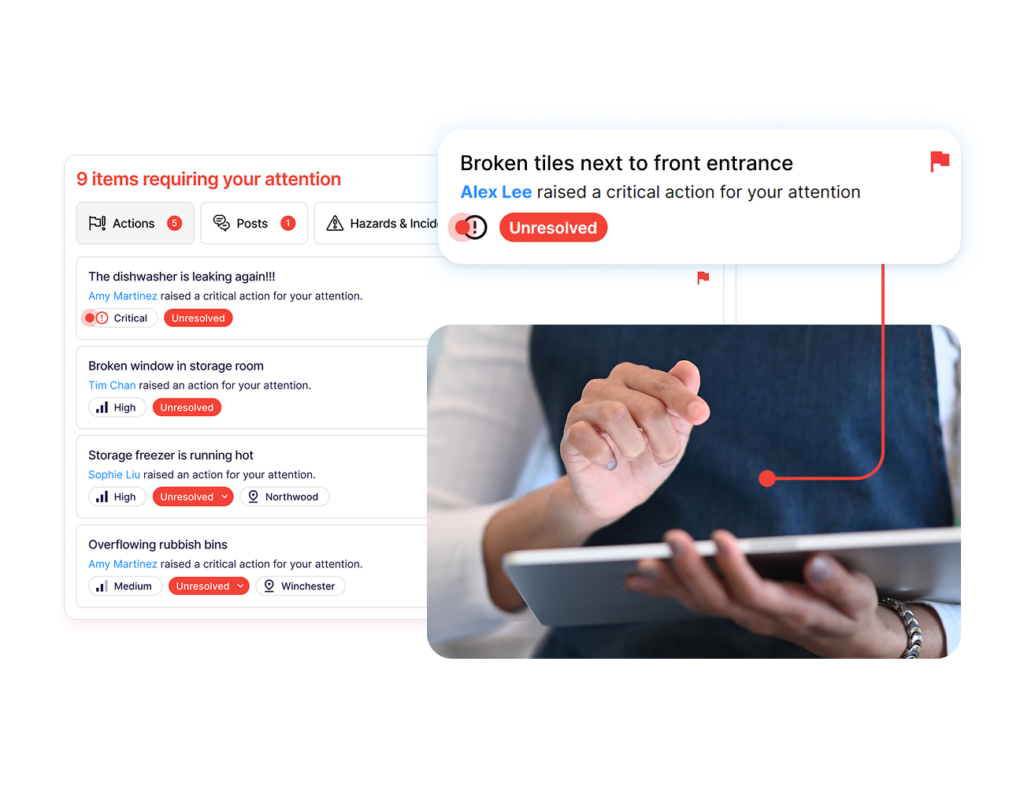
Operandio’s corrective actions can assign food-safety issues to an owner with a due date and closure evidence.
Step 11: Establish Verification
Verification confirms that the HACCP plan itself remains valid and that employees are following it correctly.
It may include:
- Reviewing monitoring records
- Reviewing corrective actions
- Watching employees perform checks
- Calibrating thermometers
- Confirming critical limits remain appropriate
- Reviewing changes in ingredients, equipment, or process
- Reassessing the plan when operations change
Keep the distinction clear:
Monitoring: “Did this batch meet the critical limit?”
Verification: “Are our monitoring procedure, records, equipment, and HACCP plan working as intended?”
A manager reviewing temperature logs and checking thermometer calibration is performing verification, not simply another monitoring check.
Step 12: Write the Plan Down and Keep the Records
A HACCP system only works consistently when the process is documented.
For establishments required to submit a HACCP plan under the FDA Food Code, §8-201.14 calls for information including:
- Establishment and contact information
- Categories of TCS foods covered
- A flow diagram showing each process step and CCP
- Ingredients, recipes, materials, equipment, and procedural controls
- A CCP summary identifying hazards and critical limits
- Monitoring method, frequency, and responsible person
- Corrective actions
- Verification method and frequency
- Records used to show the plan is operating correctly
- Relevant employee/supervisory training information
- Blank record forms
- Supporting scientific information where requested by the regulator
Keep records for the period required by your regulatory authority rather than assuming one retention period applies everywhere.
For multi-unit restaurants, HACCP management software can keep required checks, corrective actions, records, and verification evidence accessible across locations.
HACCP Plan Example: House Chili (Complex Food Preparation)
House chili is an ideal HACCP example because it follows FDA’s Process 3: Complex Food Preparation:
Receive → store → prepare → cook → cool → reheat → hot hold → serve
The table below shows how one restaurant might analyze key controls. It’s an example, not a universal HACCP plan. Your HACCP team and regulatory authority determine the actual CCPs based on your process.
| Process Step | Significant Hazard | CCP? | Critical Limit / Control | Monitoring | Corrective Action |
|---|---|---|---|---|---|
| Receive ground beef | Pathogen growth from temperature abuse | Usually a prerequisite/control step; verify through your hazard analysis | Receive at 41°F or below unless another lawful receiving temperature applies | Probe representative product at delivery; verify approved source | Reject delivery if receiving requirements are not met |
| Cook | Survival of pathogens such as E. coli | Common possible CCP | 155°F for 17 seconds | Probe the center of each batch with a calibrated thermometer | Continue cooking until the critical limit is met; record the new reading |
| Cool | Growth of spore-forming bacteria such as C. perfringens | Common possible CCP | 135°F to 70°F within 2 hours; 41°F or below within 6 hours total | Record temperatures during cooling, including the 2-hour point and final cooling time | Follow the prewritten recovery/discard procedure if the cooling limit is missed |
| Reheat for hot holding | Growth or survival of organisms after cooling | Common possible CCP | 165°F for 15 seconds within 2 hours | Probe the center of each batch before hot holding | Continue reheating within the permitted time or discard if the limit cannot be achieved safely |
| Hot hold | Bacterial growth | Possible CCP depending on the plan | 135°F or above | Check at the frequency defined in the plan; for example, every 2 hours as a brand SOP | Follow the approved corrective-action procedure when food falls below the limit |
Cooling deserves close attention.
FDA restaurant risk-factor research has repeatedly identified improper cooling and cold holding among common out-of-compliance practices. Large batches of chili, soup, sauce, and similar foods retain heat for a long time, giving bacteria an opportunity to grow if the food does not pass through the temperature danger range quickly enough.
Practical cooling methods can include shallow pans, smaller portions, rapid-cooling equipment, ice-water baths, containers that transfer heat efficiently, or adding ice as an ingredient where appropriate.
HACCP Plan Template: Copy This Format
A practical HACCP plan usually includes a summary table for each food or process group. Use the six fields below to document each CCP consistently.
| CCP and Hazard | Critical Limit | Monitoring | Corrective Action | Verification | Records |
|---|---|---|---|---|---|
| Cooling chili: growth of spore-forming bacteria | 135°F → 70°F within 2 h; 41°F or below within 6 h total | Cook on duty probes and records temperatures at required intervals | Follow approved recovery procedure or discard when the cooling limit cannot be met safely | Manager reviews cooling records and thermometer calibration | Cooling log; corrective-action record |
| [CCP]: [hazard] | [measurable limit] | [what / how / frequency / who] | [action if limit is missed] | [who verifies / how / frequency] | [record or form] |
Here is what belongs in each column:
- CCP and hazard: The process step where control is essential and the significant food-safety hazard being controlled.
- Critical limit: The measurable boundary the process must meet.
- Monitoring: What employees check, how they check it, how often, and who is responsible.
- Corrective action: What happens when the limit is missed, including disposition of affected food.
- Verification: How management confirms the plan and monitoring procedures are working.
- Records: The logs or forms that show monitoring, corrective action, and verification occurred.
This table is a useful CCP summary, but it’s not necessarily the entire HACCP submission required by your regulator. A formal submission can also require process-flow diagrams, recipes, equipment information, training plans, blank forms, and supporting scientific documentation.
Supporting records are just as important as the plan itself. Restaurant operators may also need:
- Temperature log templates
- Cooling records
- Cold-holding logs
- Corrective-action records
- Thermometer-calibration records
- Training records
- Other food-safety record templates
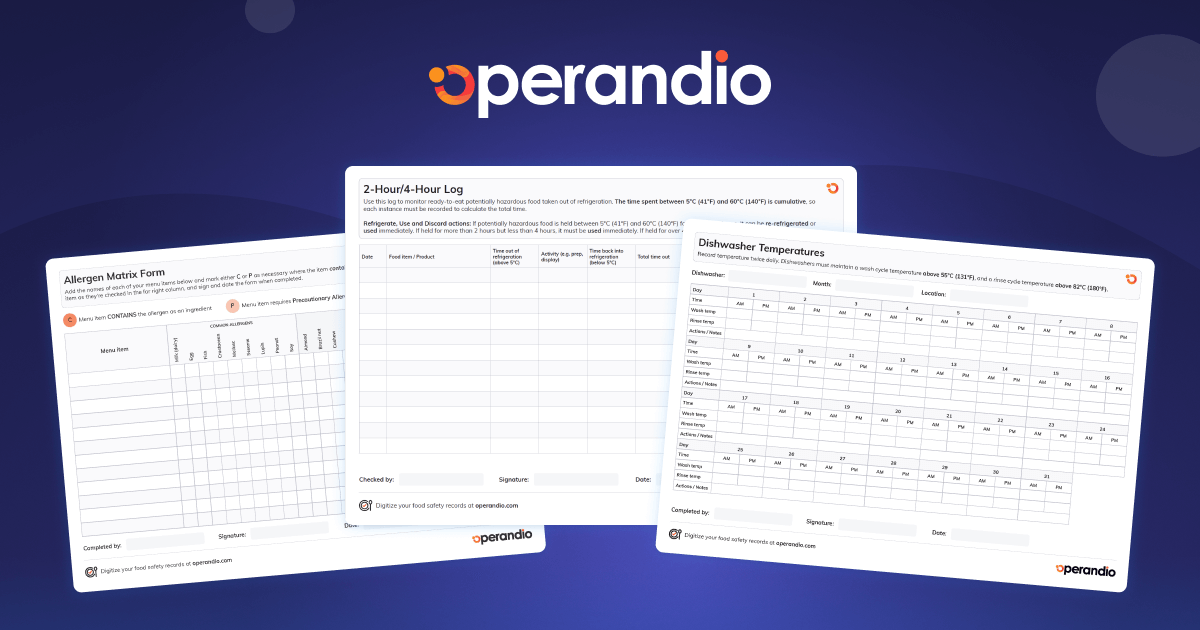
Use the templates above as the working structure, then confirm the exact submission and record requirements with your regulatory authority.
The Benefits of Implementing a HACCP Plan
A HACCP plan gives restaurants a structured way to identify significant food-safety hazards, monitor the controls that prevent them, and respond consistently when something goes wrong.
Improved Food Safety and Reduced Risk of Foodborne Illnesses
HACCP focuses attention on the points where a food-safety failure can have the greatest consequence.
Instead of relying only on a final inspection, teams monitor the process while food is being received, prepared, cooked, cooled, reheated, and held.
That helps restaurants catch deviations before unsafe food reaches a customer.
HACCP does not guarantee that food will always be safe. Its value is in creating a preventive system that identifies significant hazards, defines the required controls, and makes the response to a deviation clear.
Compliance With Regulatory Requirements
A documented HACCP plan can help restaurants meet regulatory requirements when a specialized process requires one.
It also organizes the same types of controls regulators commonly review, including:
- Critical limits
- Monitoring
- Corrective actions
- Verification
- Records
Exact requirements depend on the Food Code adopted in your jurisdiction and the process being used.
If your restaurant is introducing a variance process, reduced oxygen packaging, or another specialized method, confirm the required plan and submission format with your regulatory authority before launch.
Enhanced Reputation and Customer Trust
Strong food-safety systems support consistent execution across shifts and locations.
Customers may never see the HACCP plan itself, but they experience the results through better-controlled food handling, fewer visible food-safety failures, and more consistent operating standards.
For multi-unit brands, that consistency is particularly valuable. A problem at one location can affect how customers perceive the wider brand.
HACCP provides one structured framework for reducing that variation while still allowing site-specific controls where equipment or processes differ.
Cost Savings
Preventing a food-safety problem can reduce the operational costs that follow a failure.
Examples include:
- Discarded food
- Repeat preparation
- Emergency corrective work
- Spoilage
- Staff time spent investigating missing records
- Business disruption after an incident
HACCP can also make corrective actions more targeted because staff already know what to check and what response is required.
The financial result will vary by operation, but preventing errors is usually less disruptive than responding after unsafe conditions have already developed.
Faster Response to Food-Safety Deviations
A good HACCP plan tells employees what to do before something goes wrong.
If a cooking temperature is missed or cooling runs too slowly, staff shouldn’t need to invent a response during a busy shift. Predefined corrective actions identify:
- Who responds
- What happens to the food
- How the process is corrected
- What gets recorded
- Who verifies the follow-up
That reduces uncertainty and makes responses more consistent across shifts.
Better Records and Inspection Readiness
HACCP creates a record of how food-safety controls are actually being managed.
Monitoring records, deviations, corrective actions, calibration checks, and verification reviews can show whether the system is being followed over time.
Well-organized records also make it easier to investigate a problem or respond to an inspection request.
For multi-site restaurants, centralized records can help head office see incomplete checks or recurring issues without waiting for paper files to reach the office.
More Consistent Controls Across Multiple Locations
A multi-unit restaurant group can use one common HACCP framework while still accounting for site-specific differences.
HQ can standardize:
- Process groups
- Brand critical limits
- Monitoring fields
- Corrective-action procedures
- Training expectations
- Record requirements
Each location then verifies its actual food flow, equipment, responsible people, and local regulatory requirements. This gives the brand a common food-safety standard without assuming every kitchen is identical.
Common HACCP Mistakes and How to Avoid Them
HACCP problems usually come from weak execution rather than the seven principles themselves. The following mistakes can make a well-written plan unreliable in practice.
Mistake 1: Incomplete or Inconsistent Logs
Missing readings make it difficult to know whether a CCP remained under control.
A log that simply says “checked” is also less useful than one that records the actual result, employee, time, and required follow-up.
How to avoid it: Define exactly what employees record, how often, and who is responsible. Make required fields clear and review missing entries quickly.
Digital food-safety workflows can also make overdue or incomplete checks easier to identify.
Mistake 2: Using Paper Without a Reliable Review Process
Paper records can form part of a valid HACCP system. The problem is what happens when forms are lost, incomplete, illegible, or reviewed long after the shift ends.
That becomes more difficult across multiple locations.
How to avoid it: If you use paper, define who reviews each record and when. If you digitize the process, use required fields, timestamps, alerts, and centralized access to reduce missing information and speed up review.
The goal is reliable records, not digitization for its own sake.
Mistake 3: Failing to Update the HACCP Plan
A plan can become inaccurate when the operation changes.
Common triggers include:
- New menu items
- New equipment
- Different ingredients
- Changed preparation methods
- New packaging
- Revised food flow
- Updated regulatory requirements
How to avoid it: Review the relevant hazard analysis and process flow whenever a meaningful change occurs. Update critical limits, monitoring, training, and records where the change affects the plan.
FDA guidance calls for HACCP systems to be reassessed and revised as needed rather than relying on one universal annual-review rule.
Mistake 4: Poor Staff Training
A perfect HACCP plan on paper will fail if the employee performing the check does not understand it.
Monitoring staff need to know:
- What they are checking
- How to measure it correctly
- Why the limit exists
- What counts as a deviation
- What action to take
- Where to record it
How to avoid it: Train by role and task, then confirm employees can perform the procedure correctly in the kitchen.
Refresher training should follow significant process changes or repeated monitoring errors.
Mistake 5: No Verification System
Monitoring and verification aren’t the same thing.
A cook recording a chili temperature is monitoring. A manager reviewing the records, checking thermometer calibration, and confirming employees follow the procedure is verification.
Without verification, problems can continue even when the paperwork looks complete.
How to avoid it: Define who verifies each part of the plan, how often, and what evidence they review.
Use trends such as recurring deviations or missing records to decide where the system needs closer attention.
Mistake 6: Treating Every Food-Safety Control as a CCP
Too many CCPs make a HACCP plan harder to operate and can distract employees from the controls that are genuinely critical.
Sanitation, approved suppliers, handwashing, and routine operational controls may be important without becoming CCPs.
How to avoid it: Complete the hazard analysis first. Identify the significant hazards, then decide where control is essential to prevent, eliminate, or reduce each one.
Use FDA’s CCP decision tree as a guide where useful, but base the final decision on the actual process.
Mistake 7: Using Critical Limits Without a Reliable Basis
A precise-looking number is not automatically a valid critical limit.
If the limit comes from habit, an old document, or another restaurant with a different process, it may not control the hazard in your operation.
How to avoid it: Base critical limits on the applicable Food Code, regulation, scientific literature, validated process, or qualified expert guidance.
Document where the limit came from so future reviewers can understand why it was selected.
Mistake 8: Deciding Corrective Actions After the Deviation Happens
Waiting until food falls outside a critical limit to decide what to do creates inconsistency.
One employee may rework the product. Another may discard it. A third may do nothing.
How to avoid it: Write the corrective action into the plan before operations begin.
Define:
- Who responds
- How the cause is corrected
- What happens to affected food
- What gets documented
- Who verifies closure
Operandio’s corrective-action workflows can assign an issue to a named owner, set a due date, and keep evidence of the follow-up with the original finding.
Bring HACCP, Food Safety, and Daily Tasks Into One System With Operandio
HACCP works best when monitoring, records, training, and corrective actions are part of the daily workflow rather than separate paperwork.
Operandio brings digital food-safety checks, wireless temperature monitoring, food-prep labeling, corrective actions, and network-wide reporting into one operating system.
Cold Rock Ice Creamery uses Operandio across 70+ franchise locations to standardize food-safety compliance, training, and operational processes across the network.
“Operandio has transformed our franchise operations by replacing paper systems with a seamless, automated platform that ensures consistency, enhances communication, and simplifies compliance across 70+ locations,” says Kris K., State Manager at Cold Rock Ice Creamery
If you want to manage HACCP and daily food-safety work in the same place, book a demo.
FAQs
What foods require a HACCP plan?
Sometimes. A formal HACCP plan is generally required for certain specialized restaurant processes, such as qualifying reduced oxygen packaging or processes requiring a variance. Local rules vary, so check with your regulatory authority.
Can I write my own HACCP plan?
Yes, in many cases. Your team can develop the plan if it has the necessary process and food-safety knowledge. Specialized processes may require regulator review or additional technical support.
What is the first step in developing a HACCP plan?
Start by assembling a HACCP team with the food-safety knowledge and operational experience needed to understand how food actually moves through your restaurant.
How often should a HACCP plan be reviewed?
Review it whenever a meaningful change affects the process, ingredients, equipment, hazards, critical limits, or regulatory requirements, and according to any schedule required by your regulator.
Is a HACCP plan the same as a food safety management system?
No. HACCP is one structured hazard-control approach. A food safety management system can be broader and include sanitation, training, supplier controls, employee practices, and other programs.
What are the 12 steps of a HACCP plan?
They are FDA’s five preliminary tasks followed by the seven HACCP principles: team, food description, intended use, flow diagram, verification, then hazard analysis through recordkeeping.
Does every restaurant need a HACCP plan?
No. Most ordinary restaurant cooking and holding does not require a formal HACCP submission under the FDA model Food Code, but specialized processes can trigger that requirement.