
- Platform
- Features
 Franchise & Multi-Unit ManagementCentralize oversight and streamline growth across your entire multi location network
 Learning ManagementTrain, verify, and reward your workforce with mobile-first education
 Operations ExecutionStreamlined operations ensuring brand standards, accountability and efficiency
 Asset ManagementOptimize equipment uptime through proactive maintenance and smart tracking
 Digital Food SafetyAutomate compliance and monitor quality with real-time digital precision
 Health & Safety Management (EHS)Mitigate workplace risks and streamline digital incident reporting and investigations
- Platform Essentials
 Powerful ReportingAlign leadership with role-based dashboards and deeper analytics
 Operandio IntelligenceAutomate content, analyze trends, and provide instant answers
 IntegrationsUnify your enterprise tech stack with real-time data
 IoT PlatformDetect anomalies and automate workflows with intelligent sensors
 Mobile & Shared Tablet AppsSecurely empower frontline teams with fast, offline-capable access
- Footer


 Not sure what you need?
Book in a call with the team
- Features
- Solutions
- By Industry
 RestaurantsQSR, fast food and multi-unit restaurants
 Hotels & ResortsHotels, resorts and extended stay hotels
 ChildcareEarly education, childcare, daycare and preschool
 EntertainmentTheme parks, family entertainment centers and play centers
 Fitness Centers & LeisureFitness centers, golf clubs, gyms and sports facilities
 RetailBig-box retailers, franchise stores and supermarkets
- By Use Case
- Operational ExcellenceStreamlined operations ensuring brand standards, accountability and efficiency
- Learning & DevelopmentTrain, verify, and reward your workforce with mobile-first education
- Franchise & Multi-Unit ManagementCentralize oversight and streamline growth across your entire multi location network
- Food Safety ComplianceAutomate compliance and monitor quality with real-time digital precision
- Asset Management & MaintenanceOptimize equipment uptime through proactive maintenance and smart tracking
- Health & Safety Management (EHS)Mitigate workplace risks and streamline digital incident reporting and investigations
- By Industry
- Resources
- Platform
- Features
- Franchise & Multi-Unit ManagementCentralize oversight and streamline growth across your entire multi location network
- Learning ManagementTrain, verify, and reward your workforce with mobile-first education
- Operations ExecutionStreamlined operations ensuring brand standards, accountability and efficiency
- Asset ManagementOptimize equipment uptime through proactive maintenance and smart tracking
- Digital Food SafetyAutomate compliance and monitor quality with real-time digital precision
- Health & Safety Management (EHS)Mitigate workplace risks and streamline digital incident reporting and investigations
- Platform Essentials
- Powerful ReportingAlign leadership with role-based dashboards and deeper analytics
- Operandio IntelligenceAutomate content, analyze trends, and provide instant answers
- IntegrationsUnify your enterprise tech stack with real-time data
- IoT PlatformDetect anomalies and automate workflows with intelligent sensors
- Mobile & Shared Tablet AppsSecurely empower frontline teams with fast, offline-capable access
- Footer
- Not sure what you need?
Book in a call with the team
- Features
- Solutions
- By Industry
- RestaurantsQSR, fast food and multi-unit restaurants
- Hotels & ResortsHotels, resorts and extended stay hotels
- ChildcareEarly education, childcare, daycare and preschool
- EntertainmentTheme parks, family entertainment centers and play centers
- Fitness Centers & LeisureFitness centers, golf clubs, gyms and sports facilities
- RetailBig-box retailers, franchise stores and supermarkets
- By Use Case
- Operational ExcellenceStreamlined operations ensuring brand standards, accountability and efficiency
- Learning & DevelopmentTrain, verify, and reward your workforce with mobile-first education
- Franchise & Multi-Unit ManagementCentralize oversight and streamline growth across your entire multi location network
- Food Safety ComplianceAutomate compliance and monitor quality with real-time digital precision
- Asset Management & MaintenanceOptimize equipment uptime through proactive maintenance and smart tracking
- Health & Safety Management (EHS)Mitigate workplace risks and streamline digital incident reporting and investigations
- By Industry
- Resources
How to Grow Your Franchise: 7 Strategies & Practical Guide
Key Takeaways
- Growing a franchise means proving your current model can run consistently before adding more locations.
- Focus on unit economics, franchisee quality, market selection, standardized SOPs, training, financing, and reporting before you expand.
- Strong franchise growth depends on repeatable systems that help every location follow the same standards without constant head office chasing.
- For multi-unit and franchise businesses, Operandio helps connect daily checklists, audits, SOPs, LMS training, communication, corrective actions, and reporting in one platform so growth does not create operational chaos.
Learning how to grow your franchise sounds exciting until expansion starts exposing every weak spot in your current system.
One location forgets a food safety check, another trains new staff from an outdated PDF. A franchisee launches without the right documents, and the head office only hears about the issue after it affects the customer experience.
The answer: grow your franchise by building repeatable systems before adding more locations.
In this article, we’ll show you how to do exactly that.
7 Strategies to Grow Your Franchise
Franchise growth works when every new location can copy what already works. These strategies help you expand without losing control of quality, training, compliance, or brand consistency.
1. Prove Your Current Locations are Consistent
A franchise is ready to grow when daily work runs through clear systems. Opening and closing routines, customer service standards, incident reporting, and compliance tasks need to happen the same way across locations.
Look for signs of repeatability:
- Managers complete key routines without reminders.
- New staff follow a documented onboarding path.
- Audits show consistent standards across sites.
- Corrective actions get resolved on time.
- Franchisees understand what head office expects.
This is where franchise and multi-unit management software helps. Operandio gives multi-location operators one place to manage operational standards, compliance, communication, and performance visibility across every site.

2. Choose Markets Based on Operational Fit, Not Hype
A strong market has demand, available labor, reachable suppliers, realistic site costs, and enough support coverage from head office or area managers.
Do not choose a new territory only because competitors have not entered it yet. That gap may exist because rent is too high, hiring is difficult, foot traffic is weak, or supply chain costs damage margins.
Use a simple market scorecard:
| Factor | What to Check |
| Demand | Customer profile, local income, traffic, competition |
| Labor | Hiring pool, wage pressure, turnover risk |
| Real estate | Rent, visibility, parking, permits, fit-out cost |
| Supply chain | Vendor coverage, delivery cost, product consistency |
| Support access | Area manager reach, training capacity, launch support |
For U.S. expansion, IFA’s 2026 outlook expects the Southeast and Southwest to remain strong regions for franchise growth, with Texas, Florida, Georgia, Arizona, and North Carolina among the top states.
Pro tip: Pick markets your support model can serve well. A good territory can still fail when franchisees cannot get fast training, audit support, or operational help.
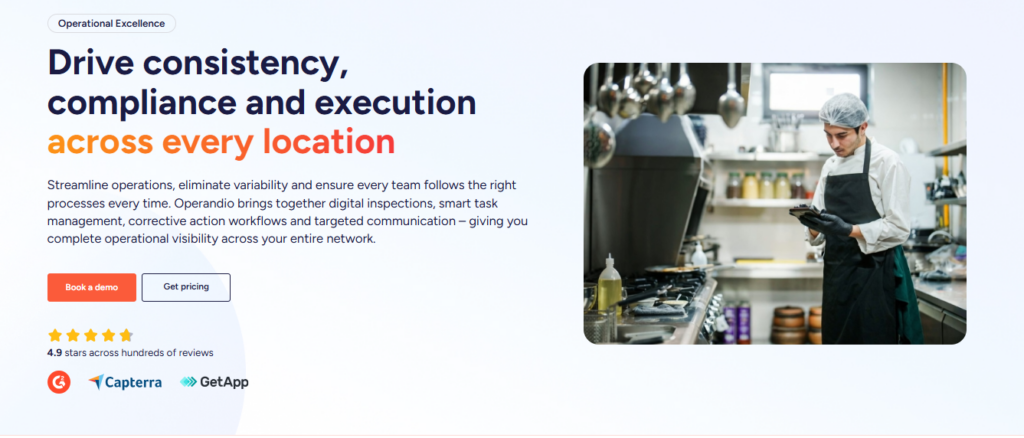
3. Standardize SOPs Before You Add More Sites
Franchise growth breaks when standards live in scattered PDFs, manager memory, old email threads, and location-specific habits.
Your SOPs should cover the daily reality of the business, especially for hospitality, QSR, retail, childcare, healthcare, gyms, cleaning services, and other frontline-heavy environments.
If you operate a food franchise, having digital procedures in place ensures consistent kitchen and service standards across every branch.
Build SOPs for:
- Daily opening and closing routines
- Customer service steps
- Food safety checks
- Cleaning and maintenance
- Cash handling
- Incident reporting
- Inventory and ordering
- Brand presentation
- New staff onboarding
- Manager handover
Operandio’s operations execution platform helps turn SOPs into checklists, audits, corrective actions, and completion records, so head office can see whether standards happen at each location.
4. Recruit Franchisees With Evidence, Not Enthusiasm
The wrong franchisee can slow expansion, damage the brand, create compliance gaps, and drain head office support.
Strong franchisee recruitment looks at more than capital. You need to understand how candidates make decisions, manage teams, follow standards, handle pressure, and commit to the operating model.
Operandio’s FranchiseLab supports structured franchisee evaluation with candidate background capture, financial readiness checks, benchmarking, structured interviews, scoring, and suitability reports.

Ready to grow with better operational control?
Book an Operandio demo to see how franchise recruitment, onboarding, training, audits, and reporting can work from one connected platform.
5. Build Financing and Audit Trails Early
Franchise expansion needs clean financial systems before the next unit opens.
At a minimum, map:
- Franchise fees and setup costs
- Equipment and fit-out costs
- Working capital requirements
- Royalty structure
- Marketing fund contributions
- Insurance and legal costs
- Payroll and staffing assumptions
- Break-even timeline
- Cash reserves
- Reporting and audit requirements
SBA-guaranteed loans can support business purposes including operating capital, fixed assets, equipment, construction, and remodeling. The SBA states loans range from $500 to $5.5 million, depending on the loan program and lender requirements.
For U.S. franchisors, franchise compliance also affects the sales process. Federal rules require franchisors to provide the Franchise Disclosure Document at least 14 calendar days before a prospective franchisee signs a binding agreement or makes payment.
6. Treat Training as a Growth System
Franchise growth fails when training only happens during opening week.
Your LMS should support new franchisees, managers, frontline staff, refresher training, role-based learning, compliance modules, quizzes, and practical sign-offs.
For restaurants and hospitality brands, training needs to hold up during rush conditions. Staff need fast access to food safety procedures, service standards, recipes, cleaning processes, and escalation steps.
Pro tip: Look for a franchise LMS that combines learning management, SOP execution, and compliance in one platform designed for non-desk teams.
7. Track Location Performance Weekly
Franchise growth needs a weekly operating rhythm. Monthly reporting often catches issues too late.
Track the metrics that show whether locations follow standards:
- Audit scores
- Missed tasks
- Corrective action completion
- Training completion
- Food safety checks
- Incident trends
- Customer complaints
- Manager response times
- Launch milestones
- Location-level performance gaps
Pro tip: Your franchise analytics should help operators bring sales, audits, training, tasks, and other operational data into dashboards, so leadership can catch issues earlier and scale with more confidence.
Operandio offers advanced reporting that brings insights across your entire operational suite.
How to Grow Your Franchise: Step-by-Step Process
Use this process to decide what to fix first, what to standardize, and when to open the next location.
| Step | Timeline | What to Do |
| Audit current operations | 2 to 4 weeks | Review performance, compliance, training, SOPs, and location consistency |
| Standardize systems | 4 to 8 weeks | Build SOPs, checklists, LMS courses, launch workflows, and reporting |
| Plan capital and compliance | 2 to 6 weeks | Model costs, funding, FDD timing, legal review, and reporting controls |
| Select markets and franchisees | 4 to 12 weeks | Score territories, assess candidates, validate readiness |
| Launch in controlled waves | Ongoing | Open locations in batches with milestone tracking and support |
Step 1. Audit Your Current Franchise System
Start by finding the weak points in your current locations.
Review audit results, customer complaints, training records, sales performance, checklist completion, staff turnover, and franchisee feedback. Look for patterns by location, region, manager, and role.
This tells you whether your current model can support expansion or whether head office needs to fix basic operating gaps first.
Step 2. Turn Standards Into Daily Workflows
Next, move your standards out of static documents and into daily workflows.
Use digital checklists for recurring routines. Use audits for brand and compliance checks. Use corrective actions for failed tasks. Use your LMS for onboarding and refresher training. Use communications tools for policy updates and campaign rollouts.
This gives every location the same operating rhythm.
Step 3. Build Your Growth and Funding Plan
Now model the cost of expansion.
Include franchisee recruitment, legal work, field support, LMS content, opening support, equipment, technology, marketing, training, travel, and operational reporting. Franchisees should understand their expected investment, working capital needs, and support obligations before signing.
This step protects both sides. It also helps head office avoid underfunding the systems needed to support growth.
Step 4. Recruit and Prepare Franchisees
Once the financial and operational model is clear, recruit franchisees who match it.
Assess operational experience, financial capacity, leadership style, coachability, customer focus, and willingness to follow the system. Strong brands do not only sell territories. They choose operators who can protect the customer experience.
Use structured interviews, readiness checks, and documented decision criteria to reduce inconsistent recruitment decisions.
Step 5. Launch New Locations With a Repeatable Playbook
Use a structured launch plan for every new site.
A launch playbook should cover:
- Site readiness
- Equipment checks
- Hiring
- Training
- Compliance documents
- Opening stock
- Local marketing
- Operational sign-offs
- First-week support
- Post-launch review
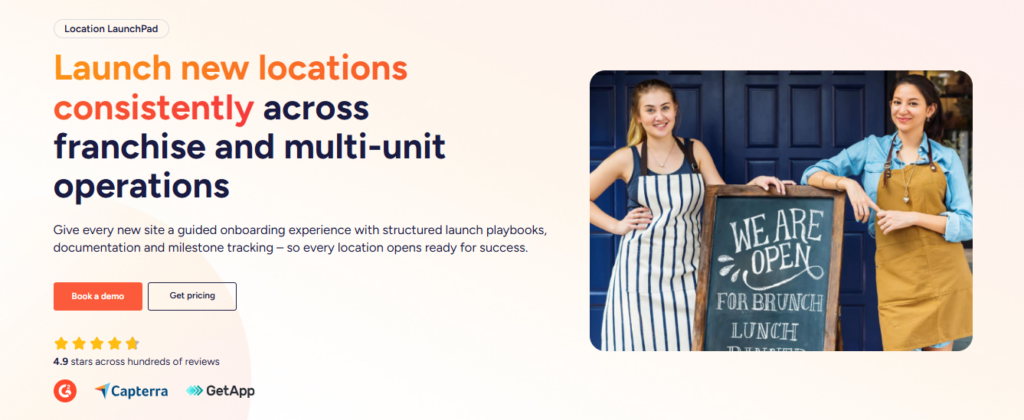
Operandio’s Location LaunchPad supports guided launch playbooks, documentation, milestone tracking, pre-opening checklists, approvals, and progress visibility for HQ, regional managers, and franchisees.
Best Practices When Growing Your Franchise
Even strong franchise systems hit friction during expansion. These best practices help you reduce avoidable problems.
Grow at the Speed Your Support Team Can Handle
Fast growth looks good on paper, but every new unit increases demand on training, field support, audits, franchisee communication, vendor coordination, and issue resolution.
Before approving more locations, ask:
- Can area managers support the extra sites?
- Can head office onboard franchisees without shortcuts?
- Can training stay consistent?
- Can compliance checks keep pace?
- Can leadership see performance by location?
The right growth speed protects brand standards.
Keep Training Active After Opening Week
Opening training gives teams a start. Ongoing LMS training keeps standards alive.
Use short modules, quizzes, practical assessments, refresher courses, and role-based pathways. For hospitality and restaurant franchises, connect training to real tasks like food prep, service recovery, cleaning, equipment checks, and safety routines.
Operandio’s learning and development tools help franchise networks assign training, track completion, and connect learning to daily operations.
Require Proof of Execution
Franchise growth needs proof, not assumptions.
Use photo evidence, timestamps, digital logs, audit trails, and corrective action records. This matters in food safety, brand audits, cleaning standards, maintenance, incident reporting, and staff compliance.
Operandio brings audits, task management, employee communications, training, document management, corrective actions, food safety, and reporting into one platform for multi-location teams.
Centralize Franchise Communication
Do not rely on email chains, group chats, and manager memory for critical updates.
Use a central communication system for new menu launches, policy changes, safety notices, seasonal campaigns, and compliance reminders. Require read acknowledgments for high-risk updates.
Operandio supports targeted communications, scheduled campaigns, rich content, read confirmations, and frontline messaging across mobile and shared tablet workflows.
Review Performance by Location, Region, and Role
Do weekly reviews across training, audits, incidents, tasks, compliance, and corrective actions.
This helps head office spot:
- Locations that need coaching
- Franchisees who need extra support
- Managers who need retraining
- SOPs that confuse staff
- Equipment issues that keep recurring
- Regions with compliance risk
Good reporting helps franchise leaders support locations before small gaps become customer-facing problems.
Unify Your Franchise Operations With Operandio
Franchise growth comes from making every location easier to launch, train, manage, audit, support, and improve.
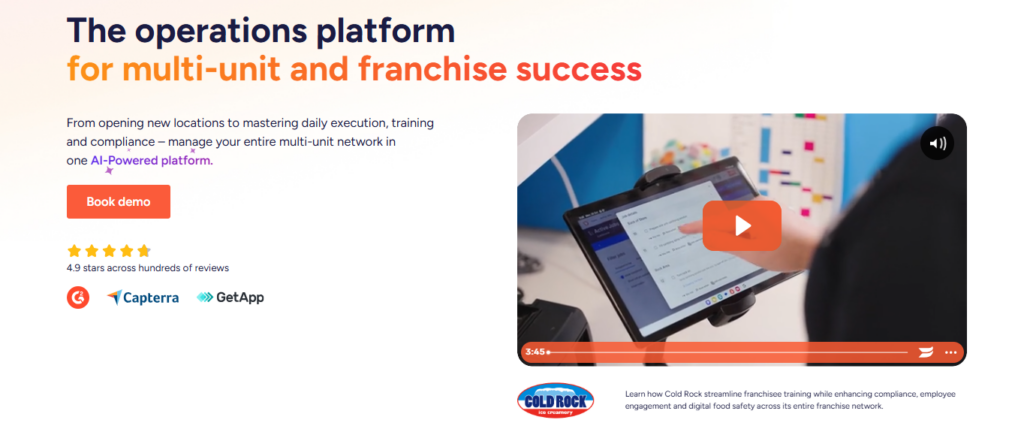
Operandio helps multi-unit and franchise businesses replace scattered systems with one connected platform for SOPs, LMS training, daily checklists, audits, food safety, communications, corrective actions, launch workflows, and reporting.
For hospitality, QSR, retail, healthcare, gyms, childcare, cleaning services, and other frontline-heavy franchise networks, that means head office gets stronger visibility while location teams get simpler tools for daily work.
Book a demo to see how Operandio can help you grow your franchise with consistent operations across every site.
FAQs
Should I Grow My Franchise Quickly or Take It Slow?
Usually, take it slow enough to protect quality. Grow only when your current locations can follow standards, train staff, and report performance consistently.
How Does a Franchise Grow?
A franchise grows by proving the model works, recruiting strong franchisees, choosing viable markets, standardizing operations, funding expansion, and supporting every location with training and reporting.
How Much Does It Cost to Grow a Franchise System?
It depends on your industry, legal needs, location costs, staffing, technology, training, and support model. Build a full capital plan before approving expansion.
How Can I Ensure Consistency Across Multiple Franchise Locations?
Use standardized SOPs, digital checklists, LMS training, audits, corrective actions, and reporting. Consistency improves when every location follows the same workflow.
What Is the Biggest Franchise Growth Mistake?
The biggest mistake is expanding before the operating system is ready. More locations will multiply weak training, unclear SOPs, poor reporting, and inconsistent compliance.