
- Platform
- Features
 Franchise & Multi-Unit ManagementCentralize oversight and streamline growth across your entire multi location network
 Learning ManagementTrain, verify, and reward your workforce with mobile-first education
 Operations ExecutionStreamlined operations ensuring brand standards, accountability and efficiency
 Asset ManagementOptimize equipment uptime through proactive maintenance and smart tracking
 Digital Food SafetyAutomate compliance and monitor quality with real-time digital precision
 Health & Safety Management (EHS)Mitigate workplace risks and streamline digital incident reporting and investigations
- Platform Essentials
 Powerful ReportingAlign leadership with role-based dashboards and deeper analytics
 Operandio IntelligenceAutomate content, analyze trends, and provide instant answers
 IntegrationsUnify your enterprise tech stack with real-time data
 IoT PlatformDetect anomalies and automate workflows with intelligent sensors
 Mobile & Shared Tablet AppsSecurely empower frontline teams with fast, offline-capable access
- Footer


 Not sure what you need?
Book in a call with the team
- Features
- Solutions
- By Industry
 RestaurantsQSR, fast food and multi-unit restaurants
 Hotels & ResortsHotels, resorts and extended stay hotels
 ChildcareEarly education, childcare, daycare and preschool
 EntertainmentTheme parks, family entertainment centers and play centers
 Fitness Centers & LeisureFitness centers, golf clubs, gyms and sports facilities
 RetailBig-box retailers, franchise stores and supermarkets
- By Use Case
- Operational ExcellenceStreamlined operations ensuring brand standards, accountability and efficiency
- Learning & DevelopmentTrain, verify, and reward your workforce with mobile-first education
- Franchise & Multi-Unit ManagementCentralize oversight and streamline growth across your entire multi location network
- Food Safety ComplianceAutomate compliance and monitor quality with real-time digital precision
- Asset Management & MaintenanceOptimize equipment uptime through proactive maintenance and smart tracking
- Health & Safety Management (EHS)Mitigate workplace risks and streamline digital incident reporting and investigations
- By Industry
- Resources
- Platform
- Features
- Franchise & Multi-Unit ManagementCentralize oversight and streamline growth across your entire multi location network
- Learning ManagementTrain, verify, and reward your workforce with mobile-first education
- Operations ExecutionStreamlined operations ensuring brand standards, accountability and efficiency
- Asset ManagementOptimize equipment uptime through proactive maintenance and smart tracking
- Digital Food SafetyAutomate compliance and monitor quality with real-time digital precision
- Health & Safety Management (EHS)Mitigate workplace risks and streamline digital incident reporting and investigations
- Platform Essentials
- Powerful ReportingAlign leadership with role-based dashboards and deeper analytics
- Operandio IntelligenceAutomate content, analyze trends, and provide instant answers
- IntegrationsUnify your enterprise tech stack with real-time data
- IoT PlatformDetect anomalies and automate workflows with intelligent sensors
- Mobile & Shared Tablet AppsSecurely empower frontline teams with fast, offline-capable access
- Footer
- Not sure what you need?
Book in a call with the team
- Features
- Solutions
- By Industry
- RestaurantsQSR, fast food and multi-unit restaurants
- Hotels & ResortsHotels, resorts and extended stay hotels
- ChildcareEarly education, childcare, daycare and preschool
- EntertainmentTheme parks, family entertainment centers and play centers
- Fitness Centers & LeisureFitness centers, golf clubs, gyms and sports facilities
- RetailBig-box retailers, franchise stores and supermarkets
- By Use Case
- Operational ExcellenceStreamlined operations ensuring brand standards, accountability and efficiency
- Learning & DevelopmentTrain, verify, and reward your workforce with mobile-first education
- Franchise & Multi-Unit ManagementCentralize oversight and streamline growth across your entire multi location network
- Food Safety ComplianceAutomate compliance and monitor quality with real-time digital precision
- Asset Management & MaintenanceOptimize equipment uptime through proactive maintenance and smart tracking
- Health & Safety Management (EHS)Mitigate workplace risks and streamline digital incident reporting and investigations
- By Industry
- Resources
Top 7 Profitable Food Franchise Segments + Examples (2026)
Key Takeaways
- A food franchise gives you the right to operate under an established brand’s name, menu, and systems, in exchange for an upfront fee and ongoing royalties.
- Food franchises split into segments that behave differently on capital and margin. Profitability comes down to a handful of numbers: AUV, food and labor cost percentages, combined royalty load, margin, and payback period that you track per location.
- Operandio is built for the operators who run several of these locations at once, giving franchisors and multi-unit franchisees one place to standardize procedures, train staff, audit sites, and compare performance across the network.
Food franchises account for an estimated 30% of total franchise establishments in the U.S. and nearly 60% of direct franchise employment.
Looking for profitable food franchises to add to your portfolio?
This article covers the seven segments worth your capital, the big brands inside each, the metrics that tell you whether a specific opportunity performs, and how Operandio helps you run them profitably once you own them.
What a Food Franchise Actually Is (and What You’re Buying)
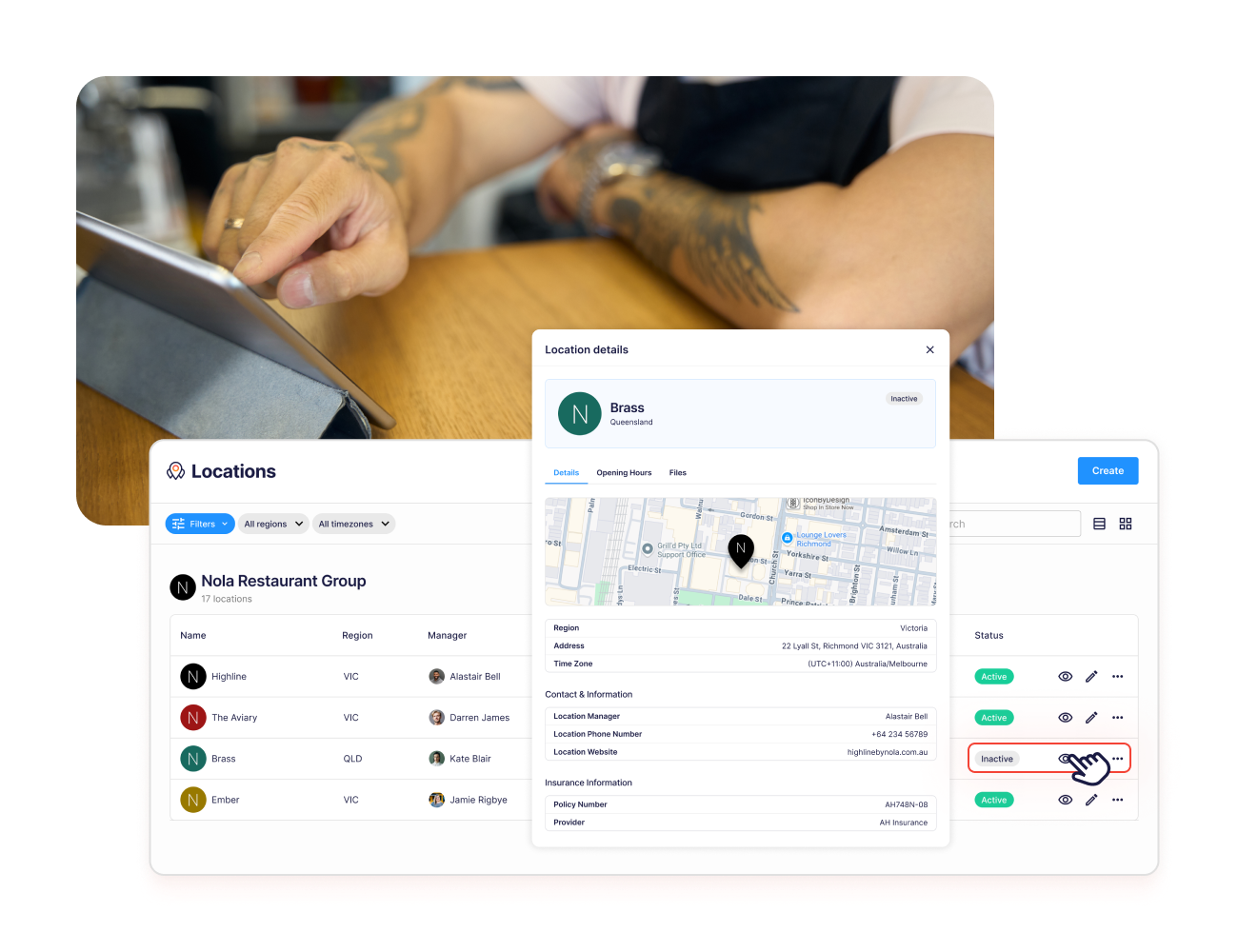
A food franchise is a license to operate a restaurant under an established brand, using its menu, suppliers, systems, and marketing.
The franchisor owns the brand and the operating model. You become the franchisee/operator, who owns the unit, the lease, the staff, and the risk.
The franchisor sets the standards; you execute them and pay for the privilege.
What you’re buying breaks into four costs.
- Initial franchise fee. Paid once, for the license, initial training, and site approval. For example, Kona Ice charges $15,000, Scooter’s Coffee $40,000, Crumbl $50,000.
- Total initial investment. FDD Item 7 reports this figure, and it includes the franchise fee alongside build-out, equipment, signage, inventory, and working capital. For instance, Kona Ice runs $102,365 to $226,841 for a mobile unit.
- Royalty. 4% and 8% of gross sales, paid weekly or monthly. McDonald’s charges 4% legacy, 5% for new US units. Subway and Crumbl charge 8%.
- Ad fund contribution. 2% to 6% of gross, funding national marketing. Higher than the 1% to 3% typical across franchising generally.
Royalty and ad fund come off the top before you pay for food, labor, or rent. The FTC’s guide for franchise buyers notes you owe royalties for the duration of the agreement even in a loss-making year. A combined 12% load means twelve cents of every dollar leaves before your costs begin.
The economics shift once you run more than one unit. Multi-unit ownership is a portfolio, with shared labor pools, negotiated supply, and area development agreements that lock in territory before competitors reach it.
Most franchisors now prefer multi-unit developers, and franchise expansion plans are written around them.
Which Are the Most Profitable Food Franchise Segments?
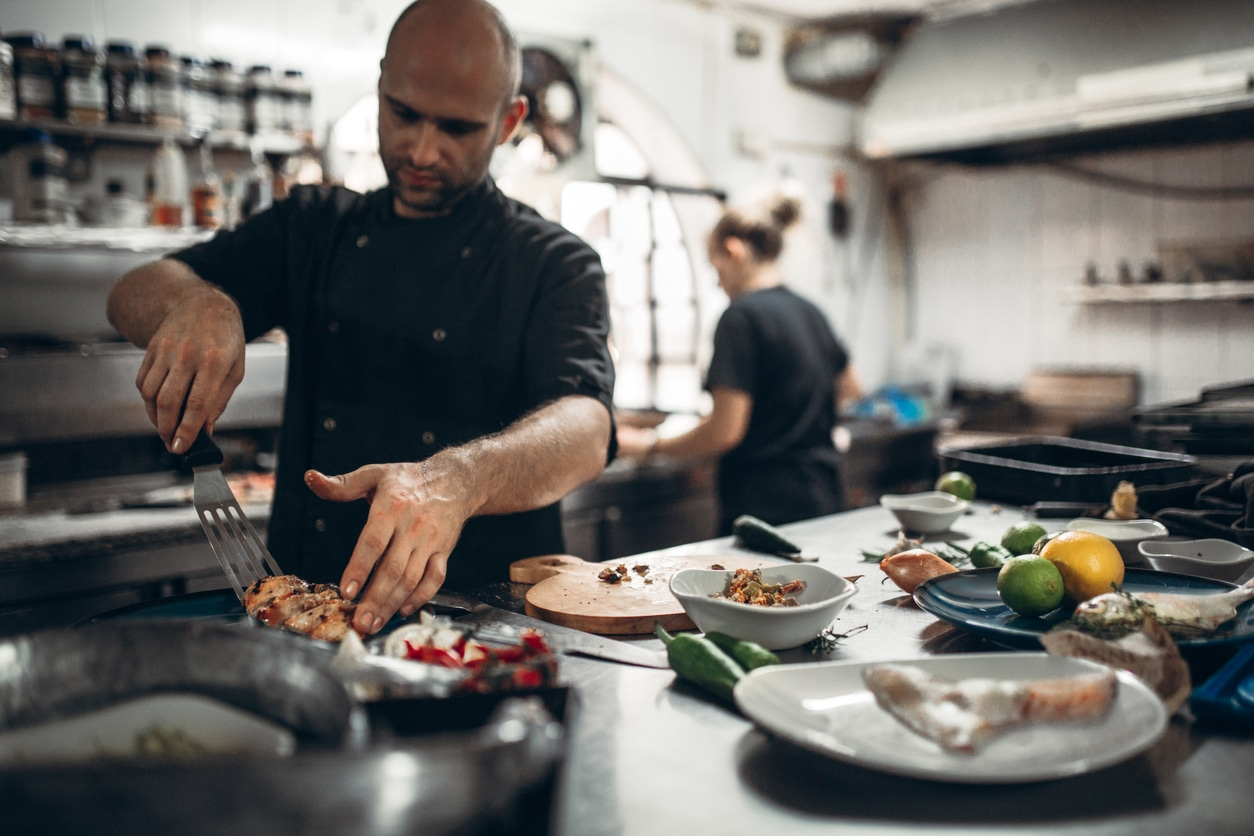
Seven segments dominate food franchising, and they behave differently on capital, margin, and how well they scale. Match the segment to your capital and your operating appetite.
1. Quick Service Restaurants
QSR covers limited-service restaurants where customers order at a counter, drive-thru, or app, and food is prepared for immediate consumption. Burgers, chicken, tacos, and fried food dominate. Seating is limited or absent, and most volume moves off-premise.
This is the largest segment in food franchising by unit count, system sales, and franchisee count. Fast food alone accounts for an estimated 25% of all U.S. franchise establishments. Globally, the QSR market reached $1.16 trillion in 2026 and is forecast to hit $1.74 trillion by 2031.
Scale is the reason to invest. Off-premise formats now produce over 70% of revenue at leading brands, and digital ordering drives more than 40% of chain transactions. Chicken-led concepts are growing fastest as consumer preference shifts away from beef.
Top franchises:
- Wingstop
- Popeyes
- Taco Bell
- KFC
- Dave’s Hot Chicken
Best for: Well-capitalized operators building multiple units in a defined territory.
Our breakdown of what smart QSR brands do differently to increase profitability covers the operating side.
2. Pizza
Pizza franchises run delivery and carryout-led operations with limited or no dine-in. Kitchens are simple, menus are narrow, and staffing skews toward drivers rather than servers.
The pizza foodservice market sits at $158.93 billion in 2026 and is forecast to reach $257.17 billion by 2031, growing at 10.10% annually. That outpaces QSR overall.
Build-out is unusually cheap for the revenue produced. Dough, sauce, and cheese keep ingredient costs low, and off-premise volume removes most front-of-house labor.
Best for: Operators building density in suburban markets, and anyone wanting a semi-absentee structure. Delivery volume is growing while dine-in pizza declines, so brands with real delivery infrastructure are pulling away.
Top franchises:
- Domino’s
- Marco’s Pizza
- Little Caesars
- Papa John’s
- Jet’s Pizza
3. Coffee and Beverage
Coffee franchises range from full cafés with seating to drive-thru-only kiosks with no dining room at all. The kiosk format has driven most recent growth, since it needs a fraction of the square footage and almost no front-of-house staff.
The foodservice coffee market reached $555.13 billion in 2026 and is forecast to hit $738.34 billion by 2031.
Within the café market specifically, chained outlets are growing at 8.23% annually while independents hold the larger share.
Ingredient costs are the lowest in food franchising, and the fee load can be too.
Top franchises:
- Scooter’s Coffee
- 7 Brew
- Dunkin’
- The Human Bean
- Biggby Coffee
Best for: Operators who want the fastest payback per dollar deployed.
4. Fast Casual
Fast casual sits between QSR and full service. Counter ordering, higher-quality ingredients, made-to-order preparation, and price points above fast food. Bowls, burritos, premium burgers, and salads.
It is the fastest-growing restaurant format. Within the global fast food market, fast casual units are forecast to grow at 8.24% annually through 2031, ahead of the category as a whole.
Revenue per location is the highest on this list. Margin is not. Prep-to-order labor and premium ingredients consume the price premium before it reaches the operator, which is why fast casual ranks near the top on revenue lists and lower on return.
Top franchises:
- Five Guys
- Tropical Smoothie Cafe
- Panera Bread
- Clean Juice
Best for: Operators who want brand strength and higher revenue per site, and who have systems tight enough to hold labor cost down. This segment punishes weak execution faster than any other.
5. Bakery, Dessert, and Specialty
Cookies, donuts, ice cream, pretzels, and cakes sold as a destination purchase or an impulse add-on. Footprints are small, kitchens are simple, and the daypart sits outside lunch and dinner rush.
The bakery products market runs $524.99 billion in 2026, growing to $647.58 billion by 2031. Growth is steadier than QSR, rather than faster.
Top franchises:
- Cinnabon
- Baskin-Robbins
- Nothing Bundt Cakes
- Duck Donuts
- Auntie Anne’s
Best for: Operators seeking lower entry costs and non-traditional locations like malls, airports, and travel centers.
6. Sandwich and Sub
Assembly-line sandwich production with narrow menus and no cooking line. Simple to operate, cheap to build, and entirely dependent on throughput.
Sandwiches sit inside the burger and sandwich category, the largest product type in the global fast food market, which reached $1.78 trillion in 2026.
Top franchises:
- Jersey Mike’s Subs
- Jimmy John’s
- Firehouse Subs
- Subway
Best for: Operators in high-traffic office or campus locations who can drive lunch volume. Check the combined fee load before anything else in this segment.
7. Mobile and Non-Traditional
Food trucks, trailers, carts, and kiosks placed inside host locations like stadiums, airports, universities, and travel plazas. No lease, no build-out, minimal staff.
The food truck market reached $4.71 billion in 2026 and is forecast to reach $6.46 billion by 2031. Small against the other segments, and growing at 6.52% annually.
Return on capital is the reason to look here. Kona Ice charges a $15,000 franchise fee against a total investment well under any brick-and-mortar format. Absolute cash flow per unit is modest. Three mobile units cost less than one coffee kiosk.
Top franchises:
- Kona Ice
- Cousins Maine Lobster
- Auntie Anne’s non-traditional format
- Dunkin’ kiosk format
Best for: First-time operators testing the model, and existing multi-unit owners adding revenue in venues where a permanent build is impossible.
Why Franchise Profitability Is Key to Success, and the Most Important Metrics to Track

Franchise profitability is what the operator keeps after royalties, food, labor, rent, and debt service. It is not revenue, and it is rarely what franchisor marketing leads with.
The reason to focus on it is simple. Margin is what funds the next location. A franchise that produces $3 million in revenue at 8% margin generates less expansion capital than one producing $1.5 million at 18%.
Tracking profitability properly gives you:
- The ability to fund growth from operations rather than new debt for every unit
- A resale valuation. Multi-unit platforms sell at higher multiples than single units, and the gap widens with portfolio size.
- Early warning on failing locations before they consume cash from performing ones
- A benchmark for franchise audits that measures sites against numbers, not impressions
What Are the Most Important Metrics to Track to Understand Franchise Profitability?
Here are the most important metrics to track to learn top food franchise profitability:
| Metric | What It Measures | Why It Matters |
|---|---|---|
| Average Unit Volume (AUV) | Average annual revenue per location | The headline number franchisors lead with. Meaningless without a margin figure attached |
| Food cost percentage | Share of revenue spent on ingredients | Ranges from 15% in coffee to 32% in fast casual. Sets your margin ceiling before you do anything |
| Labor percentage | Share of revenue spent on wages | The line most affected by execution. Fast casual runs 30% to 35%, drive-thru coffee far less |
| Combined royalty load | Royalty plus ad fund as a share of gross sales | Ranges from 8% at Scooter’s to 12.5% at Subway. Comes off the top before any cost |
| EBITDA or net margin | What remains after operating costs | Determines whether the unit funds expansion or just services debt |
| Return on invested capital | Annual earnings against capital deployed | The only fair way to compare a $130,000 mobile unit with a $1.3 million drive-thru |
| Payback period | Years to recover total investment | Five to eight years is healthy. Beyond ten, the model depends on resale value |
| Unit-level cash flow | Cash left after debt service and owner compensation | The number that pays you. Everything above it is theory |
Where to find real numbers?
Item 19 of the Franchise Disclosure Document is the only financial performance data a franchisor is legally required to share, and many disclose selectively.
Ask for quartile breakdowns rather than system averages, since the spread within a brand is often larger than the gap between brands.
Item 20 lists every existing franchisee with contact details. Call eight to fifteen of them and ask what they take home after paying themselves fairly.
Once you own locations, the same metrics need tracking per site. Franchisee monitoring and structured franchise management turn those numbers into something you can act on weekly rather than review quarterly.
How Can We Maximize Franchise Profitability?

Margin is won in execution, not in brand selection. These five practices can give you better odds to succeed with a new franchise model:
1. Standardize Execution Before You Add Locations
Every procedure that lives in a manager’s head becomes a variable at the next location. Document opening, prep, cleaning, and closing as assigned work, then push the same version to every site.
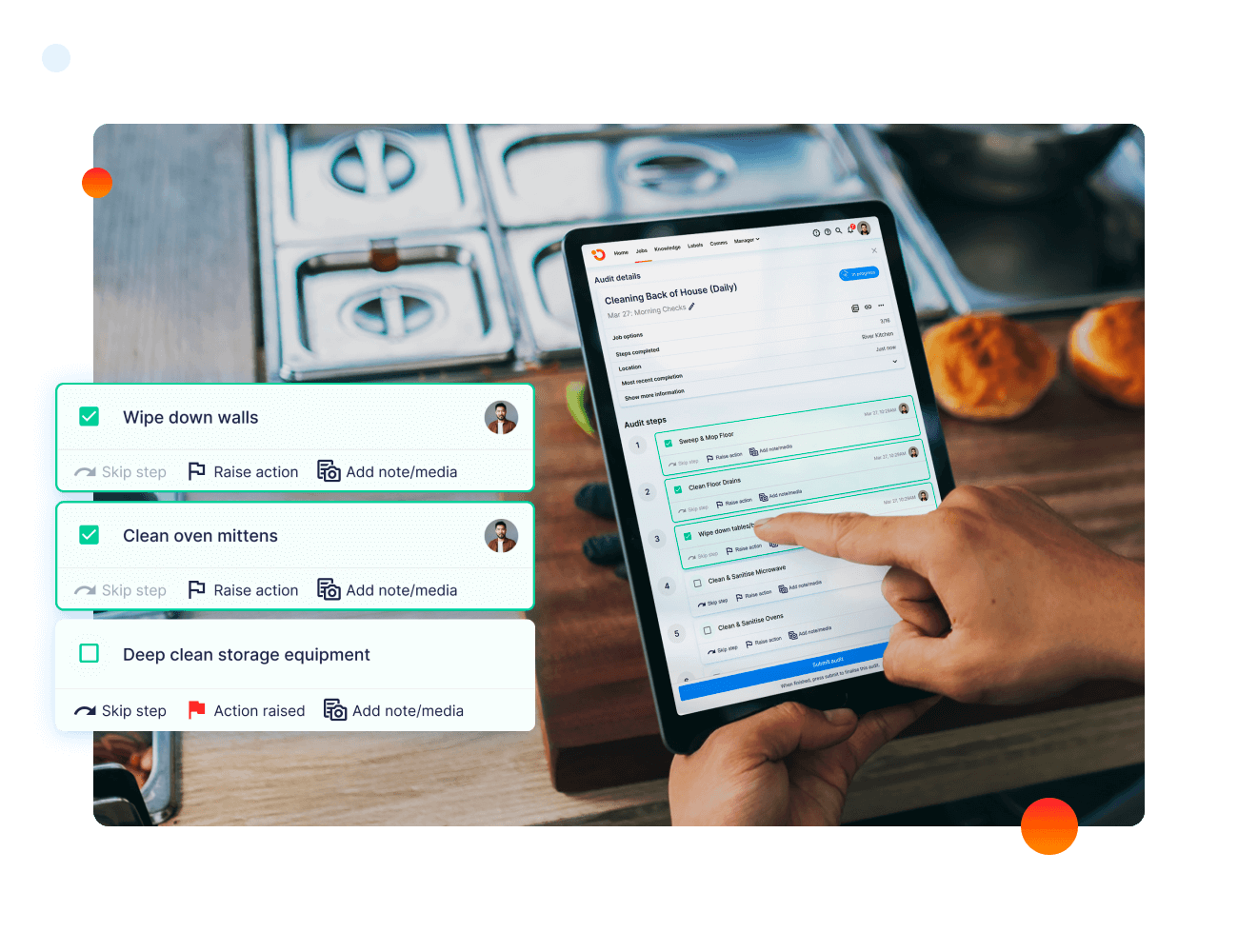
Operandio’s task management and checklists convert your franchise operations manual into recurring assignments with completion records. Head office publishes once and every location receives it, which removes the drift that shows up when standards travel by word of mouth.
Here are 15+ must-have restaurant checklists you can replicate for locations before launching.
2. Open New Locations on a Repeatable Timeline
Every week between lease signing and opening day costs rent without revenue. Operators who open on schedule do it by running the same sequence each time rather than rebuilding the plan per site.
Operandio’s Location LaunchPad sequences hiring, equipment, training, and sign-off against the opening date, so each new site follows the process that worked at the last one.
3. Cut Time to Competence for New Staff
Fast-food turnover runs around 150% annually. Every replacement costs recruiting, onboarding, and weeks of reduced output, and that cost lands on labor percentage.
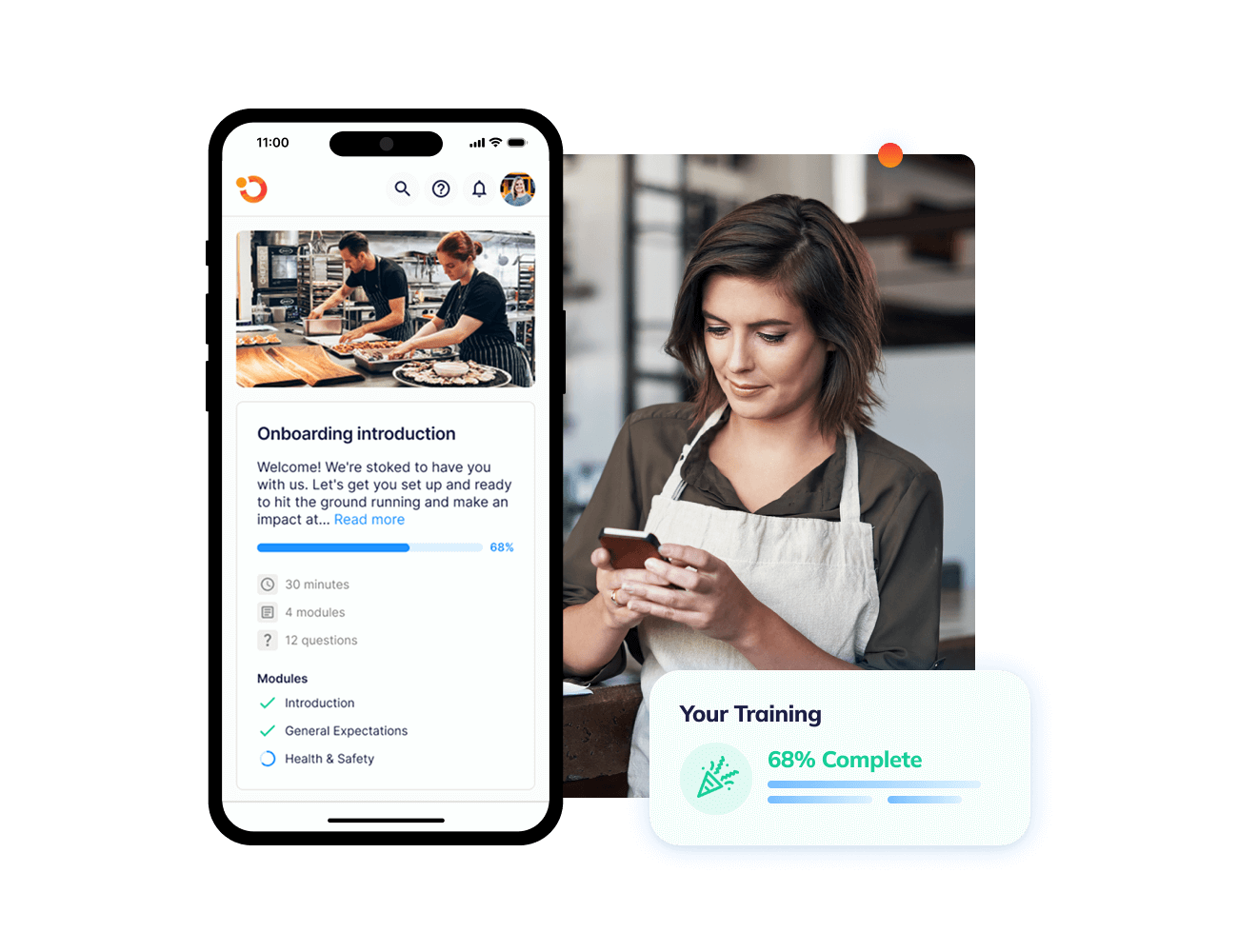
Deliver training on the devices staff already carry. Operandio’s mobile-first LMS runs modules and quizzes on any phone or shared tablet, and the AI course builder turns existing SOPs into courses without a content team.
Our guide to franchise employee onboarding covers the first 90-day sequence.
4. Audit to a Written Standard and Close the Loop
Score sites against the same criteria, then convert every failed item into an owned action with a deadline.
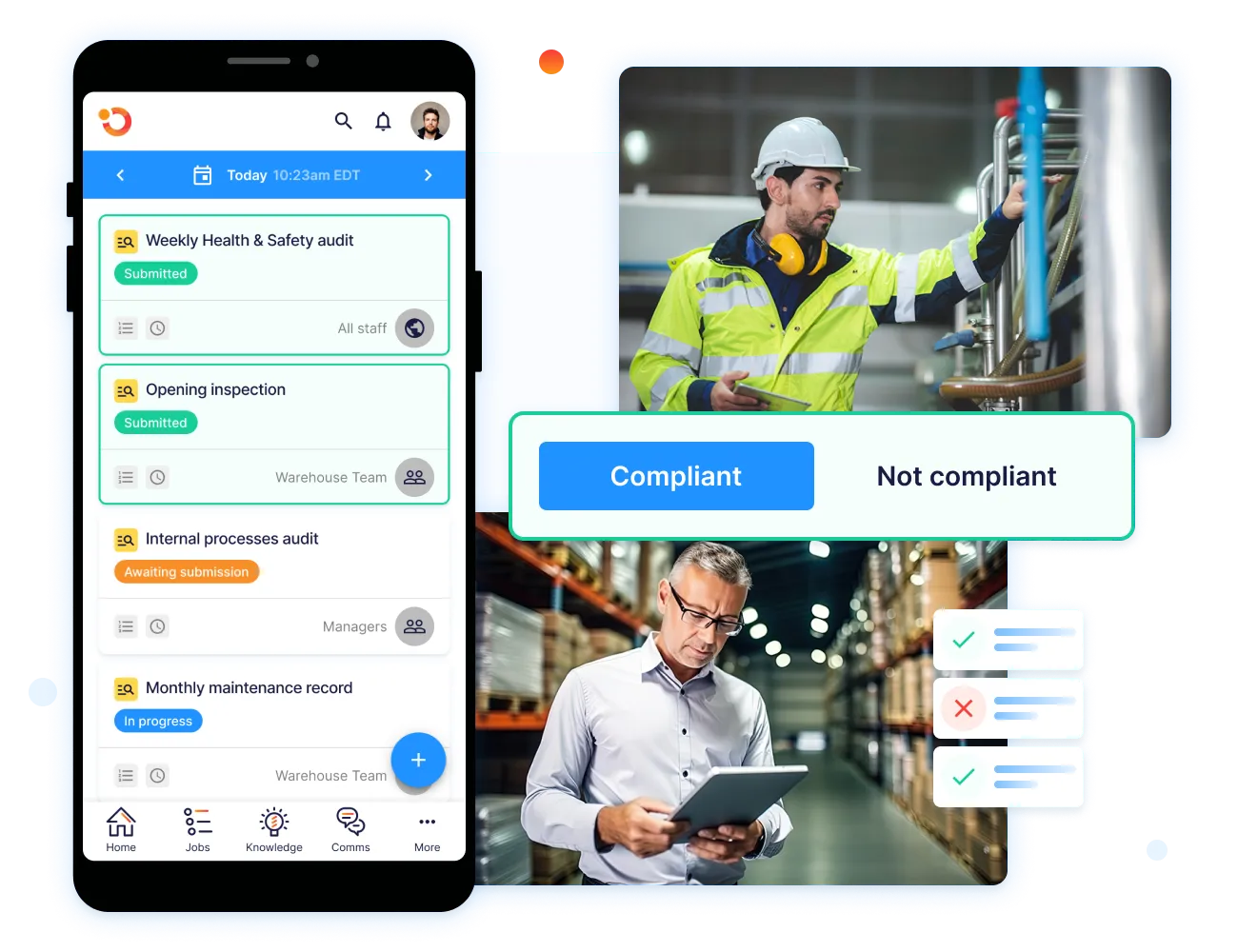
Operandio’s inspections and audits capture photo evidence against your standards, and failed items generate corrective actions assigned to a named person. You see what was raised, who owns it, and whether it closed.
5. Compare Every Location on One Dashboard
System averages hide your problem sites. The location running 4% above target labor cost looks fine inside a portfolio average and looks obvious on a per-site view.
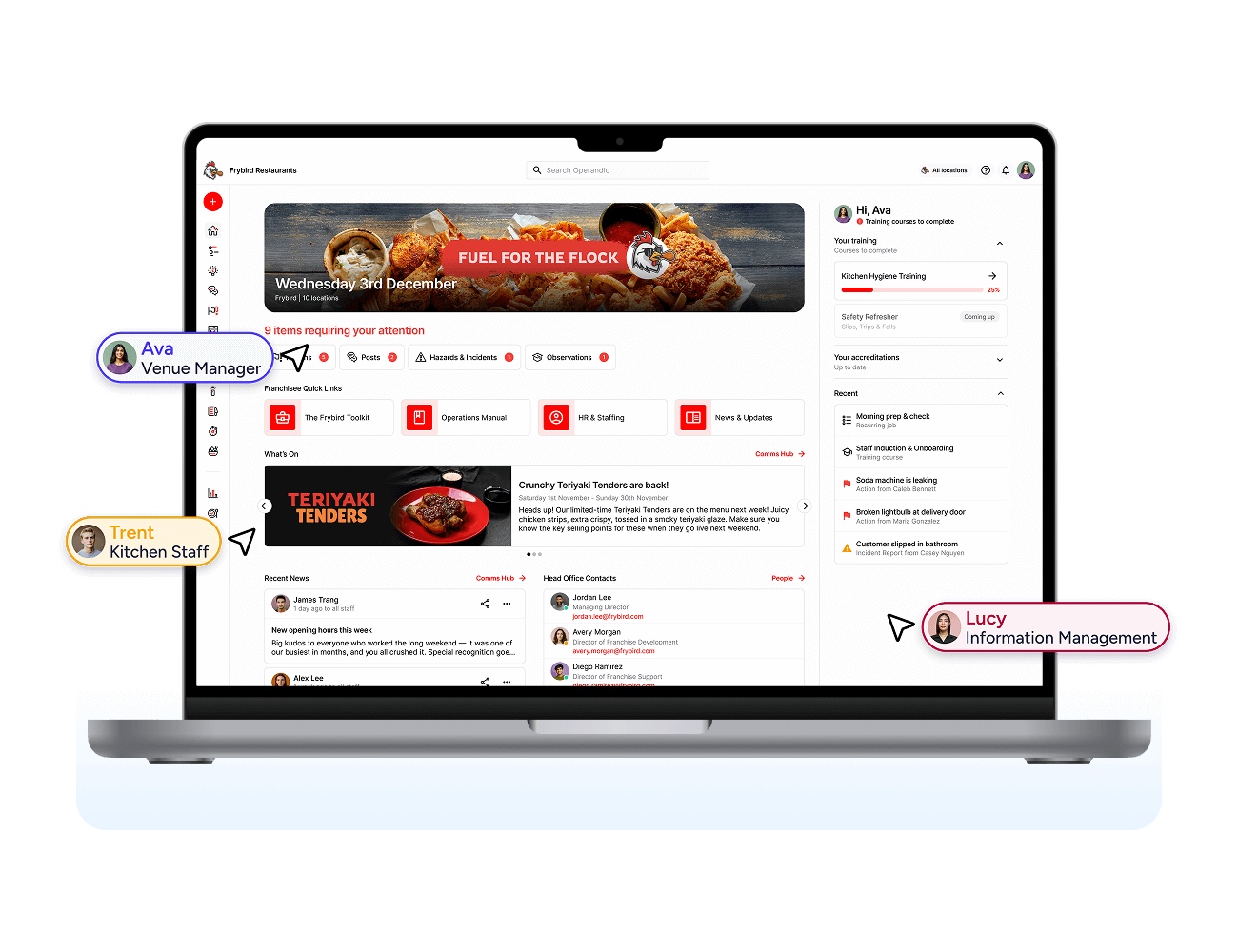
Operandio’s network dashboard ranks locations on task completion, audit scores, and training status in one view. That comparison is what lets you intervene at the weak site instead of discovering it in a quarterly report.
Our guide on how to grow your franchise covers the expansion decisions that follow.
Focus on Delivering a Greater Guest Experience at Every Location With Operandio
Segment choice sets your margin ceiling. Execution decides whether you reach it.
Operandio gives franchisors and multi-unit operators one franchise operating system for standards, training, audits, and network reporting, so every location performs like your best one.
See how multi-unit and franchise brands run their networks, then book a demo with our team.
FAQs
1. How much does it cost to open a food franchise?
In most cases, between $204,046 and $494,000, depending on format. Mobile units sit at the low end, freestanding drive-thrus with land at the top. Add a $25,000 to $50,000 franchise fee.
2. Which food franchise segment is the most profitable?
Drive-thru coffee, by margin. Ingredient costs run 15% to 22% and net margins reach 16% to 20%, ahead of pizza, QSR, and fast casual.
3. Can you open a food franchise with no restaurant experience?
Yes. Most franchisors train new operators from scratch, and franchise management software like Operandio handles the rest by putting procedures and training in front of staff.
4. How many locations do you need before franchising becomes worthwhile?
Around three to five. Below that, overheads sit on too few units. Above it, shared labor, negotiated supply, and multi-unit resale multiples start working in your favor.