
- Platform
- Features
 Franchise & Multi-Unit ManagementCentralize oversight and streamline growth across your entire multi location network
 Learning ManagementTrain, verify, and reward your workforce with mobile-first education
 Operations ExecutionStreamlined operations ensuring brand standards, accountability and efficiency
 Asset ManagementOptimize equipment uptime through proactive maintenance and smart tracking
 Digital Food SafetyAutomate compliance and monitor quality with real-time digital precision
 Health & Safety Management (EHS)Mitigate workplace risks and streamline digital incident reporting and investigations
- Platform Essentials
 Powerful ReportingAlign leadership with role-based dashboards and deeper analytics
 Operandio IntelligenceAutomate content, analyze trends, and provide instant answers
 IntegrationsUnify your enterprise tech stack with real-time data
 IoT PlatformDetect anomalies and automate workflows with intelligent sensors
 Mobile & Shared Tablet AppsSecurely empower frontline teams with fast, offline-capable access
- Footer


 Not sure what you need?
Book in a call with the team
- Features
- Solutions
- By Industry
 RestaurantsQSR, fast food and multi-unit restaurants
 Hotels & ResortsHotels, resorts and extended stay hotels
 ChildcareEarly education, childcare, daycare and preschool
 EntertainmentTheme parks, family entertainment centers and play centers
 Fitness Centers & LeisureFitness centers, golf clubs, gyms and sports facilities
 RetailBig-box retailers, franchise stores and supermarkets
- By Use Case
- Operational ExcellenceStreamlined operations ensuring brand standards, accountability and efficiency
- Learning & DevelopmentTrain, verify, and reward your workforce with mobile-first education
- Franchise & Multi-Unit ManagementCentralize oversight and streamline growth across your entire multi location network
- Food Safety ComplianceAutomate compliance and monitor quality with real-time digital precision
- Asset Management & MaintenanceOptimize equipment uptime through proactive maintenance and smart tracking
- Health & Safety Management (EHS)Mitigate workplace risks and streamline digital incident reporting and investigations
- By Industry
- Resources

- Platform
- Features
- Franchise & Multi-Unit ManagementCentralize oversight and streamline growth across your entire multi location network
- Learning ManagementTrain, verify, and reward your workforce with mobile-first education
- Operations ExecutionStreamlined operations ensuring brand standards, accountability and efficiency
- Asset ManagementOptimize equipment uptime through proactive maintenance and smart tracking
- Digital Food SafetyAutomate compliance and monitor quality with real-time digital precision
- Health & Safety Management (EHS)Mitigate workplace risks and streamline digital incident reporting and investigations
- Platform Essentials
- Powerful ReportingAlign leadership with role-based dashboards and deeper analytics
- Operandio IntelligenceAutomate content, analyze trends, and provide instant answers
- IntegrationsUnify your enterprise tech stack with real-time data
- IoT PlatformDetect anomalies and automate workflows with intelligent sensors
- Mobile & Shared Tablet AppsSecurely empower frontline teams with fast, offline-capable access
- Footer
- Not sure what you need?
Book in a call with the team
- Features
- Solutions
- By Industry
- RestaurantsQSR, fast food and multi-unit restaurants
- Hotels & ResortsHotels, resorts and extended stay hotels
- ChildcareEarly education, childcare, daycare and preschool
- EntertainmentTheme parks, family entertainment centers and play centers
- Fitness Centers & LeisureFitness centers, golf clubs, gyms and sports facilities
- RetailBig-box retailers, franchise stores and supermarkets
- By Use Case
- Operational ExcellenceStreamlined operations ensuring brand standards, accountability and efficiency
- Learning & DevelopmentTrain, verify, and reward your workforce with mobile-first education
- Franchise & Multi-Unit ManagementCentralize oversight and streamline growth across your entire multi location network
- Food Safety ComplianceAutomate compliance and monitor quality with real-time digital precision
- Asset Management & MaintenanceOptimize equipment uptime through proactive maintenance and smart tracking
- Health & Safety Management (EHS)Mitigate workplace risks and streamline digital incident reporting and investigations
- By Industry
- Resources
Frontline Manager Training: Skills, Program & Rollout Guide
Key Takeaways
- Frontline manager training prepares shift leads, assistant managers, store managers, and other first-line leaders to run daily operations, coach employees, enforce standards, and respond when something goes wrong.
- The strongest programs teach seven practical skills: shift execution, communication, coaching, accountability, employee development, safety and compliance, and data-led improvement.
- Training should be verified through observable behavior. Completing a course does not prove someone can run a shift, coach an employee, conduct an audit, or respond correctly to an incident.
- Build manager development around role-specific competencies, coached practice, practical assessment, and operational metrics such as audit results, task completion, employee ramp-up, turnover, and incidents.
Promoting your strongest frontline employee does not automatically create a capable manager.
Frontline manager training teaches newly promoted and existing managers how to lead people while running the standards, tasks, safety requirements, and operating routines of a location.
This guide covers the frontline leadership skills managers need, how to build the training program, a practical 30-60-90 day ramp plan, and the metrics that show whether the training actually changed performance.
What Is Frontline Manager Training?
Frontline manager training develops the people who directly supervise employees delivering day-to-day operations.
Unlike senior leaders who may manage departments, budgets, or long-term strategy, frontline managers work close to the point of execution. They assign work, coach employees, handle problems during the shift, enforce standards, manage compliance, and communicate what the organization expects.
Frontline managers can include:
- Shift leads: Coordinate employees and priorities during a specific shift.
- Assistant managers: Support the manager while taking ownership of daily people and operational issues.
- Store or restaurant GMs: Run location-level people, performance, service, safety, and financial execution.
- Head housekeepers: Coordinate housekeeping standards, workloads, inspections, and employee performance.
- Gym floor managers: Manage employees, member experience, equipment, safety, and daily floor operations.
- Clinic coordinators: Coordinate frontline teams, patient workflows, procedures, and compliance requirements.
Many frontline managers move into these roles after succeeding as individual contributors. Yet research from the Center for Creative Leadership found that 60% never received training for their first leadership role.
That creates a difficult transition: the employee who used to perform the work now has to get results through other people.
For more on the operating context, read this guide to managing frontline employees.
What Is the Difference Between Corporate Leadership and Frontline Manager Training?
Both forms of development build leadership capability, but they prepare people for different jobs.
Corporate leadership programs often focus on organizational direction, influence, and longer-term decision-making. Frontline manager training needs to prepare someone to run the next shift, coach the employee in front of them, and keep operational standards intact.
| Corporate Leadership Training | Frontline Manager Training |
|---|---|
| Focuses on strategy, organizational leadership, and influence | Focuses on people and daily operational execution |
| Often works across quarterly, annual, or multi-year priorities | Works across the current shift, day, and week |
| May lead through managers, functions, or cross-functional teams | Directly supervises frontline employees |
| Covers resources, priorities, change, and stakeholder alignment | Covers staffing, delegation, service, safety, and compliance |
| Often uses workshops, cohorts, cases, and leadership programs | Relies heavily on short learning, shadowing, coached practice, and observation |
| Measures broader business and leadership outcomes | Verifies behavior through tasks, audits, observations, and team performance |
The idea is not to replace broader leadership development. It is to make sure the manager first learns the practical behaviors required to lead frontline work.
Why Frontline Manager Training Is Important
Frontline managers are often given responsibility for people before anyone teaches them how to manage people.
That creates several predictable problems:
- Promotion changes the job: Being excellent at the frontline role does not automatically prepare someone to delegate, coach former peers, manage conflict, or hold employees accountable.
- Managers are forced to improvise: Axonify’s 2024 Deskless Report found that 67% of frontline managers say they are “making it up as they go along” at least some of the time.
- The consequences appear in daily operations: Poorly supported managers can contribute to inconsistent standards, weak coaching, missed tasks, slower onboarding, failed audits, safety issues, and employee turnover.
Good frontline training gives managers a repeatable way to lead rather than asking each newly promoted employee to invent their own management style.
The 7 Skills a Frontline Manager Training Program Must Cover
A complete program should develop shift execution, communication, coaching, accountability, employee development, safety and compliance, and data-led improvement.
For each skill, define what good performance looks like and how you will verify it.
1. Shift Execution and Prioritization
Frontline managers need to turn operating standards into an organized shift.
That includes setting priorities, assigning work, adjusting staffing or workload, checking progress, and responding when the plan changes.
What good looks like: The manager begins with clear priorities, employees know what they own, and missed or urgent work is reassigned before it becomes a larger problem.
How to verify it: Review task and checklist completion, observe a live shift, and assess the quality of opening, closing, or handoff routines.
Tools such as standardized restaurant checklists can give managers a clear operating structure while making missed work easier to see.
2. Clear Communication and Shift Leadership
A frontline manager has to translate company expectations into instructions employees can act on.
That includes pre-shift briefings, handoffs, process changes, active listening, escalation instructions, and confirming that employees understood the message.
What good looks like: Employees leave a briefing knowing what changed, what they are responsible for, and what requires escalation.
How to verify it: Observe a team briefing, check whether critical updates were acknowledged, and ask employees to explain important instructions in their own words.
For distributed teams, communication also needs to stay consistent across locations rather than depending on individual managers to relay every update.
Check out this guide to frontline worker communication platforms.
3. Coaching and Feedback
Frontline managers should be able to improve performance while the work is happening.
Good coaching is specific. It identifies the observed behavior, explains the expected standard, gives the employee a chance to practice or correct it, and follows up later.
What good looks like: Instead of saying “do better,” the manager can explain exactly what happened, what should change, and what good execution looks like.
How to verify it: Observe coaching conversations, review whether the same error repeats, and check whether employee performance improves after feedback.
Structured observations and practical skill assessments also helps managers evaluate performance against the same criteria across locations.
4. Accountability and Performance Management
Managers need to respond consistently when employees miss agreed standards.
That includes setting clear expectations, following up on incomplete work, addressing repeated performance issues, documenting action, and escalating when necessary.
What good looks like: The manager does not quietly redo missed work or ignore the problem. They explain the expectation, assign the correction, follow up, and escalate recurring issues appropriately.
How to verify it: Review overdue tasks, recurring misses, corrective-action closure, performance documentation, and employee evaluation results.
A clear staff accountability system also reduces the risk that expectations change depending on which manager happens to be working.
5. Training and Developing Employees
Frontline managers are part of the training system.
They often onboard new hires, demonstrate procedures, answer questions, observe practice, reinforce standards, and decide when an employee is ready to work independently.
What good looks like: A new employee progresses from learning the procedure to supported practice and then to independent execution against a defined standard.
How to verify it: Track time to competency, training completion, certification status, practical assessments, and the employee’s early task or audit performance.
This is why frontline development should combine digital staff training with observed performance. A completed course shows that training occurred. A practical assessment shows whether the employee can perform the skill.
6. Safety, Compliance, and Incident Response
Frontline managers need to recognize when an operating problem becomes a safety or compliance issue.
They should know the required standard, control immediate risk, report the incident correctly, preserve relevant evidence, escalate when required, and follow corrective action through to closure.
What good looks like: The manager responds quickly without skipping documentation or leaving the underlying problem unresolved.
How to verify it: Review audits, incident records, near-miss reporting, compliance observations, and corrective-action closure.
The goal is a consistent response under pressure, rather than relying on the individual manager to decide what seems appropriate in the moment.
7. Using Operational Data to Improve Performance
Frontline managers should be able to use basic operational data to identify recurring problems and improve the location.
Useful inputs can include task completion, audit scores, incidents, training performance, customer feedback, labor or service measures, and corrective actions.
What good looks like: The manager spots a repeated problem, identifies a likely cause, takes action, and checks whether performance improves.
How to verify it: Review location KPIs, audit trends, improvement actions, and whether recurring issues decline over time.
A centralized reporting platform can help bring task, training, compliance, safety, and location performance data together so managers and head office can identify patterns rather than reviewing isolated events.
Frontline Manager Competency Map
| Skill | Observable Behavior | How to Verify |
|---|---|---|
| Shift execution | Assigns work, monitors progress, and adjusts priorities during the shift | Tasks, checklists, shift observation |
| Communication | Runs clear briefings and confirms employees understand critical updates | Observation, acknowledgment, employee recall |
| Coaching | Gives specific feedback tied to observed behavior and follows up | Observation, employee improvement |
| Accountability | Addresses missed standards consistently and tracks required follow-up | Overdue work, corrective actions, evaluations |
| Employee development | Moves employees from training to demonstrated independent competency | Training records, practical assessments |
| Safety and compliance | Controls, reports, and follows up on incidents or noncompliance correctly | Audits, incident records, corrective actions |
| Data-led improvement | Uses recurring trends to identify and correct operational problems | Dashboards, KPI reviews, improvement actions |
How to Build a Frontline Manager Training Program
Build the program in six steps: define the competency standard, assess skill gaps, create role-based learning pathways, add on-the-job practice, verify competence, then reinforce and measure performance.
Step 1: Define What a Capable Frontline Manager Must Be Able to Do
Start with the job, not the course catalog.
Define the behaviors a manager needs to demonstrate across the seven competencies covered above. Make each expectation observable enough that another manager could assess it consistently.
For example:
- “Understands opening procedures” is difficult to verify.
- “Can independently run opening procedures, assign work, and resolve exceptions” is measurable.
Set different expectations where roles genuinely differ. A restaurant GM, hotel housekeeping manager, and clinic coordinator may all need coaching and accountability skills, but their safety, compliance, and operational responsibilities will not be identical.
This competency standard becomes the foundation for training, practical assessment, promotion decisions, and ongoing development.
Step 2: Assess Current Skill Gaps
Next, compare what each manager needs to do with what they can already demonstrate.
Use a combination of:
- Self-assessment
- Manager assessment
- Workplace observation
- Audit and task results
- Training history
- Incident or corrective-action records
- Employee performance data
A training needs assessment helps separate actual skill gaps from problems caused by unclear standards, poor tools, or broken processes.
For example, repeated missed closing tasks do not automatically mean the manager needs another leadership course. The issue could be weak delegation, unclear ownership, an unrealistic checklist, or insufficient staffing.
Use the assessment to prioritize development rather than giving every manager the same training regardless of need.
Step 3: Build a Role-Based Learning Pathway
Turn the competency map into a logical development sequence.
A new frontline manager learning and development pathway might include:
- Manager role and expectations
- Brand standards and SOPs
- Shift execution and delegation
- Communication
- Coaching and feedback
- Accountability
- Safety and compliance
- Reporting and continuous improvement
Use the learning format that fits the skill. Policies and procedures can work well as short mobile modules. Coaching conversations and incident response need scenarios, discussion, or live practice.
Operandio’s Learning Management System can assign training by role and location, track completion, and keep learning accessible from mobile or shared devices. Structured pathways can then guide new managers through required learning in the right order.
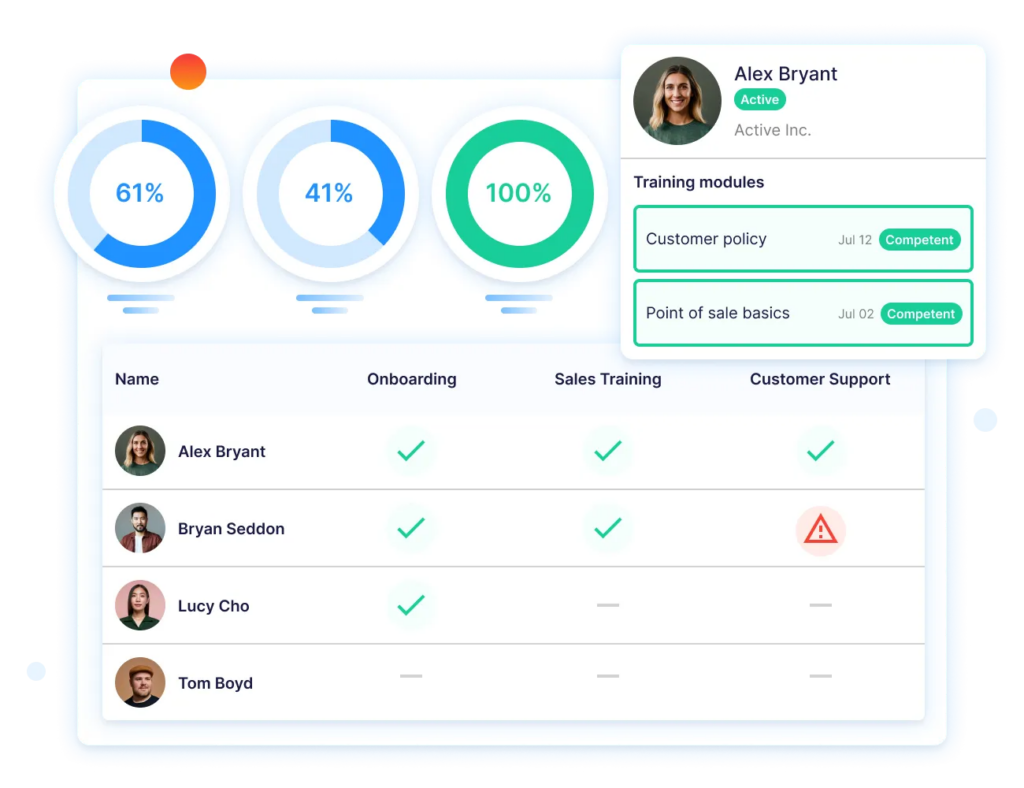
💡 Pro Tip: Build the pathway around what a manager must demonstrate at the end, then work backward to the learning and practice required to get there.
Step 4: Combine Learning With On-the-Job Practice
Management is learned partly by doing the work with feedback.
Give new managers supervised opportunities to:
- Run a pre-shift briefing
- Assign and reallocate work
- Handle a customer or employee issue
- Coach an employee
- Complete an audit
- Lead an opening or closing routine
- Respond to a simulated incident
- Review a location KPI
Shadowing an experienced manager can help, but observation alone is not enough. The new manager needs to take progressively more ownership while someone capable watches and coaches.
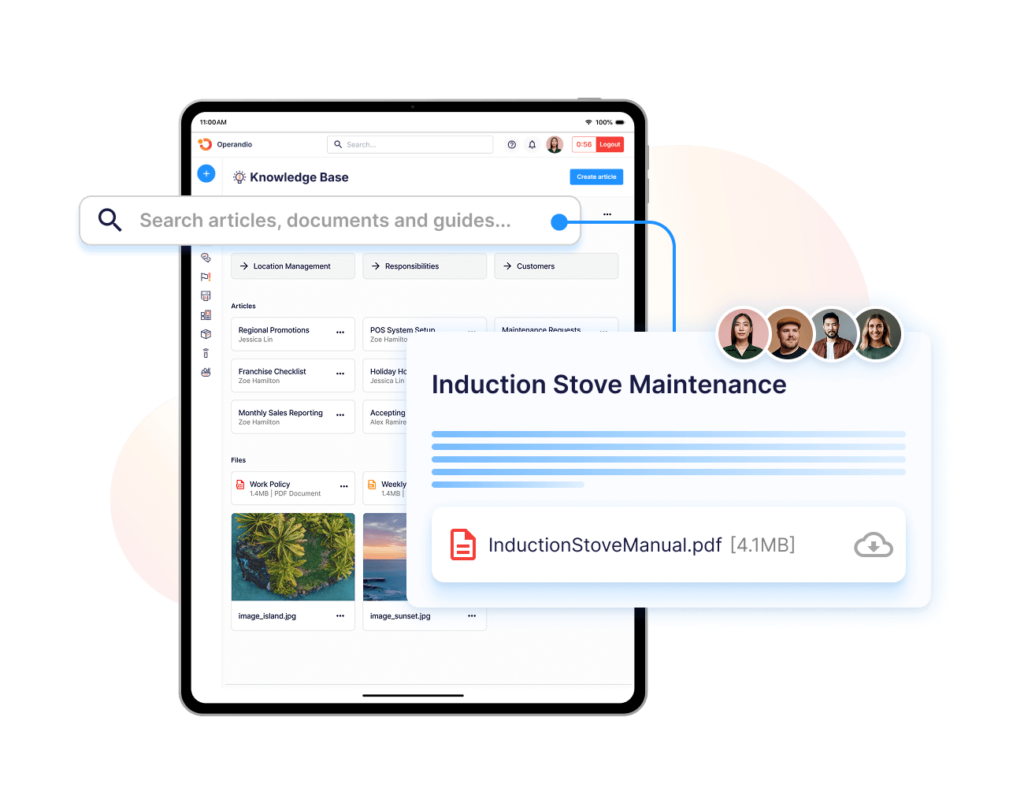
Operandio’s Knowledge & Document Management lets relevant SOPs, checklists, and operational guidance stay readily accessible during this stage so trainees learn to use the same tools they will rely on once they are working independently.
Step 5: Verify Competence Before Independent Ownership
Completing manager training should not automatically mean someone is ready to run a shift or location alone.
Require practical sign-off against the competencies that affect their role.
A manager might need to demonstrate that they can:
- Run a complete shift
- Deliver a clear team briefing
- Coach an employee
- Complete an operational or compliance audit
- Respond correctly to an incident
- Review performance data
- Follow a corrective action through closure
Operandio’s workplace observations and assessments let assessors evaluate employees against standardized criteria during real work and mark the skill complete after hands-on demonstration and sign-off.
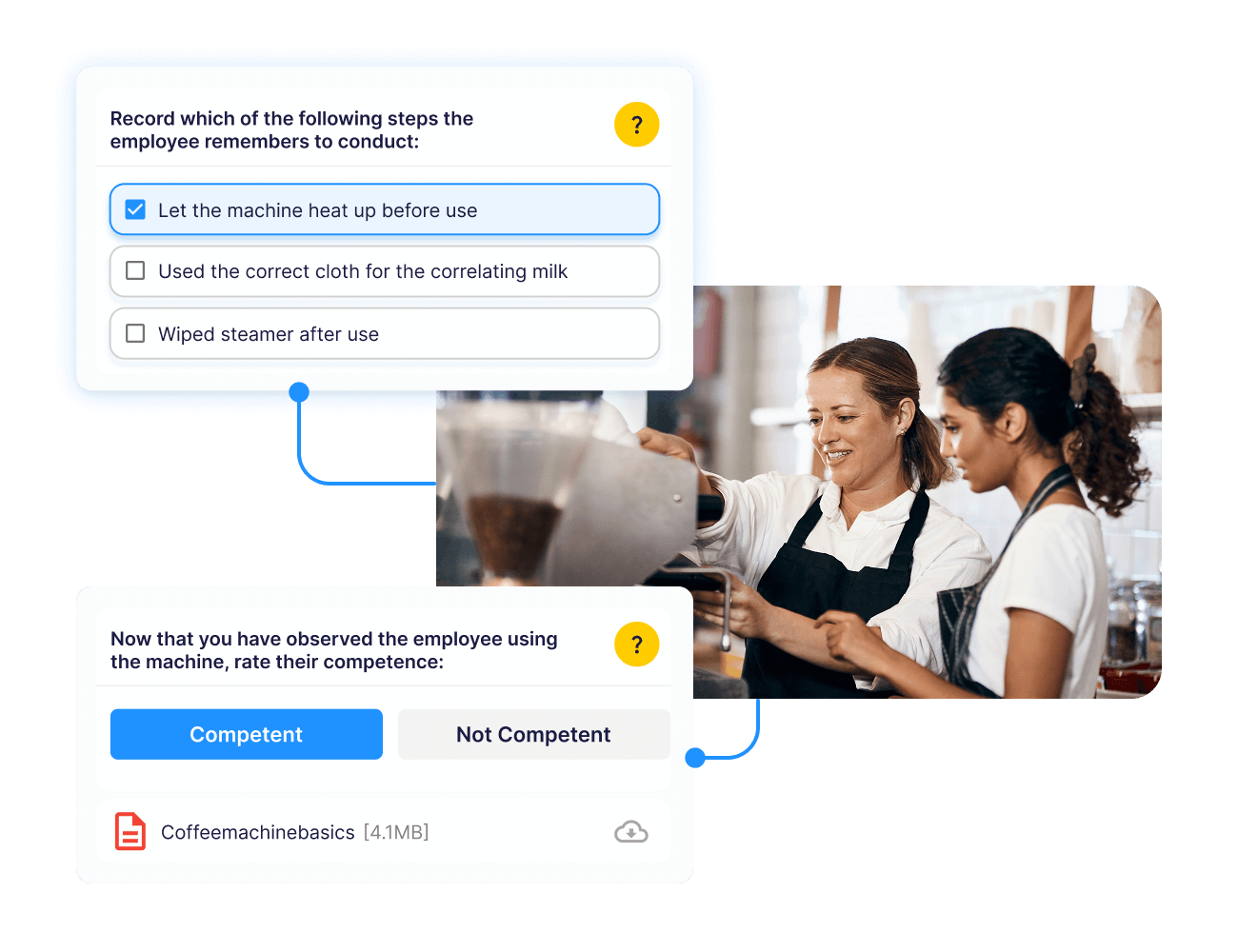
This creates a clearer threshold between “finished the course” and “ready to manage independently”.
Step 6: Reinforce, Coach, and Measure Continuously
Manager development should continue after the first independent shift.
Use recurring coaching, refresher learning, workplace observations, audits, and performance reviews to reinforce important behaviors and identify new gaps.
Retraining may be needed when:
- Standards or regulations change
- New equipment or systems are introduced
- Audit performance declines
- Incidents repeat
- A manager takes on a larger location or team
- The business introduces a new service or operating model
Operandio’s operational reporting brings training, task, audit, safety, and compliance data together so head office can compare training and location-level performance, and identify where additional manager development is needed rather than relying only on course completion.
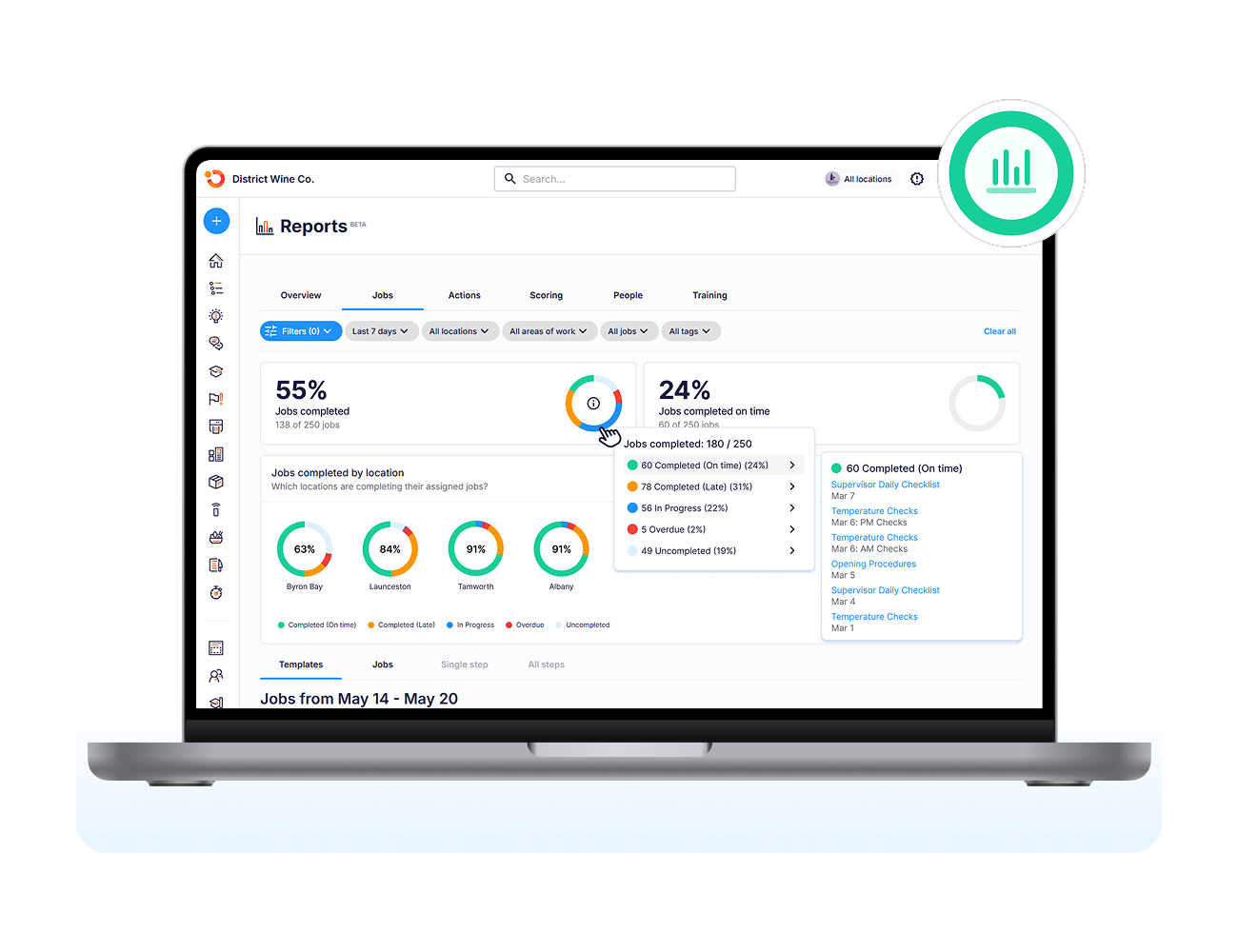
The objective is continuous improvement: train the standard, observe the behavior, measure the result, then coach where performance still falls short.
A 30-60-90 Day Plan for a New Frontline Manager
A newly promoted manager should gain responsibility progressively. Use the first 90 days to move them from learning the standards, to running supervised shifts, to demonstrating independent management competence.
| Window | Focus | Milestone |
|---|---|---|
| Days 1-30 | Complete core manager training; review SOPs and role expectations; shadow experienced managers; learn key systems and reports; practice team briefings, task delegation, and parts of a shift | Can explain core standards, complete required manager routines, and lead defined parts of a shift under supervision |
| Days 31-60 | Run full shifts with oversight; coach employees; allocate work; complete audits; manage routine attendance or performance issues; handle normal customer and operational problems | Can run a normal shift to standard with limited intervention and passes practical assessments for core manager competencies |
| Days 61-90 | Run shifts independently; monitor team and location KPIs; onboard or coach employees; close corrective actions; handle escalations; identify and lead one operational improvement | Receives final competency sign-off and demonstrates stable performance across operational, people, safety, and compliance measures |
Ninety days is a useful framework, not a universal deadline. Complex or higher-risk management roles may need a longer supervised period before final sign-off.
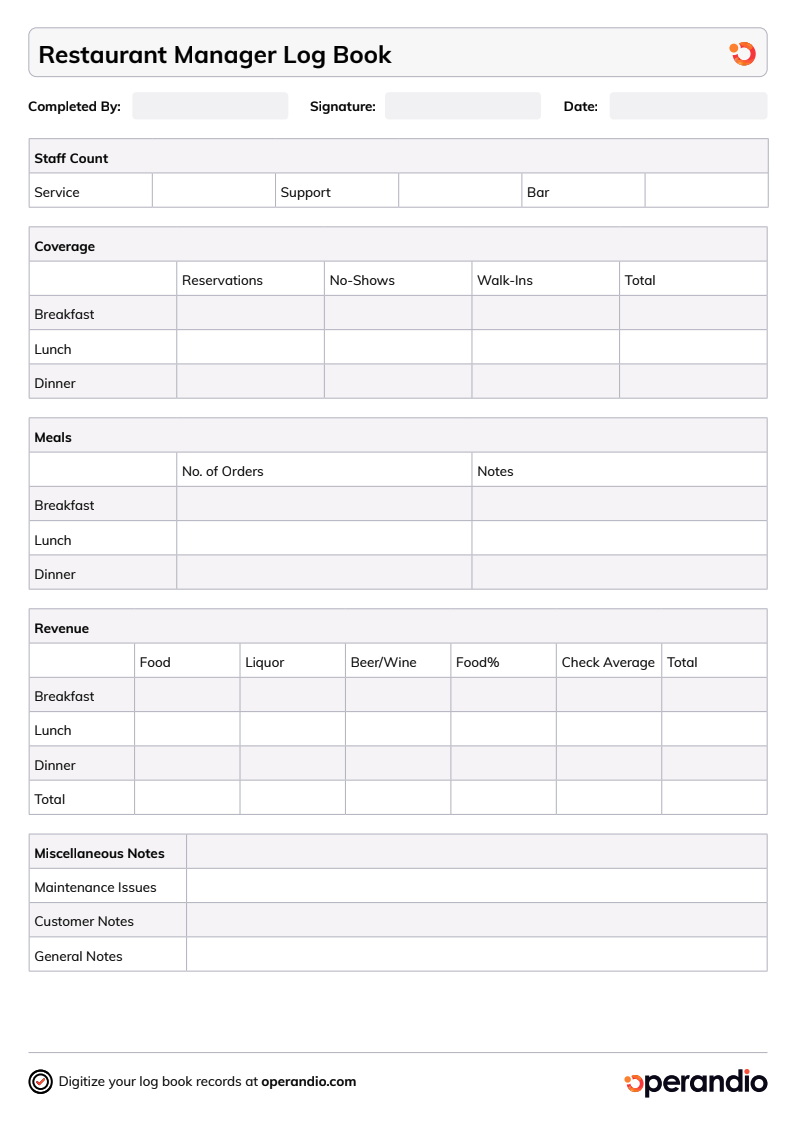
For restaurants, Operandio’s free restaurant manager log book template can help new managers record staffing, maintenance issues, customer feedback, handoffs, and other operating notes during the ramp-up period.
How to Tell Whether the Training Is Working
Course completion tells you whether a manager finished the training. It does not tell you whether they became a better manager.
Measure what changes on the floor: standards, daily execution, employee development, retention, and safety.
| Metric | What It Tells You | Where It Comes From |
|---|---|---|
| Audit pass rate | Whether the manager consistently runs required operating and compliance standards | Operational and compliance audits |
| 90-day team turnover | Whether new employees stay under the manager during their first 90 days | HR or payroll records |
| Task completion rate | Whether recurring work is completed fully and on time | Task and checklist system |
| New-hire time to competency | How effectively the manager develops employees until they can work independently | Training records and practical assessments |
| Incident rate | Whether safety, compliance, or operational incidents are increasing or decreasing | Incident and safety records |
Review these measures monthly by location and compare managers or locations within the same brand and operating context. Trends are usually more useful than arbitrary universal benchmarks.
Measure Operational Execution
Audit pass rate and task completion show whether manager training is translating into consistent daily execution.
Calculate audit pass rate as:
Passed audited items ÷ total audited items × 100
For task completion:
Tasks completed on time ÷ tasks due × 100
Look beyond the overall percentage. A location with strong completion but repeated failures in opening, food safety, cleaning, or closing procedures may still have a management problem.
Use restaurant audits or equivalent operational assessments to identify which standards repeatedly slip and whether coaching improves the result over time.
Measure Team Development
A capable frontline manager should help employees become productive and stay with the team.
Track 90-day turnover for new hires:
Employees leaving within their first 90 days ÷ employees in the relevant new-hire cohort × 100
Then track time to competency, preferably as the median number of days between an employee’s start date and verified practical sign-off.
A faster ramp is useful only when the employee can perform the work correctly. Combine learning records with practical assessments rather than treating course completion as competency.
This also gives you a direct measure of whether managers can train, coach, and develop employees rather than simply run their own shifts.
Measure Safety and Risk
Incident rate helps show whether managers recognize risk, enforce standards, escalate correctly, and follow problems through to resolution.
Use the organization’s existing normalized measure so different locations can be compared fairly, such as incidents per 1,000 shifts or another consistent operating basis.
Also review recurring audit failures, near misses, and corrective actions alongside the headline incident number. A declining incident rate is encouraging, but repeated unresolved findings may show that the manager is correcting individual problems without fixing their cause.
Train Frontline Managers Where They Work With Operandio
Frontline managers learn best when development is connected to the work they are expected to run.
Operandio brings frontline learning and development together with SOPs, practical assessments, checklists, audits, and operational reporting. Managers can learn the standard, practice it on the floor, demonstrate competency, then use the same system to run and verify it across their location.
Tex’s Chicken & Burgers used Operandio to standardize manager training and processes across 52 locations and reported a 40% reduction in manager onboarding time.
If you want to build manager training around real frontline execution across multiple locations, request a demo.
FAQs
What is frontline leadership training?
Frontline leadership training prepares first-line managers to lead employees, run daily operations, coach performance, enforce standards, and respond to operational problems.
What is the 70-20-10 rule for leadership development?
The 70-20-10 framework emphasizes learning through challenging experience, developmental relationships, and formal training. It is a guideline, not a fixed formula.
How long should frontline manager training take?
It depends. A 30-60-90 day ramp works well as a framework, but complex or high-risk roles may require longer supervised development.
What is the difference between a frontline manager and a supervisor?
Often, the titles overlap. Both directly manage frontline employees, although manager roles may carry broader responsibility for location performance, staffing, and compliance.