
- Platform
- Features
 Franchise & Multi-Unit ManagementCentralize oversight and streamline growth across your entire multi location network
 Learning ManagementTrain, verify, and reward your workforce with mobile-first education
 Operations ExecutionStreamlined operations ensuring brand standards, accountability and efficiency
 Asset ManagementOptimize equipment uptime through proactive maintenance and smart tracking
 Digital Food SafetyAutomate compliance and monitor quality with real-time digital precision
 Health & Safety Management (EHS)Mitigate workplace risks and streamline digital incident reporting and investigations
- Platform Essentials
 Powerful ReportingAlign leadership with role-based dashboards and deeper analytics
 Operandio IntelligenceAutomate content, analyze trends, and provide instant answers
 IntegrationsUnify your enterprise tech stack with real-time data
 IoT PlatformDetect anomalies and automate workflows with intelligent sensors
 Mobile & Shared Tablet AppsSecurely empower frontline teams with fast, offline-capable access
- Footer


 Not sure what you need?
Book in a call with the team
- Features
- Solutions
- By Industry
 RestaurantsQSR, fast food and multi-unit restaurants
 Hotels & ResortsHotels, resorts and extended stay hotels
 ChildcareEarly education, childcare, daycare and preschool
 EntertainmentTheme parks, family entertainment centers and play centers
 Fitness Centers & LeisureFitness centers, golf clubs, gyms and sports facilities
 RetailBig-box retailers, franchise stores and supermarkets
- By Use Case
- Operational ExcellenceStreamlined operations ensuring brand standards, accountability and efficiency
- Learning & DevelopmentTrain, verify, and reward your workforce with mobile-first education
- Franchise & Multi-Unit ManagementCentralize oversight and streamline growth across your entire multi location network
- Food Safety ComplianceAutomate compliance and monitor quality with real-time digital precision
- Asset Management & MaintenanceOptimize equipment uptime through proactive maintenance and smart tracking
- Health & Safety Management (EHS)Mitigate workplace risks and streamline digital incident reporting and investigations
- By Industry
- Resources
- Platform
- Features
- Franchise & Multi-Unit ManagementCentralize oversight and streamline growth across your entire multi location network
- Learning ManagementTrain, verify, and reward your workforce with mobile-first education
- Operations ExecutionStreamlined operations ensuring brand standards, accountability and efficiency
- Asset ManagementOptimize equipment uptime through proactive maintenance and smart tracking
- Digital Food SafetyAutomate compliance and monitor quality with real-time digital precision
- Health & Safety Management (EHS)Mitigate workplace risks and streamline digital incident reporting and investigations
- Platform Essentials
- Powerful ReportingAlign leadership with role-based dashboards and deeper analytics
- Operandio IntelligenceAutomate content, analyze trends, and provide instant answers
- IntegrationsUnify your enterprise tech stack with real-time data
- IoT PlatformDetect anomalies and automate workflows with intelligent sensors
- Mobile & Shared Tablet AppsSecurely empower frontline teams with fast, offline-capable access
- Footer
- Not sure what you need?
Book in a call with the team
- Features
- Solutions
- By Industry
- RestaurantsQSR, fast food and multi-unit restaurants
- Hotels & ResortsHotels, resorts and extended stay hotels
- ChildcareEarly education, childcare, daycare and preschool
- EntertainmentTheme parks, family entertainment centers and play centers
- Fitness Centers & LeisureFitness centers, golf clubs, gyms and sports facilities
- RetailBig-box retailers, franchise stores and supermarkets
- By Use Case
- Operational ExcellenceStreamlined operations ensuring brand standards, accountability and efficiency
- Learning & DevelopmentTrain, verify, and reward your workforce with mobile-first education
- Franchise & Multi-Unit ManagementCentralize oversight and streamline growth across your entire multi location network
- Food Safety ComplianceAutomate compliance and monitor quality with real-time digital precision
- Asset Management & MaintenanceOptimize equipment uptime through proactive maintenance and smart tracking
- Health & Safety Management (EHS)Mitigate workplace risks and streamline digital incident reporting and investigations
- By Industry
- Resources
8 Proven Strategies To Improve Business Operations (2026)
Key Takeaways
- Improve business operations by simplifying high-friction processes, assigning clear ownership, and connecting everyday work with measurable business goals.
- Give employees clear expectations and the information they need to act. Strong communication and visible accountability reduce missed work, inconsistent execution, and unnecessary manager follow-up.
- Measure a small set of useful KPIs before and after changing a workflow. Otherwise, you cannot tell whether the improvement actually worked.
- Use software and automation to reinforce well-designed processes, then keep reviewing results. Automating a confusing or unnecessary workflow only makes the same problem happen faster.
Business operations are the recurring processes, people, systems, and decisions that keep a company delivering its products or services.
Improving business operations means making that everyday work simpler, clearer, more reliable, and easier to measure. Not by changing everything at once, but by beginning with the workflows creating the most friction, then improving ownership, communication, accountability, technology, and measurement around them.
In this post, you’ll learn eight operational improvement strategies that provide a practical framework for improving business operations while keeping each change tied to a business outcome.
8 Strategies To Improve Business Operations
Operational process improvement works best when each change solves a specific problem. The following strategies address different parts of execution, from process design and accountability to automation and continuous improvement.
1. Simplify Core Processes Around Business Goals
Start with the outcome the business needs, then work backward through the process used to achieve it.
Map one high-frequency workflow and ask:
- What triggers the process?
- Which steps are essential?
- Who owns each part?
- Where does work wait or get repeated?
- What happens when something goes wrong?
- What result should the process produce?
Remove approvals, handoffs, duplicate entry, and reporting steps that do not support that result. Then document the improved workflow in an accessible operations manual so employees work from the same process.
For multi-unit businesses, standardize the parts that should remain consistent while preserving controlled local flexibility where regulations, layouts, or operating models genuinely differ.
💡 Pro Tip: Start with a process that is frequent, frustrating, and measurable. Improving several workflows at once makes it harder to identify what produced the result.
2. Set Clear Expectations And Ownership
Every recurring activity should answer five questions: what needs to happen, who owns it, when it is due, what acceptable completion looks like, and what happens if it is missed.
That clarity is often weaker than leaders assume. Gallup 2024 data found that only 46% of U.S. employees clearly knew what was expected of them at work.
Turn broad instructions into observable expectations. Instead of “make sure the location is ready,” specify the tasks, responsible role, deadline, and evidence required.
Digital task management and checklists can support this across multiple locations with recurring schedules, assigned owners, deadlines, reminders, and overdue-task visibility.
Clear expectations reduce the time managers spend chasing routine work and make accountability more objective.
3. Build Communication And Collaboration Into Daily Work
Better communication does not mean sending more messages. Employees need the right information, at the right time, with a clear next action.
For every operational update, decide:
- Who needs to receive it?
- Which locations or roles are affected?
- Does it change an existing process?
- Is action required?
- Does receipt need to be confirmed?
For example, a revised safety procedure should reach the affected employees, link directly to the current instructions, and state what they need to do differently.
Operandio’s employee communication capabilities let multi-unit teams target announcements, attach operational resources, schedule campaigns, require acknowledgments, and track who has read critical updates.
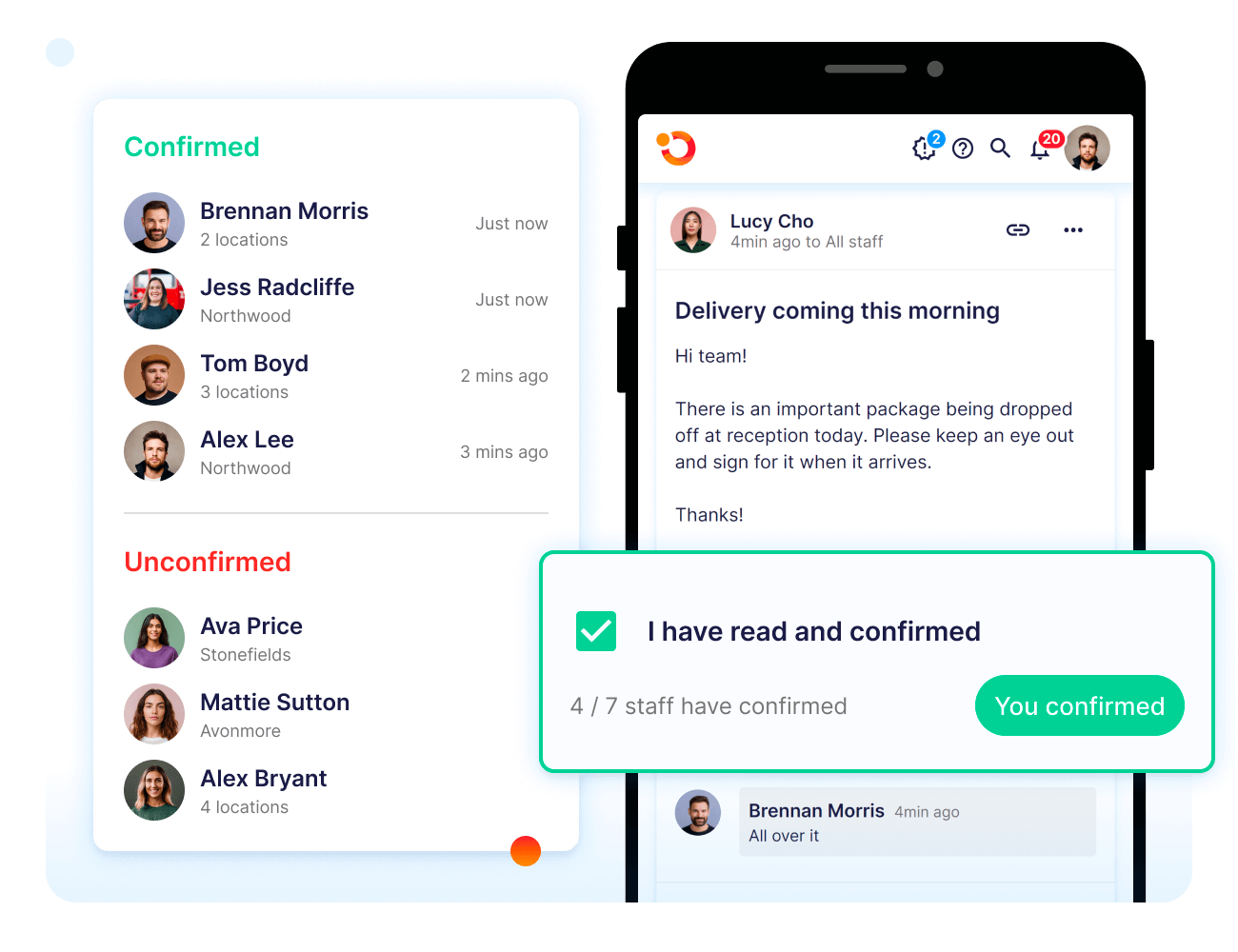
This keeps important operational communication connected to execution instead of losing it inside general chats, inboxes, or manager-to-manager relays.
4. Make Accountability Visible
Accountability works best when responsibility and follow-up are visible before something goes wrong.
Employees should know what they own, while managers should be able to see completed, overdue, failed, and unresolved work without constantly checking in.
Use evidence where the risk warrants it, such as photos, readings, notes, inspection results, or manager verification. When a check identifies a problem, define who is responsible for correcting it and when the issue is considered closed.
Digital inspections and audits can turn failed checks into assigned corrective actions with owners, due dates, evidence, and resolution tracking.
Of course, the idea is not to watch every employee with an eagle eye. It is to make important work traceable so managers can focus their attention on exceptions and recurring problems.
5. Use Operations Management Software To Connect Workflows
Software becomes useful when manual processes and disconnected tools start creating more work.
Common warning signs include:
- Paper or spreadsheets are used across several locations
- Managers repeatedly enter the same information
- Procedures live in one system and tasks in another
- Head office lacks visibility into location-level execution
- Employees switch between several tools to complete one workflow
Before choosing a platform, define the process and decide which system should own each type of information.
The right operations management software should reduce fragmentation rather than add another isolated tool. For instance, Operandio is an AI-powered operations platform for franchise and multi-unit businesses that brings connected workflows such as tasks, inspections, communication, training, corrective actions, and reporting into one operating layer.
Software supports a good process. It does not fix poor process design by itself.
6. Measure Performance With A Small Set Of Useful KPIs
Establish a baseline before changing a process, then choose metrics tied directly to the result you want.
For example:
| Improvement Goal | Example KPI |
|---|---|
| Complete work faster | Cycle or completion time |
| Improve reliability | On-time completion rate |
| Reduce mistakes | Error or failed-audit rate |
| Lower operating cost | Cost per process, unit, or location |
| Improve follow-up | Corrective-action closure rate |
| Increase consistency | Performance variance across locations |
Avoid tracking a metric simply because your software can produce it. More data does not automatically create better decisions.
For multi-unit businesses, operational reporting should make it possible to compare locations, identify trends, and determine where intervention is required.
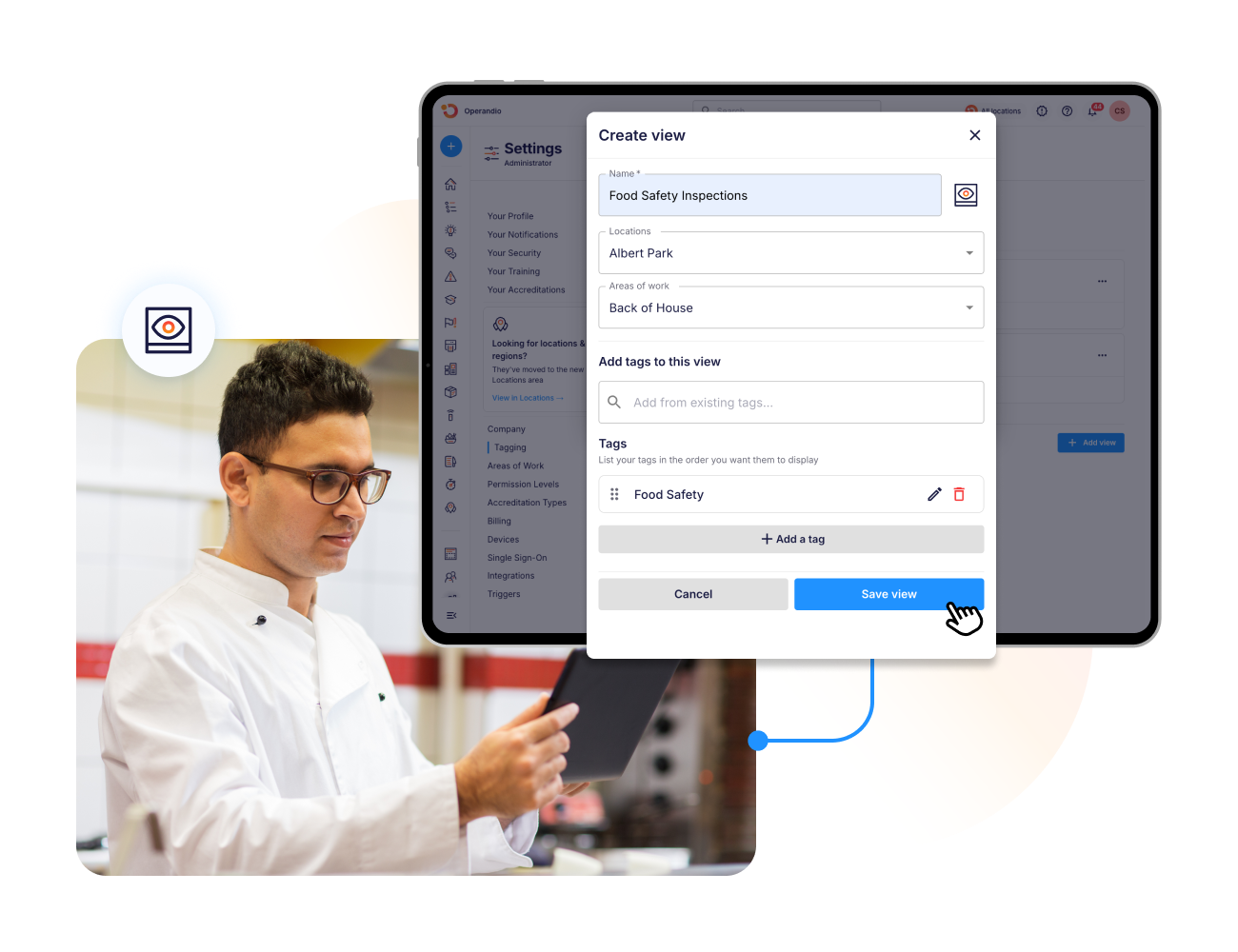
Review the KPI after each change against the original baseline. If performance did not improve, investigate why before expanding the new process elsewhere.
7. Automate Repetitive Work And Exception Follow-Up
Automate processes that are frequent, predictable, and rules-based. Keep human judgment where employees or managers need to assess context.
Good automation candidates include:
- Recurring tasks
- Reminders
- Scheduled inspections
- Notifications
- Escalations
- Corrective-action assignment
- Sensor alerts
- Recurring reports
Before automating, define the workflow as:
Trigger → action → owner → deadline → exception → closure
For example, a failed inspection should trigger a defined response rather than generate another report.
Operandio’s operations execution workflows can automatically create follow-up actions from audits, missed tasks, incidents, equipment issues, and other operational exceptions.
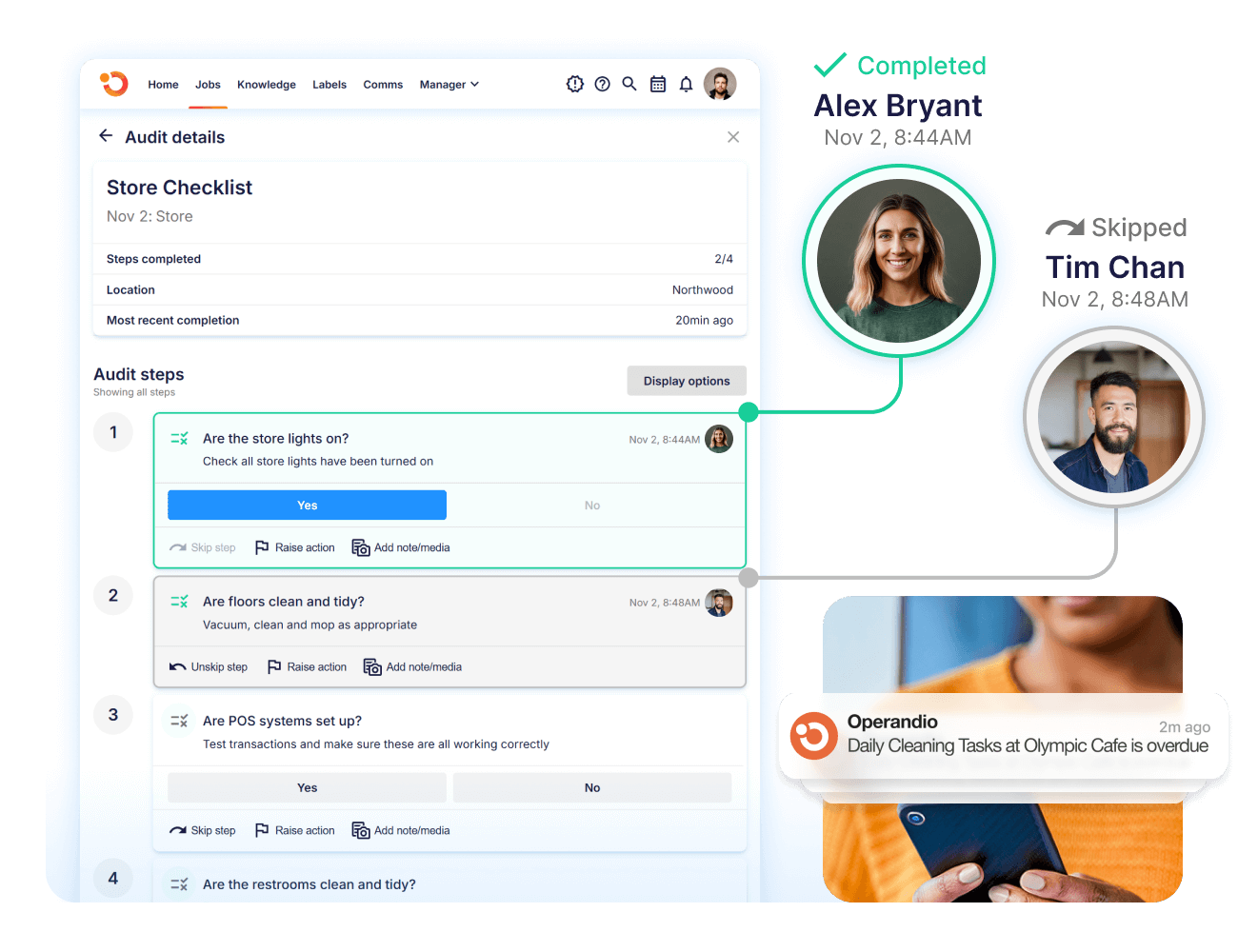
Automate after the process has been simplified and ownership is clear. Otherwise, the business risks making an inefficient workflow run faster without improving the outcome.
8. Create A Continuous Improvement Loop
Business operations improvement should continue after the first change goes live.
Use a simple loop:
Measure → identify the gap → investigate the cause → change the process → train employees → measure again
Look for recurring patterns rather than isolated misses. Ask which tasks are repeatedly late, where rework occurs, which locations perform differently, and whether the same corrective action keeps returning.
Frontline input is valuable here because employees often see friction that is invisible from head office. Ask what slows the process down, what instructions are unclear, and which workarounds employees have created.
As businesses expand, multi-unit management also requires regular review of whether processes still work at the larger scale.
A process that performed well at five locations may need different controls, reporting, or ownership at 25.
Why Improving Business Operations Matters
Better operations improve how reliably the business turns time, people, and resources into results. The benefits show up in productivity, cost control, consistency, customer experience, and the ability to scale.
Increase Productivity And Reduce Administrative Work
Operational improvement gives employees more time for useful work by removing repeated coordination, duplicate entry, manual reporting, and unnecessary manager follow-up.
Small improvements can compound when the same workflow happens every day across several locations. Social Fair, for example, reported that digitizing and centralizing its operational processes with Operandio helped cut closing times by 50%.
The goal is not merely to make employees work faster. It is to remove work that does not add value, give people clearer processes, and reduce the amount of management attention required to keep routine operations moving.
Lower Costs, Waste And Avoidable Errors
Poor processes create costs that may never appear under a single budget line.
Examples include rework, overtime, duplicated software, stock loss, missed maintenance, quality failures, unnecessary administration, and time spent correcting preventable mistakes.
Operational improvement targets the cause rather than applying an arbitrary cost cut. Simplifying a workflow might remove duplicate entry. Better maintenance can reduce unplanned downtime. Clearer quality controls can catch problems before rework is required.
Track the cost associated with the process before and after the change. A lower cost is useful only if the business maintains the quality, safety, compliance, and customer outcomes the process is meant to support.
Improve Consistency And Customer Experience
Customers experience the result of your operations even when they never see the processes behind them.
A missed opening task, unclear handover, inconsistent quality check, or delayed corrective action can affect service, product quality, safety, or availability.
Standardized operations checklists give teams a shared baseline for recurring work while making deviations easier to identify. This becomes more important across multiple locations, where different managers may otherwise interpret the same expectation differently.
Consistency does not mean removing every local decision. Define the standards that protect the customer and brand experience, then give employees appropriate flexibility within those boundaries.
Make Multi-Location Growth Easier To Manage
An operating model should become easier to replicate as the business grows.
If every new location requires the same increase in manual supervision, spreadsheets, manager follow-up, and head office coordination, the underlying system has not scaled.
Document repeatable processes before expansion, establish common measures, and decide which work should be controlled centrally versus locally. New locations then inherit an operating system rather than rebuilding one from scratch.
A structured approach to franchise expansion also helps businesses maintain training, communication, standards, and operational visibility as the network grows.
The aim is to add locations without allowing complexity and operational drift to grow at the same rate.
What To Know When You Are Improving Business Operations
Operational improvement takes time, money, and employee attention. The following implementation risks can undermine good ideas if they are not addressed before rollout.
1. Trying To Improve Too Much At Once
A long list of problems does not mean every process should be redesigned simultaneously.
Too many initiatives compete for budget, management attention, and employee capacity. They also make it harder to determine which change produced an improvement or created a new problem.
Build an operations improvement plan that prioritizes workflows by impact, frequency, effort, and measurability. Start with one or two processes where the business can establish a baseline and see the result clearly.
Pilot the change before rolling it out widely. If the new process reduces cycle time, errors, cost, or another target metric without creating unintended problems, use what you learned to guide the next improvement.
2. Legacy Systems And Poor Integrations Can Create More Work
New technology can make operations worse when it sits beside existing systems without exchanging information properly.
Employees may end up entering the same data twice, reconciling conflicting records, or creating manual workarounds between platforms. Recent PwC research found that only 11% of U.S. operations and supply chain leaders said their operations technology investments had fully delivered the expected results.
Before implementing a new system, identify the source of truth for each type of data. Confirm required integrations, data direction, update frequency, ownership, export options, and what happens when a connection fails.
Technology should remove operational friction, not relocate it.
3. Employees May Resist Processes Designed Without Them
A workflow can look efficient from head office while adding seemingly unnecessary steps for the people expected to use it. This is a classic change management issue.
To tackle this, include representative frontline employees and managers when redesigning important processes. Ask where work currently slows down, which information is missing, what unofficial workarounds already exist, and whether the proposed process fits the environment where it will be performed.
Then pilot the change, explain why it is being introduced, provide training, and collect feedback after launch.
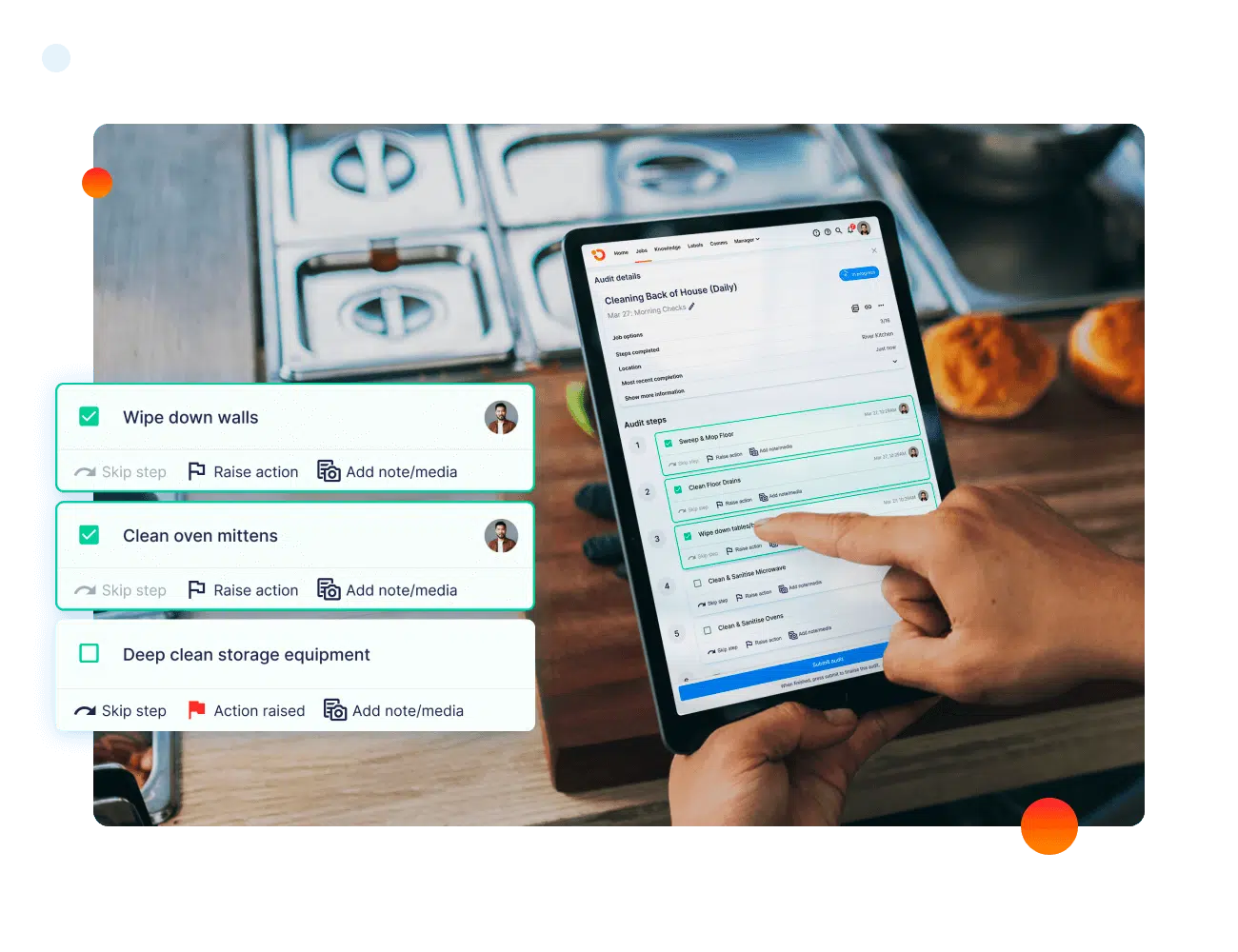
Technology should be tested in the same conditions as the work. Operandio’s mobile and shared-tablet apps let frontline teams access tasks, documents, training, inspections, and communications without requiring a back-office computer.
4. Poor Data Can Lead To Poor Improvement Decisions
A process can look better on one metric while performing worse overall.
For example, faster task completion may coincide with more errors. Higher training completion does not prove employees can perform the work. More completed inspections do not automatically indicate stronger compliance.
So, measure several dimensions where appropriate:
- Time
- Cost
- Quality
- Volume
- Exceptions
- Business outcomes
Set the baseline before making the change, then compare the same measures afterward.
Avoid vanity metrics that improve because the process was redesigned around the metric itself. If the numbers move in opposite directions, investigate the tradeoff before declaring the project successful or expanding it across the business.
Improve Your Business Operations With Operandio
Improving operations requires more than documenting a better process. Multi-unit businesses need a way to turn standards into daily work, give employees clear instructions, track execution, follow up on exceptions, and see where performance is drifting.
Operandio brings those workflows together in an AI-powered operations platform built for franchise and multi-unit businesses. Head office gains visibility across locations while frontline teams get practical tools for tasks, training, communication, inspections, and operational execution.
Request a demo to see how Operandio can help turn operational improvements into consistent everyday execution.
FAQs
What Are Some Examples Of Operational Improvements?
Examples include simplifying approvals, automating recurring tasks, reducing duplicate entry, improving handovers, standardizing quality checks, and shortening process cycle times.
How Do You Measure Operational Efficiency?
Measure efficiency using KPIs such as cycle time, cost per process, output, error rates, on-time completion, resource use, and corrective-action closure.
What Are Five Ways To Improve My Business?
Five options are simplifying processes, clarifying ownership, improving communication, measuring performance, and using appropriate technology to reduce repetitive manual work.
What Is The Difference Between Business Operations And Business Strategy?
Business strategy defines where the company wants to go. Business operations cover the recurring processes and resources used to execute that strategy.
Who Is Responsible For Improving Business Operations?
Usually, operations leaders coordinate improvement, but managers, frontline employees, finance, technology teams, and other process owners should contribute where relevant.