
- Platform
- Features
 Franchise & Multi-Unit ManagementCentralize oversight and streamline growth across your entire multi location network
 Learning ManagementTrain, verify, and reward your workforce with mobile-first education
 Operations ExecutionStreamlined operations ensuring brand standards, accountability and efficiency
 Asset ManagementOptimize equipment uptime through proactive maintenance and smart tracking
 Digital Food SafetyAutomate compliance and monitor quality with real-time digital precision
 Health & Safety Management (EHS)Mitigate workplace risks and streamline digital incident reporting and investigations
- Platform Essentials
 Powerful ReportingAlign leadership with role-based dashboards and deeper analytics
 Operandio IntelligenceAutomate content, analyze trends, and provide instant answers
 IntegrationsUnify your enterprise tech stack with real-time data
 IoT PlatformDetect anomalies and automate workflows with intelligent sensors
 Mobile & Shared Tablet AppsSecurely empower frontline teams with fast, offline-capable access
- Footer


 Not sure what you need?
Book in a call with the team
- Features
- Solutions
- By Industry
 RestaurantsQSR, fast food and multi-unit restaurants
 Hotels & ResortsHotels, resorts and extended stay hotels
 ChildcareEarly education, childcare, daycare and preschool
 EntertainmentTheme parks, family entertainment centers and play centers
 Fitness Centers & LeisureFitness centers, golf clubs, gyms and sports facilities
 RetailBig-box retailers, franchise stores and supermarkets
- By Use Case
- Operational ExcellenceStreamlined operations ensuring brand standards, accountability and efficiency
- Learning & DevelopmentTrain, verify, and reward your workforce with mobile-first education
- Franchise & Multi-Unit ManagementCentralize oversight and streamline growth across your entire multi location network
- Food Safety ComplianceAutomate compliance and monitor quality with real-time digital precision
- Asset Management & MaintenanceOptimize equipment uptime through proactive maintenance and smart tracking
- Health & Safety Management (EHS)Mitigate workplace risks and streamline digital incident reporting and investigations
- By Industry
- Resources
- Platform
- Features
- Franchise & Multi-Unit ManagementCentralize oversight and streamline growth across your entire multi location network
- Learning ManagementTrain, verify, and reward your workforce with mobile-first education
- Operations ExecutionStreamlined operations ensuring brand standards, accountability and efficiency
- Asset ManagementOptimize equipment uptime through proactive maintenance and smart tracking
- Digital Food SafetyAutomate compliance and monitor quality with real-time digital precision
- Health & Safety Management (EHS)Mitigate workplace risks and streamline digital incident reporting and investigations
- Platform Essentials
- Powerful ReportingAlign leadership with role-based dashboards and deeper analytics
- Operandio IntelligenceAutomate content, analyze trends, and provide instant answers
- IntegrationsUnify your enterprise tech stack with real-time data
- IoT PlatformDetect anomalies and automate workflows with intelligent sensors
- Mobile & Shared Tablet AppsSecurely empower frontline teams with fast, offline-capable access
- Footer
- Not sure what you need?
Book in a call with the team
- Features
- Solutions
- By Industry
- RestaurantsQSR, fast food and multi-unit restaurants
- Hotels & ResortsHotels, resorts and extended stay hotels
- ChildcareEarly education, childcare, daycare and preschool
- EntertainmentTheme parks, family entertainment centers and play centers
- Fitness Centers & LeisureFitness centers, golf clubs, gyms and sports facilities
- RetailBig-box retailers, franchise stores and supermarkets
- By Use Case
- Operational ExcellenceStreamlined operations ensuring brand standards, accountability and efficiency
- Learning & DevelopmentTrain, verify, and reward your workforce with mobile-first education
- Franchise & Multi-Unit ManagementCentralize oversight and streamline growth across your entire multi location network
- Food Safety ComplianceAutomate compliance and monitor quality with real-time digital precision
- Asset Management & MaintenanceOptimize equipment uptime through proactive maintenance and smart tracking
- Health & Safety Management (EHS)Mitigate workplace risks and streamline digital incident reporting and investigations
- By Industry
- Resources
Compliance in the Food Industry: Rules & Best Practices
Key Takeaways
- Compliance spans three layers of regulators: The FDA and USDA set federal food rules, and OSHA covers worker safety. State or local health departments enforce the food code at each location.
- Your health department is the regulator you’ll meet most: It issues permits, runs routine inspections, and can suspend a permit on the spot for an imminent health hazard.
- Several federal rules reach restaurants directly: These include calorie labeling for chains with 20 or more locations, sesame as the ninth major allergen, and FSMA traceability records enforceable from July 20, 2028.
- Proof on every shift keeps you compliant: Written procedures, continuous temperature monitoring, internal inspections, and retrievable records keep each site ready between official visits.
Compliance in the food industry means meeting the food safety, labeling, and recordkeeping rules set by federal, state, and local regulators. It also means proving it when an inspector arrives.
For multi-site operators, that proof has to exist at every location, on every shift, including the sites you can’t visit this month.
Here’s who enforces what, which regulations carry deadlines, and the practices that keep each location inspection-ready.
Who Regulates Food Industry Compliance?
| Regulator | What it oversees | What it means for your locations |
|---|---|---|
| FDA | Federal food law, the model Food Code, FSMA rules, and recalls | Sets menu labeling, allergen, and traceability rules that apply to restaurants directly |
| USDA FSIS | Meat and poultry inspection | Restaurants are exempt from inspection, but must buy USDA-inspected product |
| OSHA | Workplace safety for employees | Federal OSHA or a state plan covers your kitchens, depending on the state |
| State and local health departments | Permits, routine inspections, and enforcement | The regulator most likely to cite or close a location |
Food and Drug Administration (FDA)
The FDA sets federal food safety law, publishes the model Food Code, and runs the Food Safety Modernization Act (FSMA) rules. Most FSMA rules target registered food facilities.
While restaurants and retail food establishments are exempt from FDA facility registration, that exemption doesn’t take the FDA out of your kitchens.
Menu calorie labeling, allergen labeling on food you package, and the FSMA traceability rule all apply to restaurants directly. Treat the FDA as the source of your minimum standards and your health department as the agency that checks them.
Operandio’s food labeling software helps you comply with all FDA rules.
USDA Food Safety and Inspection Service (FSIS)
FSIS inspects the plants that slaughter and process meat and poultry. Restaurants are exempt from federal inspection for products sold to consumers in normal retail quantities, but that exemption comes with a sourcing rule.
FSIS guidance says only products bearing a USDA mark of inspection can go into the meals you sell. Build that check into receiving, so staff reject unmarked meat or poultry at the back door.
Restaurant central kitchens can operate under the same exemption. However, 9 CFR 303.1 lets FSIS place one under inspection if its conditions render the product adulterated.
Your kitchen compliance checks and restaurant inventory management should cover the commissary as closely as the stores.
Occupational Safety and Health Administration (OSHA)
OSHA regulates workplace safety for your employees. Its restaurant safety eTool describes common restaurant hazards and safety solutions, and also states that workers have a right to hazard training in a language they understand.
That said, which OSHA inspects you depends on the state. OSHA lists 22 State Plans that cover private sector workers, and in those states the state program enforces workplace safety.
Write your safety program to the federal standard, then check each state-plan location for differences before rollout. Translate hazard training into every language your crews speak, since that right applies at every site.
State and Local Health Departments
Your state or local health department issues food service permits, runs routine inspections, and enforces the food code your state adopted.
That code varies by state. The FDA’s 2024 Food Code adoption report found only 11 state agencies in seven states had adopted the 2022 edition. It also found 46 state agencies in 36 states in one of the three most recent editions.
For every location, record four things:
- the enforcing agency
- the code edition it uses
- the permit renewal date
- the latest inspection result
Keep every inspection report and corrective action note, so any re-inspection finds the fix documented.
Key Food Safety Regulations and Standards to Know
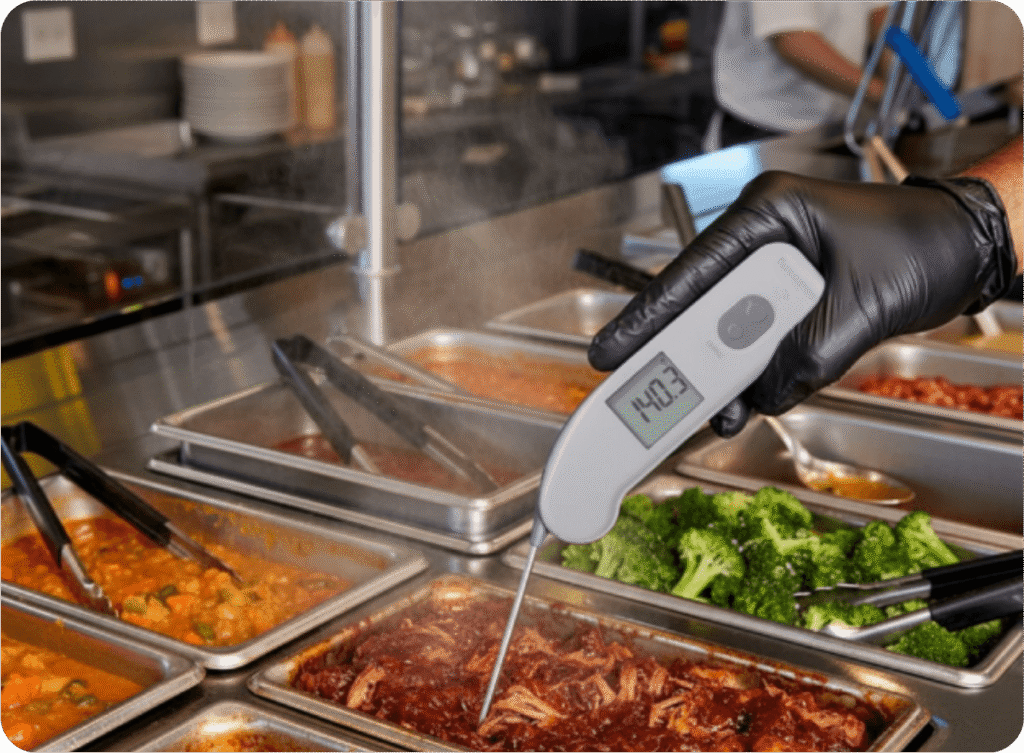
Federal rules reach your kitchens two ways: directly, like calorie labeling, or through the state food code your inspector enforces.
Knowing which path a rule takes tells you who will check it, and when.
1. The FDA Food Code
The Food Code is the FDA’s model rulebook for restaurants and retail food stores. The FDA offers it for adoption by state and local jurisdictions. Once adopted, it carries legal weight and becomes the checklist your inspector works from.
The 2022 edition clarified cooking requirements for intact meat. It also set conditions for allowing pet dogs in outdoor dining areas.
The FDA has also committed to an updated Food Code in 2026. It says the update will reflect current retail food science and recent outbreak data.
Give one person ownership of Food Code changes. That way, your procedures and food safety inspection checklists update before inspectors start citing the new rules.
2. HACCP (Hazard Analysis Critical Control Point)
HACCP is a system for finding where food safety hazards can occur and controlling them at those points, with set limits, monitoring, and records. The FDA’s HACCP guidelines set out seven principles, from hazard analysis through record-keeping.
Most restaurant menus don’t trigger a formal HACCP plan requirement. UConn’s food safety program explains when one does: when you want to produce a time/temperature-controlled food the Food Code would otherwise prohibit. Peoria County’s health department lists the common triggers:
- acidifying sushi rice
- vacuum packaging and sous vide
- smoking food for preservation
- curing meat
Screen every new menu item for these methods before launch, including limited-time offers. Fold the results into your written food safety plan.
Here are 6 HACCP software solutions for food safety in 2026.
3. FSMA Preventive Controls and Your Supply Chain
Food Safety Modernization Act compliance for restaurants runs mostly through suppliers. FSMA’s preventive controls rule requires registered food facilities to identify hazards and put controls in place. Restaurants and retail food establishments aren’t subject to it because they aren’t required to register.
The manufacturers and processors that supply you are covered, though. Request their food safety certifications and audit results before you approve them.
The retail exemption also depends on the sales mix. The FDA defines a retail food establishment as one whose primary function is selling directly to consumers. A commissary that sells more to franchisees or wholesale accounts than to consumers can lose that status. Check its sales mix before it starts supplying other businesses.
4. FSMA Food Traceability Rule (Section 204)
The Food Traceability Rule, known as FSMA 204, covers foods on the FDA’s Food Traceability List. Businesses that handle those foods must keep specific records at key points in the supply chain. FDA’s own supply chain examples include cucumbers, soft cheese, tuna, shell eggs, and fresh-cut produce.
Restaurants are included. That’s a change from earlier federal recordkeeping rules, which excluded restaurants.
For most restaurants, the rule means two things:
- receiving records for listed foods, linked to each lot’s traceability code
- a traceability plan that names a point of contact
The FDA must be able to get those records within 24 hours of a request. Congress directed the FDA not to enforce the rule before July 20, 2028. Smaller establishments may qualify for an exemption, which the FDA’s exemptions tool helps you check.
Use the time to flag every listed food on your menus. Standardize how stores capture receiving data, starting from your food inventory template.
Example: Your commissary sends fresh-cut produce to a store at a different address. The FDA counts that internal move as a shipping event at the commissary and a receiving event at the store.
5. Allergen Labeling Under FALCPA, the FASTER Act, and the Food Code
Federal law recognizes nine major food allergens: milk, eggs, fish, crustacean shellfish, tree nuts, peanuts, wheat, soybeans, and sesame.
The Food Allergen Labeling and Consumer Protection Act (FALCPA) established the original eight. The FASTER Act added sesame from January 1, 2023.
For restaurants, the labeling rule applies most directly to food you package on site. The FDA says foods packaged in retail food establishments on or after that date must list sesame as a major allergen.
The 2022 Food Code went further, adding written notification of major allergens in unpackaged food. That applies where your state has adopted that edition.
Build an allergen matrix for every menu item and update it with each recipe change. Train staff to answer guest questions from the matrix, not from memory.
6. Menu and Calorie Labeling for Chains
The FDA’s menu labeling rule covers restaurants that meet three conditions:
- part of a chain with 20 or more locations
- doing business under the same name
- selling substantially the same menu
Covered locations must post calories for standard menu items on menus and menu boards. They must also provide written nutrition information on request. They display two statements: one saying that information is available, and one noting that 2,000 calories a day is used for general nutrition advice.
Ownership doesn’t change coverage. The FDA’s supplemental guidance counts locations regardless of ownership type, including individual franchises. Growing brands should prepare nutrition data before the 20th location opens. The control recipe changes centrally so posted calories stay accurate.
Learn how to label food in a restaurant or commercial kitchen to comply with your chain’s and FDA requirements.
7. Certified Food Protection Manager Requirements
The Food Code requires food establishments to have a certified food protection manager (CFPM). That’s someone who has passed an accredited food safety exam.
States word the requirement differently:
- Arkansas: At least one employee with supervisory and management responsibility must hold the certification.
- Delaware: The person in charge at the time of inspection must be certified. In practice, that means certified coverage on every shift.
That difference matters when a certified manager quits or swaps shifts. Schedule to the stricter wording in each state, and track certificate expiry dates by person. Keep your food safety certificate compliance records ready for inspectors.
Common Compliance Challenges for Multi-Site Food Businesses
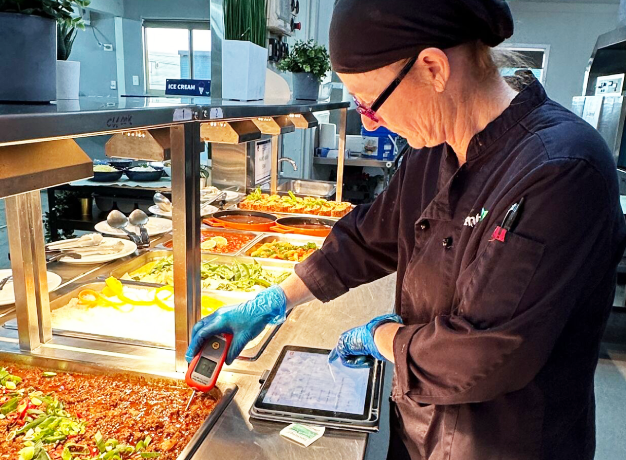
A single restaurant can run compliance from the manager’s office. Across dozens of sites, each rule passes through more people, more jurisdictions, and more handoffs, and every handoff is a place for a standard to slip.
- Oversight arrives too late: Area managers can only visit each site so often, and paper logs show problems after the fact. A warm cooler or a skipped cleaning task can repeat for days before anyone above store level sees it.
- Standards drift between locations: Headquarters writes one procedure, but each site interprets it. Labeling, cooling, and sanitizing steps diverge until two stores under the same brand run different processes. Standardizing operations means one current version of each procedure, verified the same way at every site.
- Turnover resets training constantly: Accommodation and food services averaged a 4.2% monthly quit rate in 2025, per the Bureau of Labor Statistics. The average across all private industries was 2.2%. Each departure can take a certified manager or trained allergen lead off the schedule.
- Rules change at state lines: Food Code editions, manager certification wording, and OSHA jurisdiction differ by state. A manual written for your first market leaves gaps the moment you open in a second.
- Records are scattered: Temperature logs sit on clipboards, supplier certificates in inboxes, and inspection reports in office drawers. When a regulator or franchisor asks for proof, someone has to find it location by location. Pulling those records into one place is the first job of any food compliance software worth evaluating.
What Happens If You Don’t Comply?
Enforcement escalates with risk and repetition, from a re-inspection to a suspended permit to federal charges. For multi-site groups, the most expensive consequence can land on the brand rather than the location that failed.
Did you know? The CDC estimates that 48 million people get sick from foodborne illness in the US each year. Of those, 128,000 are hospitalized and 3,000 die.
- Re-inspections and closer oversight: When violations can’t be fixed on site, one Massachusetts board of health policy schedules follow-up visits by severity: within 72 hours for priority violations, 10 days for priority foundation items, and up to 90 days for core items. A second repeat foodborne illness risk factor can move a site into a higher risk category.
- Permit suspension and closure: Health departments can suspend a permit immediately for an imminent health hazard. Orange County, California’s health agency lists examples: refrigeration lost in a power outage, hand-sink water at or below 99°F, and signs of rodent activity. The location reopens only after the agency confirms the hazard is fixed.
- Recalls that reach every site: When a supplier recalls an ingredient, every location has to find and pull the affected product. The FDA posts recalls and market withdrawals on a public list. Someone at headquarters should watch it and push removals to stores the same day.
- Federal criminal penalties: Chipotle agreed to pay a $25 million criminal fine in 2020, the largest in a food safety case, per the Justice Department. The outbreaks had sickened more than 1,100 people. The US Attorney said the company “failed to ensure that its employees both understood and complied with its food safety protocols.”
- Brand damage across the network: In the Chipotle case, the failures happened in individual restaurants, but the penalty and the headlines landed on the company. Franchise networks carry the same exposure, because guests judge every location by the name on the sign.
Best Practices for Staying Compliant
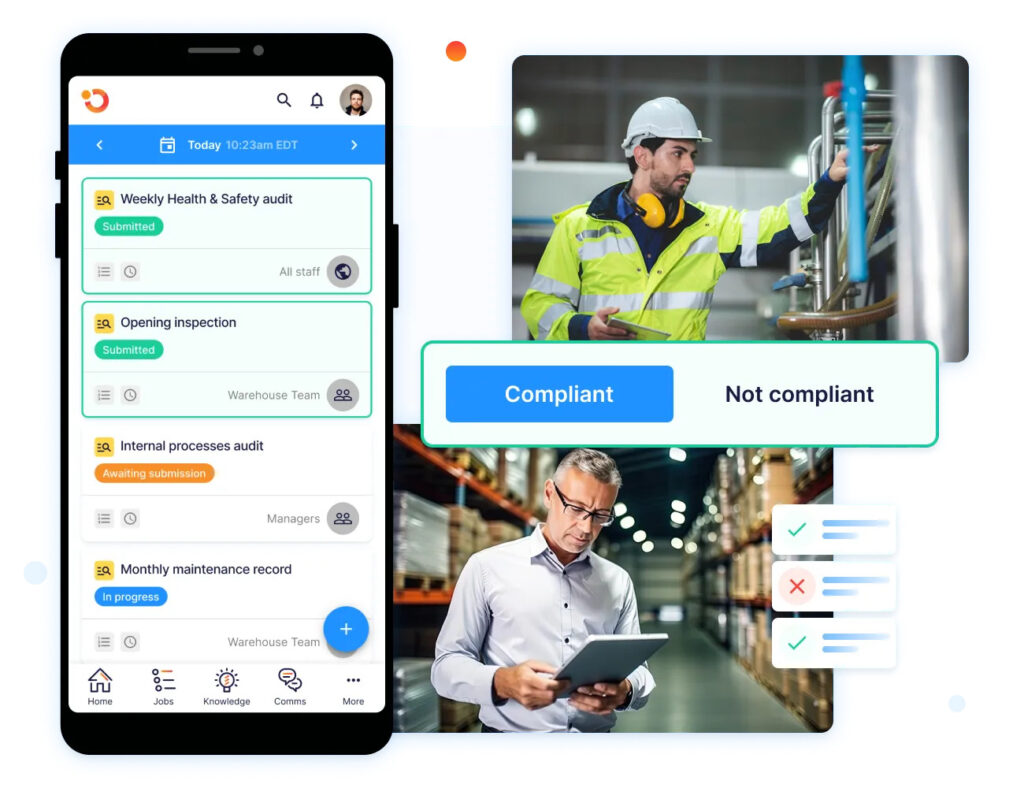
Staying compliant means every shift produces its own evidence, because an inspection only shows one moment. The practices below build that evidence into daily work, so you go beyond compliance with food safety solutions that run across sites.
1. Map the Rules That Apply to Each Location
Start with a location register that lists what applies where. For each site, record:
- the enforcing health department and the Food Code edition it uses
- permit renewal dates
- whether federal OSHA or a state plan covers the site
Add menu-level items too:
- foods on the traceability list
- specialized processes that need a HACCP plan
- whether calorie labeling applies
The register turns each regulatory change into a question you can answer quickly: which sites does this touch? Assign an owner to review it quarterly and whenever a new location opens.
If you grow through franchise and multi-unit management, make the register part of every opening checklist, so new sites start compliant.
2. Write Procedures That Mirror the Code
Translate each requirement into a written procedure with a critical limit, a check, and a named owner. Cooling, hot and cold holding, date labeling, and cleaning food contact surfaces each need a step-by-step version staff can follow mid-rush.
Write the brand-wide version once. Then note where a location’s code is stricter, so staff at that site follow the tighter rule without a separate manual.
Link every procedure to the training that teaches it, and version-control it so updates reach all locations at once. Written policies alone didn’t stop the Chipotle outbreaks, but they give inspectors, managers, and staff one standard to measure against.
Our guide to five common food safety mistakes in restaurants shows where procedures most often break down.
3. Monitor Temperatures Continuously
Manual temperature logs capture a single reading, so equipment failures between checks go unrecorded until the next log. Wireless sensors close that gap by reading continuously and alerting staff when a unit drifts out of range.
Pair sensors with probes for cooking and cooling checks, and verify each food temperature meter regularly against a reference. When a product has to be discarded, record it in a food waste log with the reason. That entry doubles as evidence of corrective action.
With Operandio’s Sensors & Temperature Monitoring, you get real-time readings from wireless sensors across your locations. Those readings sit on the same platform as your inspections and your food safety monitoring records.
4. Run Internal Inspections Before the Health Department Does
Health inspection results are a leading indicator. A CDC analysis of 800 outbreaks at restaurants and other retail food establishments found that 71% of the establishments involved had at least one critical violation on their last routine inspection before the outbreak.
Internal inspections catch those violations first:
- Build your audit form from your health department’s inspection form.
- Score each location, and require photos for high-risk items.
- Turn every failed item into a task with an owner and a due date.
- Re-check the item once the task is closed.
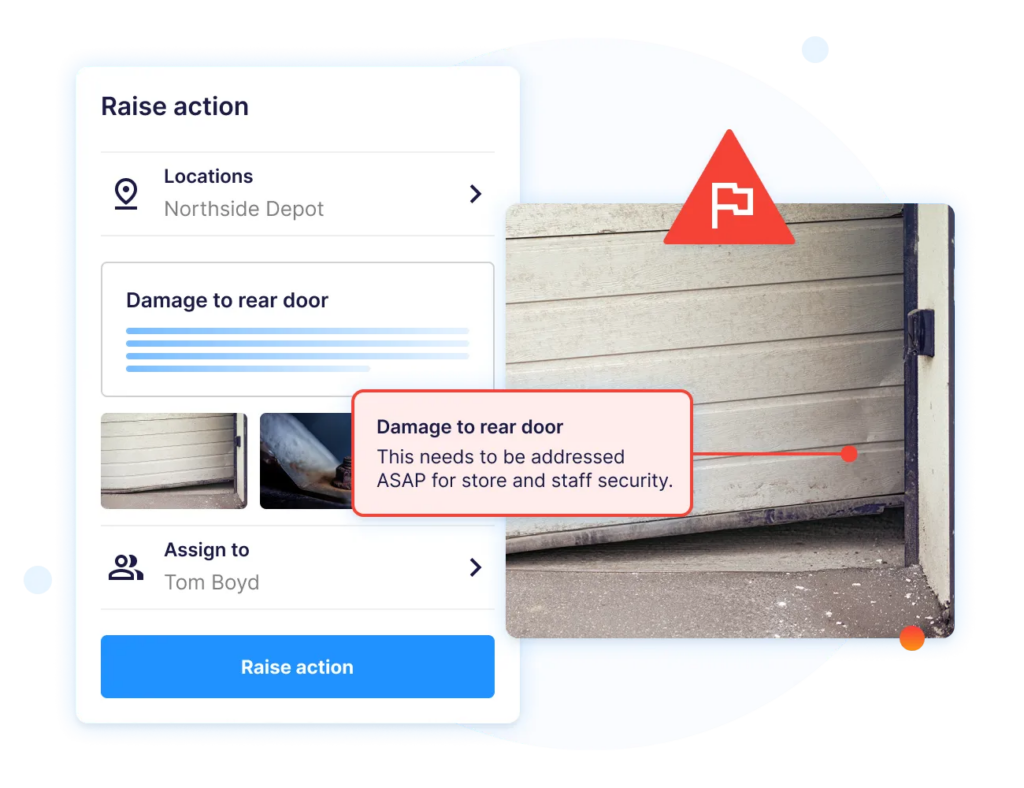
Operandio’s Inspections & Audits lets area managers run custom audits on mobile. Failed items move into Corrective Actions, assigned to the person responsible.
5. Train and Certify by Role
Training has to match the job:
- Supervisors covering a shift need a current CFPM credential where your state requires one.
- Line staff need the procedures for their station.
- Anyone taking allergen orders needs the allergen matrix.
With high turnover, the training record matters as much as the training. You need to see who is certified, who is overdue, and whether each shift has coverage.
Deliver short modules on mobile so new hires train before their first solo shift. Schedule refreshers whenever the code or a recipe changes. Consistent training is also how a food safety culture takes hold across sites.
With Operandio’s mobile-first LMS, you assign training by role. Badges, pathways, and certificates record completion for every employee.

6. Keep Supplier and Traceability Records Retrievable
Supply chain compliance starts with supplier approval. Keep an approved supplier list for every location, with each supplier’s food safety certifications and expiry dates on file.
At receiving, capture the records the traceability rule will require for listed foods, in the same format at every store. A food safety app timestamps those entries in a way paper can’t.
Then test retrieval. The FDA has run traceability readiness tabletop exercises of its own. A yearly mock recall across two locations shows whether your team can find lot-level records fast.
With Operandio’s Supplier Management, you can:
- store supplier certifications and compliance records with expiry dates
- publish approved supplier lists to locations
- notify stores when a supplier changes
7. Review Compliance Data Across Every Location
Compliance data only helps if someone compares it. At least monthly, review these by location:
- task completion
- audit scores
- temperature alerts
Rank sites so field teams know where to spend their visits. Multi-brand groups should compare within each brand, since menus and processes differ.
Flagship Restaurant Group shows what that looks like at scale. The group runs 50+ US locations across brands including Blue Sushi Sake Grill and Plank, and it replaced a legacy platform with Operandio. Automated prep labeling removed manual labeling errors. Headquarters now sees task completion, food safety metrics, and audit results for every location in real time.
Operandio’s role-based reporting dashboards give your leadership the same view.
Bring food safety and audits onto one platform. Operandio’s Digital Food Safety brings temperature monitoring and prep labeling into the same system as your inspections. Explore Digital Food Safety →
Keep Every Location Inspection-Ready With Operandio
Food safety rules rarely fail at headquarters. They fail at the location where a cooler warms overnight or a supplier certificate lapses unnoticed.
Operandio puts inspections, temperature monitoring, training records, and supplier documents on one platform built for multi-unit and franchise groups, so you can see which sites are ready today.
Book a demo with the team to start creating your food compliance processes today.
FAQs
1. What Is the Most Important Food Safety Regulation for Restaurants?
Your state’s food code. It’s the version of the Food Code your inspector enforces, so it shapes daily kitchen operations more than any single federal rule.
2. Who Enforces Food Safety Compliance?
Mostly state and local health departments, which inspect restaurants. Federal agencies such as the CDC work with partners to investigate outbreaks and identify sources of illness.
3. How Often Are Compliance Audits Required?
It depends on your jurisdiction’s inspection schedule. Internally, audit each location at least monthly so problems surface between official visits.
4. What Happens If a Location Fails an Audit?
It depends on who ran it. A failed internal audit needs corrective actions and a re-check. A failed health inspection brings re-inspection and, for imminent hazards, possible closure.