
- Platform
- Features
 Operations ExecutionStreamlined operations ensuring brand standards, accountability and efficiency
 Learning ManagementTrain, verify, and reward your workforce with mobile-first education
 Franchise & Multi-Unit ManagementCentralize oversight and streamline growth across your entire multi location network
 Digital Food SafetyAutomate compliance and monitor quality with real-time digital precision
 Asset ManagementOptimize equipment uptime through proactive maintenance and smart tracking
 Health & Safety Management (EHS)Mitigate workplace risks and streamline digital incident reporting and investigations
- Platform Essentials
 AI-Powered ToolsAutomate content, analyze trends, and provide instant answers
 IntegrationsUnify your enterprise tech stack with real-time data
 Powerful ReportingAlign leadership with role-based dashboards and deeper analytics
 IoT PlatformDetect anomalies and automate workflows with intelligent sensors
 Mobile & Shared Tablet AppsSecurely empower frontline teams with fast, offline-capable access
- Footer


 Not sure what you need?
Book in a call with the team
- Features
- Solutions
- By Industry
 RestaurantsQSR, fast food and multi-unit restaurants
 Hotels & ResortsHotels, resorts and extended stay hotels
 ChildcareEarly education, childcare, daycare and preschool
 EntertainmentTheme parks, family entertainment centers and play centers
 Fitness Centers & LeisureFitness centers, golf clubs, gyms and sports facilities
 RetailBig-box retailers, franchise stores and supermarkets
- By Use Case
- Operational ExcellenceStreamlined operations ensuring brand standards, accountability and efficiency
- Learning & DevelopmentTrain, verify, and reward your workforce with mobile-first education
- Franchise & Multi-Unit ManagementCentralize oversight and streamline growth across your entire multi location network
- Food Safety ComplianceAutomate compliance and monitor quality with real-time digital precision
- Asset Management & MaintenanceOptimize equipment uptime through proactive maintenance and smart tracking
- Health & Safety Management (EHS)Mitigate workplace risks and streamline digital incident reporting and investigations
- By Industry
- Resources
- Platform
- Features
- Operations ExecutionStreamlined operations ensuring brand standards, accountability and efficiency
- Learning ManagementTrain, verify, and reward your workforce with mobile-first education
- Franchise & Multi-Unit ManagementCentralize oversight and streamline growth across your entire multi location network
- Digital Food SafetyAutomate compliance and monitor quality with real-time digital precision
- Asset ManagementOptimize equipment uptime through proactive maintenance and smart tracking
- Health & Safety Management (EHS)Mitigate workplace risks and streamline digital incident reporting and investigations
- Platform Essentials
- AI-Powered ToolsAutomate content, analyze trends, and provide instant answers
- IntegrationsUnify your enterprise tech stack with real-time data
- Powerful ReportingAlign leadership with role-based dashboards and deeper analytics
- IoT PlatformDetect anomalies and automate workflows with intelligent sensors
- Mobile & Shared Tablet AppsSecurely empower frontline teams with fast, offline-capable access
- Footer
- Not sure what you need?
Book in a call with the team
- Features
- Solutions
- By Industry
- RestaurantsQSR, fast food and multi-unit restaurants
- Hotels & ResortsHotels, resorts and extended stay hotels
- ChildcareEarly education, childcare, daycare and preschool
- EntertainmentTheme parks, family entertainment centers and play centers
- Fitness Centers & LeisureFitness centers, golf clubs, gyms and sports facilities
- RetailBig-box retailers, franchise stores and supermarkets
- By Use Case
- Operational ExcellenceStreamlined operations ensuring brand standards, accountability and efficiency
- Learning & DevelopmentTrain, verify, and reward your workforce with mobile-first education
- Franchise & Multi-Unit ManagementCentralize oversight and streamline growth across your entire multi location network
- Food Safety ComplianceAutomate compliance and monitor quality with real-time digital precision
- Asset Management & MaintenanceOptimize equipment uptime through proactive maintenance and smart tracking
- Health & Safety Management (EHS)Mitigate workplace risks and streamline digital incident reporting and investigations
- By Industry
- Resources
Franchise Operations Manual: Step-by-Step Process + Template
Key Takeaways
- A franchise operations manual defines your brand standards and is referenced in your Franchise Disclosure Document (FDD), which franchisors provide to franchisees.
- For restaurant franchises, food safety comes first. Precise temperature controls and health code procedures help prevent $5,000–$15,000 in audit failures.
- Manuals connected to mobile checklists and daily task verification drive much higher compliance than paper binders or PDFs.
- A manual sets the standard, but Operandio delivers execution by turning procedures into mobile checklists, automatic compliance alerts, and real-time verification that keeps every location inspection-ready.
Franchise operations manuals set the standards for food safety, daily ops, and compliance. The issue isn’t documentation. It’s execution.
Most inspection failures happen when steps get skipped, rushed, or logged after the fact, usually during busy or unattended shifts. A manual explains what should happen. It doesn’t show that it did.
As franchises scale, that gap widens. Static manuals record rules but offer no visibility into daily work.
This guide shows how to turn written procedures into consistent, inspection-ready action across every location.
What is a Franchise Operations Manual?
A franchise operations manual explains how your locations are expected to run day to day.
It brings together your brand standards, operating procedures, and the rules franchisees must follow to stay compliant.
For multi-unit restaurant operators, the manual serves two purposes. On the ground, it gives your managers clear, practical guidance for daily decisions. At the corporate level, it provides managers with clear, helpful advice on how to run each shift.
Importance of a Franchise Operations Manual
A franchise operations manual helps keep standards consistent as your franchise grows. It reduces guesswork, supports compliance, and allows both sides of the franchise relationship to operate with clarity.
For Franchisors
As a franchisor, you own the brand and grant franchise rights, but you’re also responsible for maintaining consistent standards across every location, even when you’re not physically present.
Maintain Consistency Without Being On-Site
When you manage dozens of locations, you can’t rely on site visits to enforce standards.
A franchise operations manual documents how work should be done, while tools like franchise operations software help you see whether those standards are actually followed day to day.
Reduce Compliance and Audit Risk
In restaurant franchises, food safety is non-negotiable.
Clear documentation around temperature checks, sanitation, and hazard controls sets expectations, while systems that support a strong food safety culture help prevent missed checks and last-minute record-filling.
For Franchisees
As a franchisee, you’re responsible for running one or more locations day to day, often with high staff turnover and limited time to step away from the floor.
A Practical Daily Reference
When issues come up during a shift, you need answers quickly.
A clear operations manual gives you guidance on common scenarios without waiting for corporate responses, especially during busy service periods.
Faster Onboarding and Accountability
With frequent staff turnover, documented procedures help new hires get up to speed faster.
When those procedures are tied to task verification, you can hold teams accountable, even on night shifts or when you’re not on-site.
For operators managing multiple locations, platforms built for multi-unit franchise environments make it easier to apply these standards consistently without adding extra admin work.
What Are the Key Components of a Franchise Operations Manual?
A strong franchise operations manual focuses on the areas that create the most risk if they break down. For restaurant franchises, that means prioritizing compliance and execution before everything else.
Food Safety and Compliance Procedures
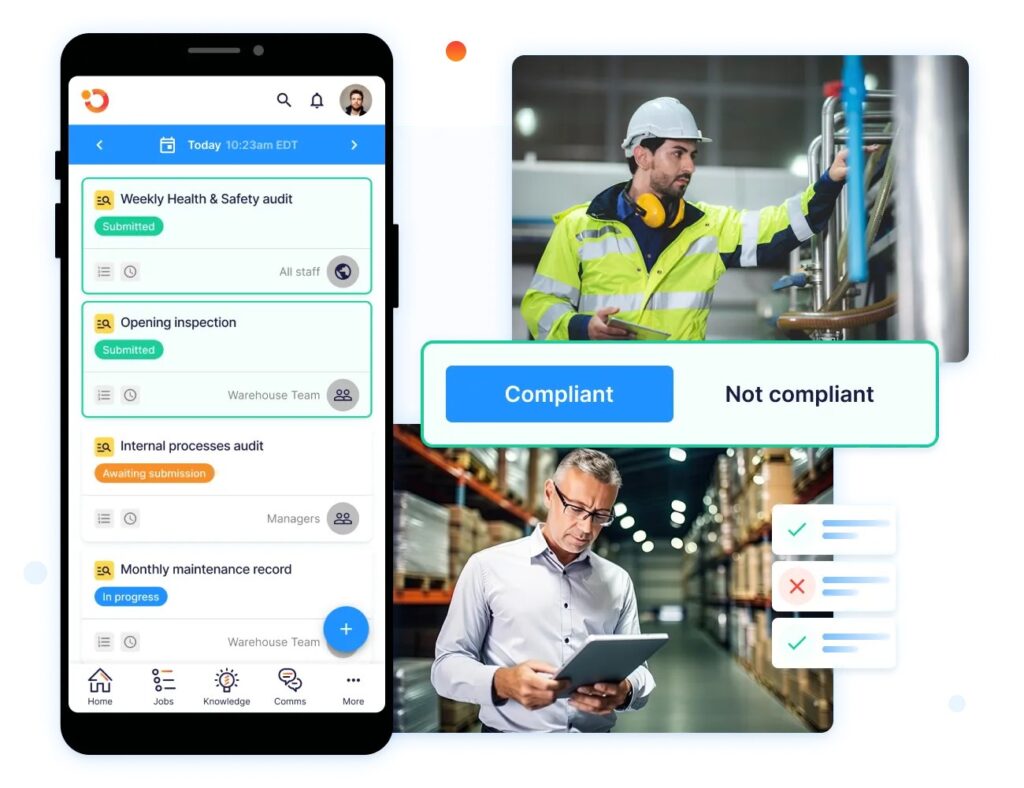
Food safety procedures cover temperature checks, allergen handling, sanitation schedules, and hazard reporting. These are health code requirements, not internal preferences, and inspectors expect them to be followed consistently.
Daily Operations and Task Checklists
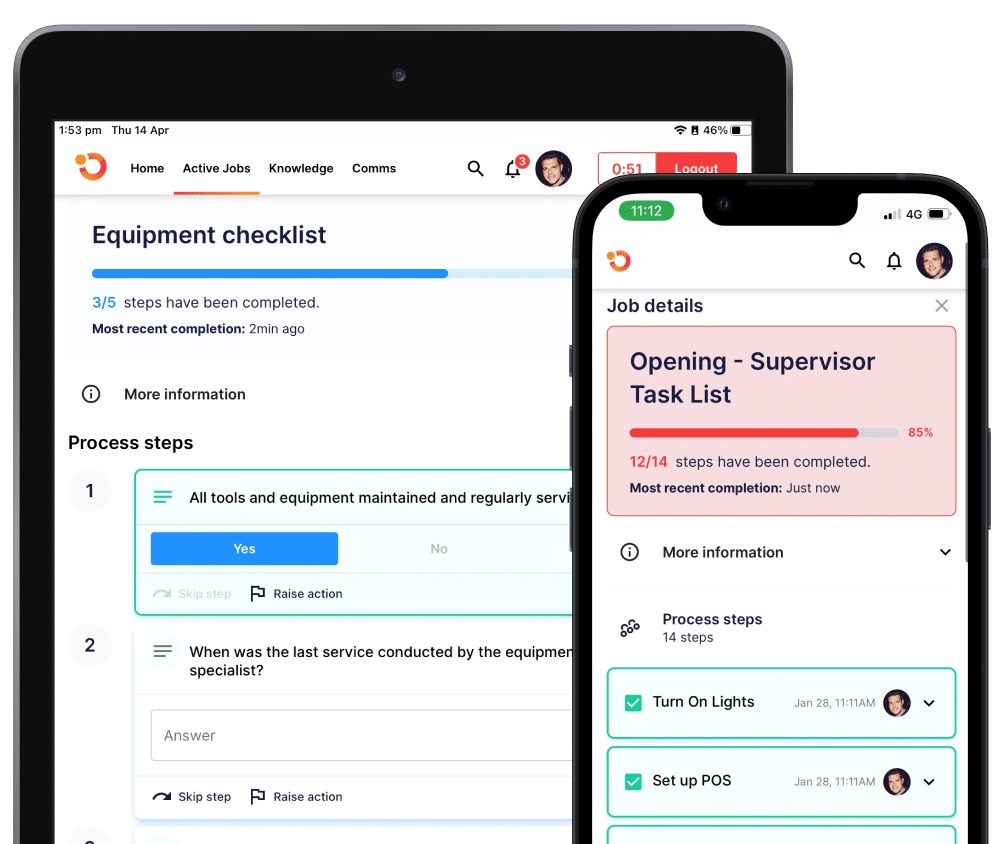
Daily workflows keep locations running consistently. Your manual should clearly document opening procedures, closing checklists, and shift handoffs, written as tasks rather than policies.
Staff Training and Onboarding Procedures
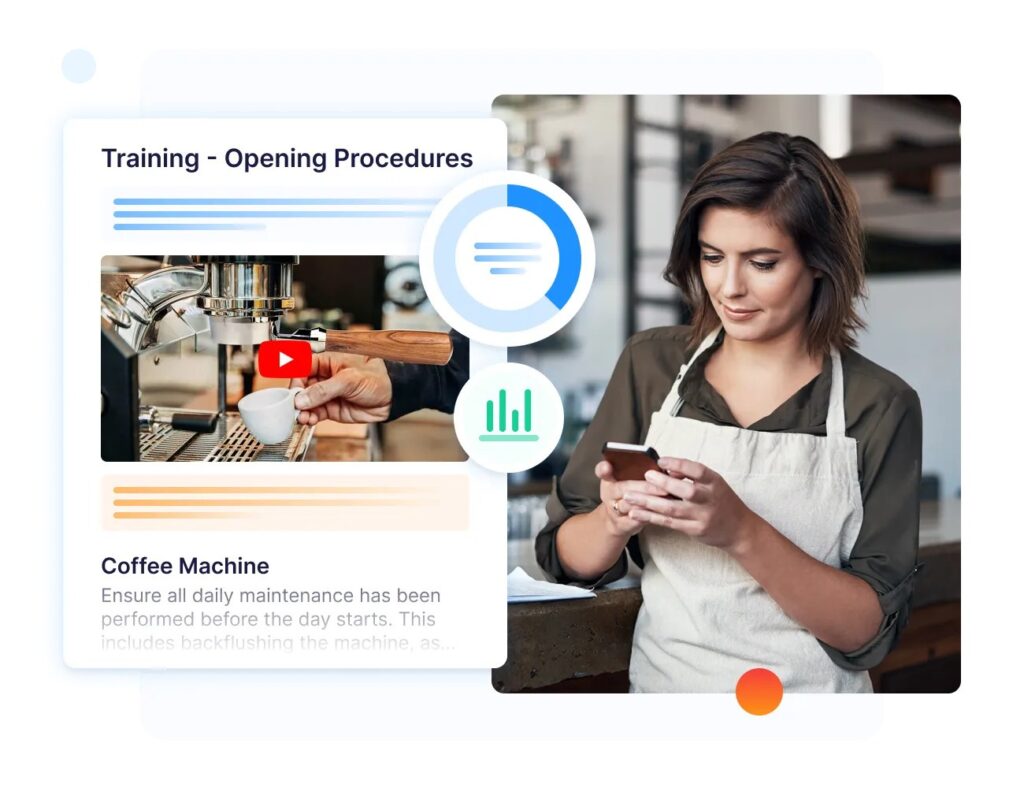
Document clear onboarding steps by role, including what new hires should learn first and who signs off on completion. Visual guides help keep training consistent even when managers change.
Brand Standards and Communication Expectations
This section defines how your brand shows up and how information flows. It should cover customer service standards, the limits of authority for decisions, and when issues need to be escalated, so franchisees aren’t guessing during critical moments. This is an essential part of franchise brand management, ensuring that brand expectations are clearly communicated and upheld consistently across all locations.
Different Types of Franchise Operations Manual
As your franchise grows, a single manual becomes hard to use. The strongest restaurant franchises split documentation by purpose, so teams can find what they need quickly and use it during live operations.
Food Safety and Compliance Manual
This is your highest-priority manual. It covers temperature checks, allergen handling, sanitation schedules, hazard reporting, and inspection preparation.
These are health code requirements, not preferences, and they carry the most risk when they fail. This manual should align closely with your documented restaurant SOPs.
Download the Restaurant SOP Checklist Template to document temperature logs, cleaning schedules, and inspection prep in a format staff can follow.
Kitchen and Front-of-House Operations Manual
This manual documents what happens during every shift: opening and closing checklists, equipment cleaning and maintenance, and handovers.
Design tasks, and organize by shift flow. Managers need “closing procedures” fast at 10 pm, not buried in text. Cleaning steps should align with your restaurant cleaning procedures.
Staff Training and Development Manual
With constant turnover, training must be simple and repeatable. This manual outlines onboarding steps, required certifications, and when staff can work independently.
Keep timelines realistic and role-specific, and anchor expectations in a consistent restaurant training manual across all locations.
Communication and Reporting Manual
This manual defines how information moves across your franchise. It sets clear rules for reporting, escalation, and daily communication so issues surface early, not weeks later.
Centralized updates through a franchise intranet become increasingly important as you scale through franchise expansion.
How to Create a Franchise Operations Manual: Step-by-Step Process
Creating a franchise operations manual works best when you build it in layers. Start with what poses the most risk, then expand based on how your locations actually operate day to day.
Step 1: Start With Food Safety and Compliance
Begin with the procedures that can shut down a location if they fail: document temperature checks, allergen handling, sanitation schedules, hazard reporting, and inspection prep.
Pro tip: Don’t invent this from scratch. Use a checklist that already mirrors inspection workflows, then adapt it to your locations.
Step 2: Document Daily Shift Workflows
Next, capture what happens every shift. Write clear opening procedures, closing checklists, equipment cleaning steps, and shift handovers as tasks, not policies.
Organize everything by shift flow so managers can find what they need during service, not after.
Step 3: Build Role-Based Training Paths
Once daily operations are clear, document how people learn the job. Outline franchise onboarding steps by role, required certifications, and when staff can work independently.
Keep timelines realistic and focused on what new hires need first. Consistency matters more than detail at this stage.
This is where a digital employee handbook helps keep training materials accessible and up to date across locations.
Step 4: Define Communication and Reporting Rules
Always document how information moves. Be clear about what gets reported, when, and through which channel.
Define escalation paths so that safety issues, equipment failures, and compliance risks surface immediately rather than weeks later.
Best Practices for a Franchise Operations Manual
A franchise operations manual only works if people actually use it. These best practices focus on accessibility, execution, and accountability, not just documentation.
Best Practice #1: Make the Manual Mobile-Accessible
Your manual should be searchable on mobile so that someone can find “allergen protocol” or “closing checklist” in seconds. Tools built for mobile and tablet use in restaurants remove that friction.
Best Practice #2: Connect Procedures to Daily Checklists
This closes the gap between policy and execution and prevents “we meant to do it” scenarios. Platforms like franchise management software help connect manuals to real-time task completion.
Best Practice #3: Use Visual Aids Instead of Long Explanations
If a task is visual, document it visually. Photos and short videos explain cleaning steps, equipment setup, and plating standards faster than text.
They also reduce interpretation errors and work across language barriers. This is especially helpful during restaurant manager training, where speed and clarity matter.
See how Operandio connects operations manuals to daily checklists and real-time completion tracking. Visit our knowledge base feature page.
Best Practice #4: Build in Accountability With Proof
Paper checklists get filled out after the fact. That’s the gap most franchises run into.
Digital verification creates accountability by capturing timestamps, task ownership, and manager sign-off. Using franchise technology amplifies this process, making it easy to track, report, and audit tasks across multiple locations instantly. When inspectors ask for proof, you can show it immediately.
Operandio’s audits and inspection features are designed specifically for this moment. It provides timestamped proof of task completion.
Common Challenges When Creating a Franchise Operations Manual
Most franchise manuals fail for the same reasons. The issue isn’t effort or intent. It’s how the manual is accessed, maintained, and enforced once real operations take over.
Challenge #1: Staff Don’t Actually Use the Manual
You can spend months documenting procedures, but if staff can’t access answers quickly during a busy shift, the manual gets ignored.
Dense PDFs and binders force managers to step away from the floor, so usage drops when pressure is highest.
Challenge #2: Awareness Without Compliance
Writing “log temperatures every four hours” doesn’t mean it happens. Paper logs can be filled out later, or not at all.
Without visibility into execution, you’re relying on trust rather than proof, especially during night shifts or on understaffed days.
Challenge#3: Too Much Detail, Not Enough Usability
Overly comprehensive manuals overwhelm teams. When problems arise, staff don’t read cover-to-cover. They search for specific answers.
Manuals that try to cover every edge case upfront often become harder to use, not more helpful.
Legal Considerations When Creating a Franchise Operations Manual
Your franchise operations manual isn’t just operational guidance. Under U.S. franchise law, the table of contents is referenced in Item 11 of your Franchise Disclosure Document (FDD), and the manual is typically incorporated into your franchise agreement as the standard franchisees must follow.
Ensure Consistent Franchise Operations with Operandio
Operandio connects your documented procedures to mobile checklists, automatic alerts, and real-time verification, so you can see what’s happening across every location, even when you’re not there.
If you’re ready to move from documented standards to provable compliance, learn why franchises choose Operandio or request a demo to see how it works in real operations.