



Key Takeaways
- The biggest restaurant technology trends for 2027 are moving behind the counter: proof-based digital checklists, continuous temperature monitoring, connected training, AI photo checks, smarter equipment maintenance, cross-system operational intelligence, and computer-vision inventory.
- Three are already proven enough for broader rollout: digital evidence, temperature monitoring, and connected frontline training.
- AI photo verification, preventive maintenance, and cross-system AI are proving themselves in live products but still deserve measured pilots.
- Computer-vision inventory remains early. Operators should budget according to maturity rather than treating every new technology as equally ready.
Restaurant technology has spent years getting more visible to the guest: kiosks, QR menus, digital ordering, loyalty apps.
The bigger 2027 restaurant technology shift is happening behind the counter.
Back-of-house systems are moving from recording work to proving it happened, monitoring conditions continuously, connecting training with execution, and using AI to decide what managers should review first.
Here are seven trends worth planning for, rated by how ready they are today.
Where Restaurant Technology Is Heading in 2027
In 2027, restaurant technology is shifting toward back-of-house (BOH) systems that capture evidence of work, monitor conditions continuously, and turn operational data into earlier action.
Nearly half of restaurant operators, 48%, planned technology investments to improve back-of-house productivity and efficiency in 2026, according to the National Restaurant Association’s State of the Restaurant Industry report.
That spending increasingly connects systems that used to stand alone:
- Digital checklists and audits
- Internet of Things (IoT) sensors
- Hazard Analysis and Critical Control Points (HACCP) food-safety workflows
- Learning management systems (LMS)
- Standard operating procedures (SOPs)
- Equipment and maintenance records
- AI that reads those operational signals
For quick-service restaurants (QSRs) and other multi-unit operators, the direction is clear: capture cleaner operating data first, then use automation and AI to find the exceptions.
This list stays entirely behind the counter. Front-of-house (FOH) trends such as kiosks, ordering AI, loyalty, and guest personalization belong to a different technology roadmap. Operandio’s restaurant management software brings many of these BOH workflows into one operating environment.
7 Back-of-House Restaurant Technology Trends for 2027
The seven trends are proof-based digital checklists, continuous temperature monitoring, connected training, AI photo verification, preventive maintenance, cross-system operational intelligence, and computer-vision inventory counting.
We use three maturity ratings:
- Proven: widely deployed with evidence beyond a product launch or pilot.
- Proving: live in commercial products, but outcome evidence is still largely vendor-reported.
- Early: limited deployments, unresolved reliability questions, or significant public rollbacks.
| Trend | Should Restaurants Use It? | Evidence |
|---|---|---|
| Digital checklists + evidence capture | Proven: Roll out where paper or manual follow-up remains | Mature multi-site workflows; large volumes of digital task and audit evidence already in use |
| Continuous temperature monitoring | Proven: Strong 2027 priority | Independent research shows active deployment and growing IoT investment, despite heavy reliance on manual logs |
| Connected frontline training | Proven: Roll out where training is disconnected from operations | Mobile LMS and digital onboarding are established; multi-unit case studies show measurable onboarding gains |
| AI photo verification | Proving: Pilot on narrow visual standards | Live in named restaurant operations platforms; evidence remains mainly vendor-led |
| Equipment monitoring + preventive maintenance | Proving: Start with critical assets | IoT equipment monitoring is growing; predictive use cases still need stronger independent restaurant evidence |
| Cross-system operational intelligence | Proving: Add once operating data is connected | AI can now read audits, incidents, sensors and training together; independent outcome data is still limited |
| Computer-vision inventory counting | Early: Use narrow pilots only | Real deployments exist, but public rollbacks show unresolved reliability challenges |
1. Digital Checklists Are Becoming Proof-of-Work Systems
Rating: Proven.
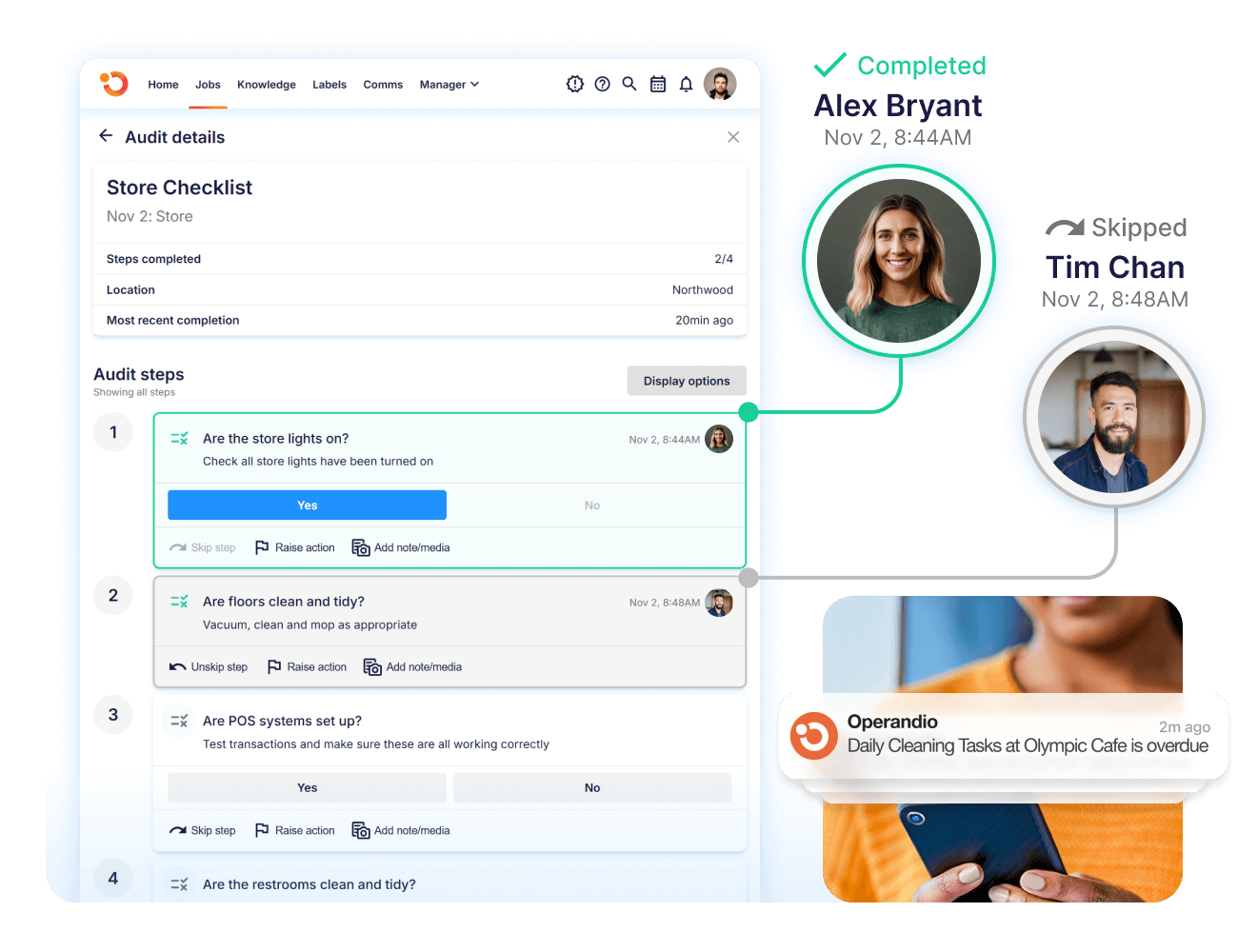
Digital checklists are evolving from electronic tick boxes into records of who completed the work, when they completed it, and what evidence supports the response.
A task can now require:
- A photo
- A temperature or numeric reading
- A timestamp
- A named employee
- A pass/fail response
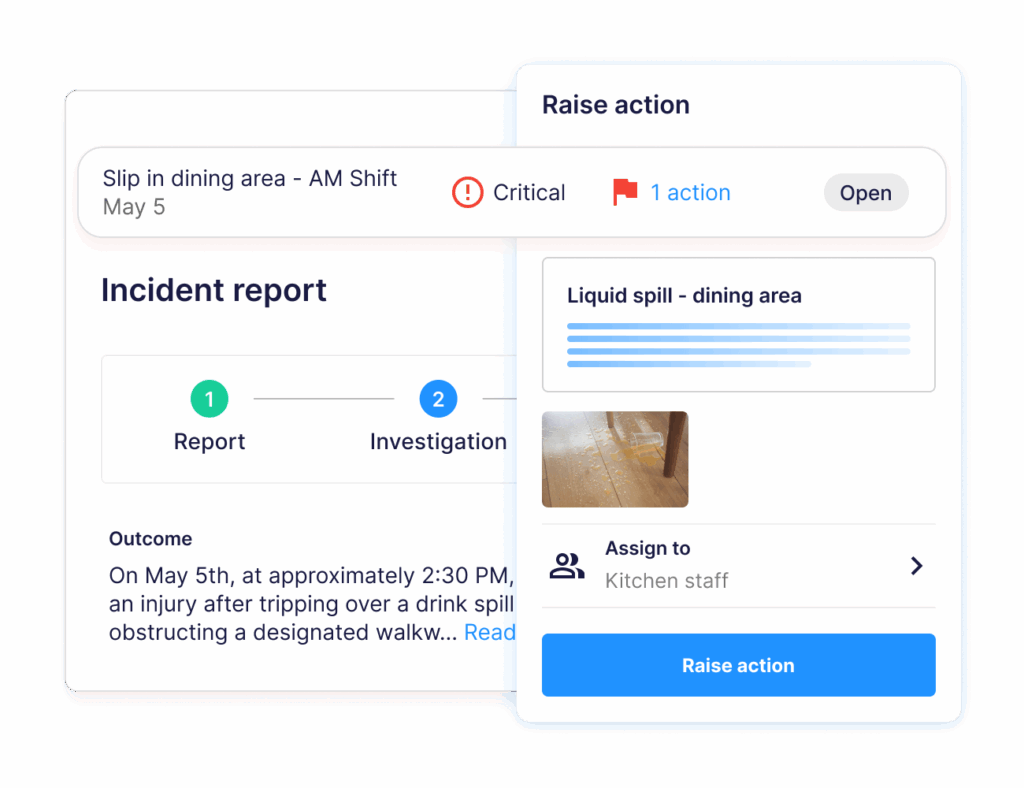
- A corrective action when the standard is missed
All of that changes what head office can see.
Instead of knowing that a closing checklist was submitted, an operator can review whether critical work was completed correctly and which locations repeatedly miss the same item.
Crunchtime says more than one million photos are uploaded to its operations platform each day, showing how much frontline evidence multi-site brands are already collecting.
Operandio’s task management can also connect failed tasks with follow-up rather than leaving the problem inside a completed checklist. District managers can compare audit histories and location rankings without relying on paper records moving up the chain.
Measure: Completion of critical tasks, repeat failures, corrective-action closure, audit scores, and manager review time.
2. Continuous Temperature Monitoring Is Replacing Manual Logs
Rating: Proven.
Wireless sensors can monitor walk-ins, freezers, and other cold-storage equipment continuously rather than relying on employees to record temperatures a few times per shift.
Adoption still has a long way to go.
MachineQ’s 2026 Restaurant Readiness research, based on 400 quick-service and fast-casual decision-makers, found that only 14% use automated IoT cold-storage monitoring. Meanwhile, 46% still use digital spreadsheets for manual checks and 20% use paper logs.
That gap makes continuous monitoring one of the clearest 2027 opportunities.
The technology can:
- Record temperatures around the clock
- Alert teams when a configured threshold is crossed
- Preserve a digital history
- Escalate unresolved exceptions
- Connect failures with corrective actions or maintenance
The sensor itself is only part of the workflow. A useful system also needs the right thresholds, a named person responsible for the alert, and an escalation path when nobody responds.
Super Chix, for instance, uses LoRaWAN temperature sensors alongside its digital time-and-temperature workflows, giving managers continuous data across locations.
Operandio’s temperature monitoring connects sensor readings with operational alerts and follow-up.

Measure: Missed checks, temperature excursions, alert response time, repeated equipment problems, and food-loss events.
Planning to connect food-safety checks, sensors, audits, and corrective actions across multiple locations? See how Operandio approaches food safety and compliance from one operating system.
3. Frontline Training Is Becoming Connected to Daily Operations
Rating: Proven.
Mobile training, learning management systems, and certification tracking are established. The 2027 shift is connecting that learning more closely with the work employees perform on shift.
Traditional training often sits apart from operations. Employees complete a course, but managers still have to work out whether the standard is being followed.
Schoox research found that 66% of U.S. frontline workers aged 18-34 feel their company does not provide the right training to help them perform better, while 67% say mobile access to training is important.
Connected training closes more of that gap by linking:
- Role requirements
- SOPs and policies
- Assigned learning
- Certification status
- Workplace assessments
- Operational follow-up
Tex’s Chicken uses Operandio across 52 stores and reported a 40% reduction in manager onboarding time after centralizing training and operational standards.
“Once Operandio came in, it was the solution to all our problems. We can push standards to any store, any time,” shares Najib Ullah, Chief Operating Officer & Managing Partner at Tex’s Chicken & Burgers
AI course generation is an additional layer. Operandio’s AI Course Builder can turn approved SOPs and documents into training drafts, while the underlying restaurant training system tracks delivery and completion.
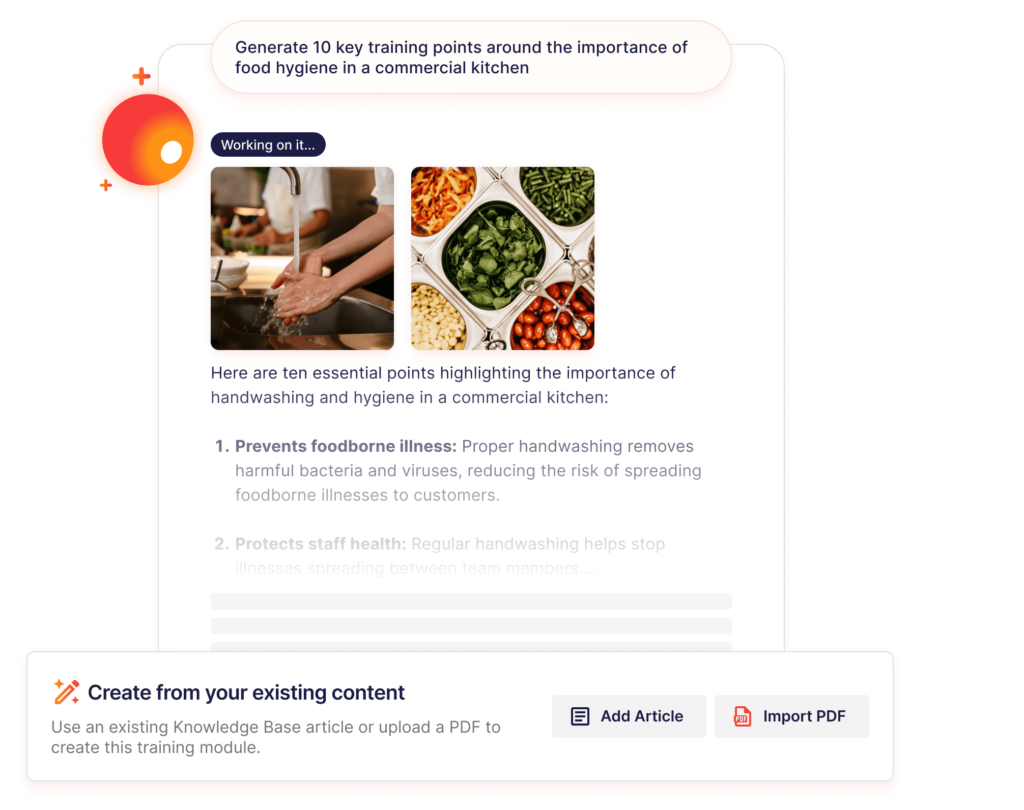
Measure: Onboarding time, completion rates, overdue certifications, assessment results, and repeat failures after training.
4. AI Photo Verification Is Cutting Manual Review
Rating: Proving.
AI can now review frontline photos against defined visual standards, but operators should keep the use case narrow and monitor false flags.
Restaurants already collect photos for:
- Cleaning checks
- Opening and closing tasks
- Equipment condition
- Merchandising
- Corrective-action evidence
The newer capability is letting AI identify which submissions deserve a manager’s attention.
Crunchtime’s Photo Intelligence can review uploaded images for issues such as poor-quality submissions, incorrect subjects, or failures against configured requirements. Operandio also supports AI photo evaluation against a brand’s reference image.
This tech can save managers from manually opening every photo across dozens or hundreds of locations. However, it becomes less reliable when the standard is visually ambiguous or images vary heavily in lighting, angle, reflections, packaging, or obstruction.
Use it for questions such as:
Does this station match the approved reference?
rather than:
Is this restaurant operating correctly?
Operandio’s AI platform can connect photo findings with the wider operating workflow.
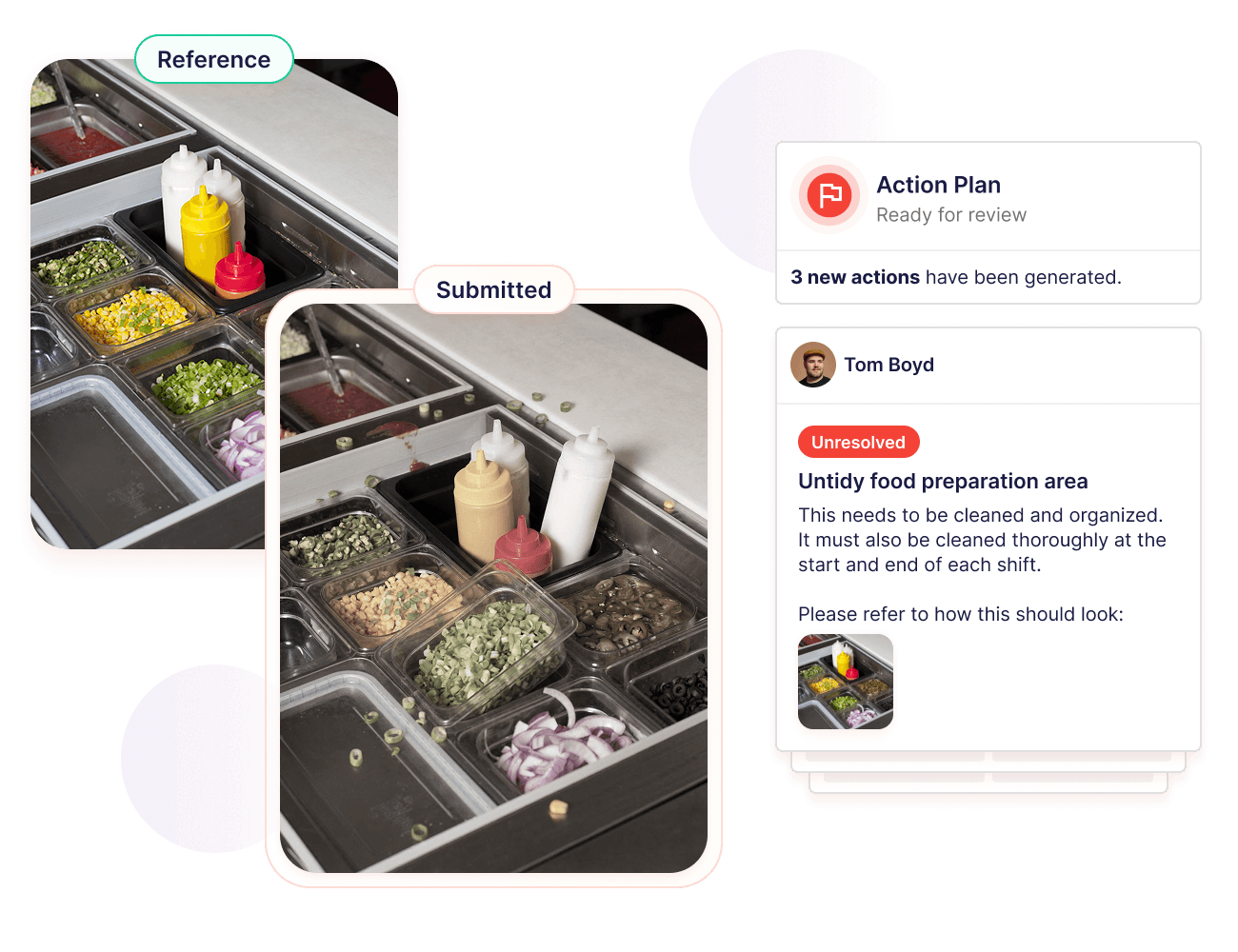
Measure: Review time, false flags, missed failures, repeat audit findings, and percentage of flagged issues corrected.
5. Equipment Monitoring Is Moving Toward Preventive Maintenance
Rating: Proving.
Restaurants already track equipment and automate maintenance workflows. The emerging step is using sensor and maintenance history to spot problems earlier.
For refrigeration, fryers, HVAC, kitchen equipment, and other critical assets, the old model is reactive:
Equipment fails → staff report it → repair begins
Connected equipment creates a different path:
Abnormal reading or repeated fault → alert → work order → repair before a larger failure
IoT adoption is moving in this direction as operators look for better visibility into equipment condition and operating costs.
Preventive maintenance also becomes more useful when inspection history, faults, repairs, and asset records live together. Repeated problems can then be identified across locations instead of staying buried in individual maintenance tickets.
Operandio’s asset tracking and preventive maintenance keeps asset history and recurring issues together, while Smart Work Orders can route repair work from frontline findings.
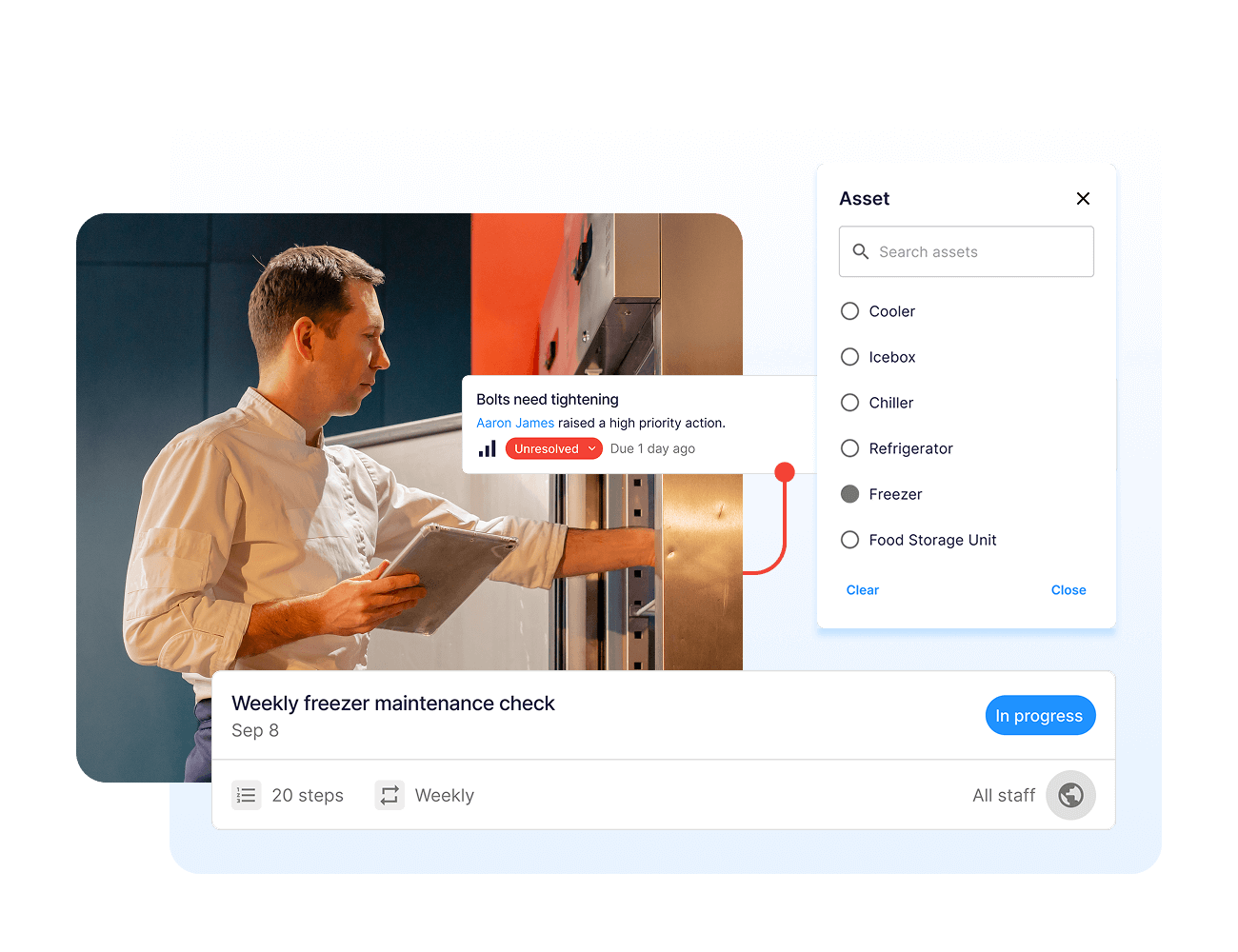
The monitoring layer is mature. Predicting failure reliably before it happens is still proving itself in restaurant environments.
Measure: Downtime hours, emergency repairs, repeat faults, preventive-maintenance completion, and repair turnaround.
6. AI Is Starting to Read the Whole Operating Record
Rating: Proving.
Restaurant AI is moving beyond one chatbot, one checklist, or one sensor feed toward systems that analyze several operational signals together.
A multi-unit restaurant may already collect:
- Audit scores
- Checklist completion
- Corrective actions
- Training records
- Incidents
- Sensor readings
- Asset history
The next step is finding patterns across those systems.
A location with falling audit scores, overdue training, and repeated corrective actions may deserve attention before its headline business metrics change.
Crunchtime has introduced AI tools that analyze submissions and operating data across its platform. Operandio’s Actionable Intelligence similarly reads connected operational signals, compares locations, surfaces patterns, and can turn findings into assigned work.
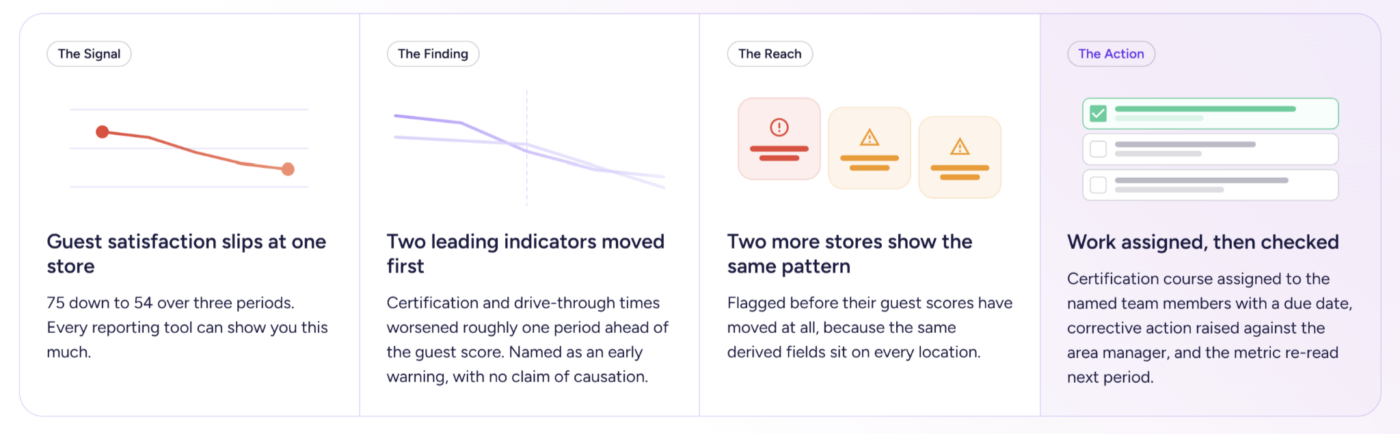
The important distinction is between correlation and cause. AI can show that several signals moved together without proving why performance changed. This makes the technology effective for prioritization rather than automatic diagnosis.
Measure: Time from finding to action, repeat location failures, alert closure, manager review time, and issues identified before they become larger operating problems.
7. Computer-Vision Inventory Counting Is Still an Early Bet
Rating: Early.
Cameras and computer vision can count products automatically, but 2026 showed how difficult that becomes in real restaurant environments.
The attraction is obvious. Instead of employees manually counting milk, cups, packaged ingredients, or other inventory, a camera scans the shelf and software identifies the items.
Starbucks tested that model across North America but discontinued its AI inventory-counting system after roughly nine months. Restaurant Dive reported problems including products being miscounted or mislabeled.
The challenge is the physical environment. Computer vision has to deal with:
- Similar-looking packaging
- Changing labels
- Items blocking one another
- Reflections
- Poor lighting
- Products stored in different orientations
- New items the system has not seen before
That does not mean automated visual inventory counting has no future. It means operators should treat it as a narrow pilot, not a replacement for verified inventory controls across an entire network.
Start with a tightly defined product set and compare every automated count with manual verification before expanding.
Measure: Count variance, mislabeled or missed products, recount frequency, stockout accuracy, and actual labor saved after errors are corrected.
What Recent Restaurant Tech Rollbacks Teach Us for 2027
Recent AI setbacks show why restaurants should separate promising technology from proven deployment.
Starbucks discontinued its computer-vision inventory-counting system in 2026 after roughly nine months. The system had encountered problems with products being miscounted or mislabeled.
McDonald’s ended its IBM drive-through voice-AI test in 2024 after accuracy problems. But the chain did not abandon AI. In 2026, it announced ArchIQ, a broader restaurant operating system covering voice AI, inventory, connected equipment, diagnostics, and predictive alerts.
Taco Bell followed a similar path. It slowed part of its voice-AI rollout in 2025 after customer friction, then continued expanding a different voice-AI deployment in 2026 to more than 890 U.S. restaurants.
The lesson is not that restaurant AI does not work. It’s that operators need to test whether the technology works inside the real environment where employees and customers will use it.
Restaurant technology experts interviewed in a recent report recommended starting small, piloting operational use cases, involving employees early, and adopting at a pace teams can absorb.
For 2027, three rules stand out:
- Digitize the inputs first. AI works better when tasks, audits, readings, and standards already produce consistent data.
- Give every alert an owner. A prediction or flag has little value until someone investigates and closes it.
- Measure real adoption. Track weekly active locations and completed workflows rather than logins.
How to Plan Your 2027 Back-of-House Technology Budget
Sequence matters more than buying every new technology at once.
Build the operating record first. Automate monitoring second. Add AI only where the underlying data is consistent enough to support it.
| Priority for 2027 | Start With | Sign It’s Working |
|---|---|---|
| Build the operating record | Digital checklists, audits, evidence capture, connected training | Critical work is consistently recorded across locations |
| Automate monitoring and maintenance | Temperature sensors and equipment monitoring on high-risk assets | Fewer missed checks, faster alert response, less repeat downtime |
| Add AI where the data is clean | Photo verification, operational intelligence, narrow computer-vision pilots | Useful flags are actioned quickly without excessive false positives |
Priority 1: Build the Data Layer
If critical checks still live on paper, spreadsheets, or disconnected apps, start there.
Standardize:
- Checklists
- Audit scoring
- Temperature records
- Training
- Corrective actions
- Evidence requirements
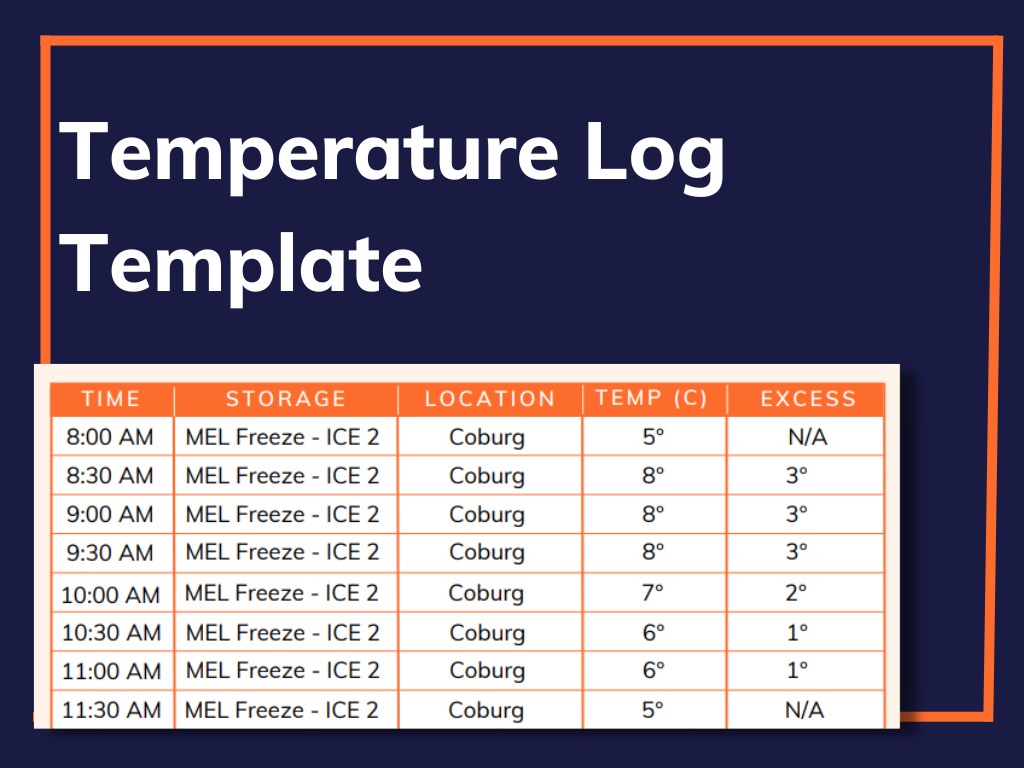
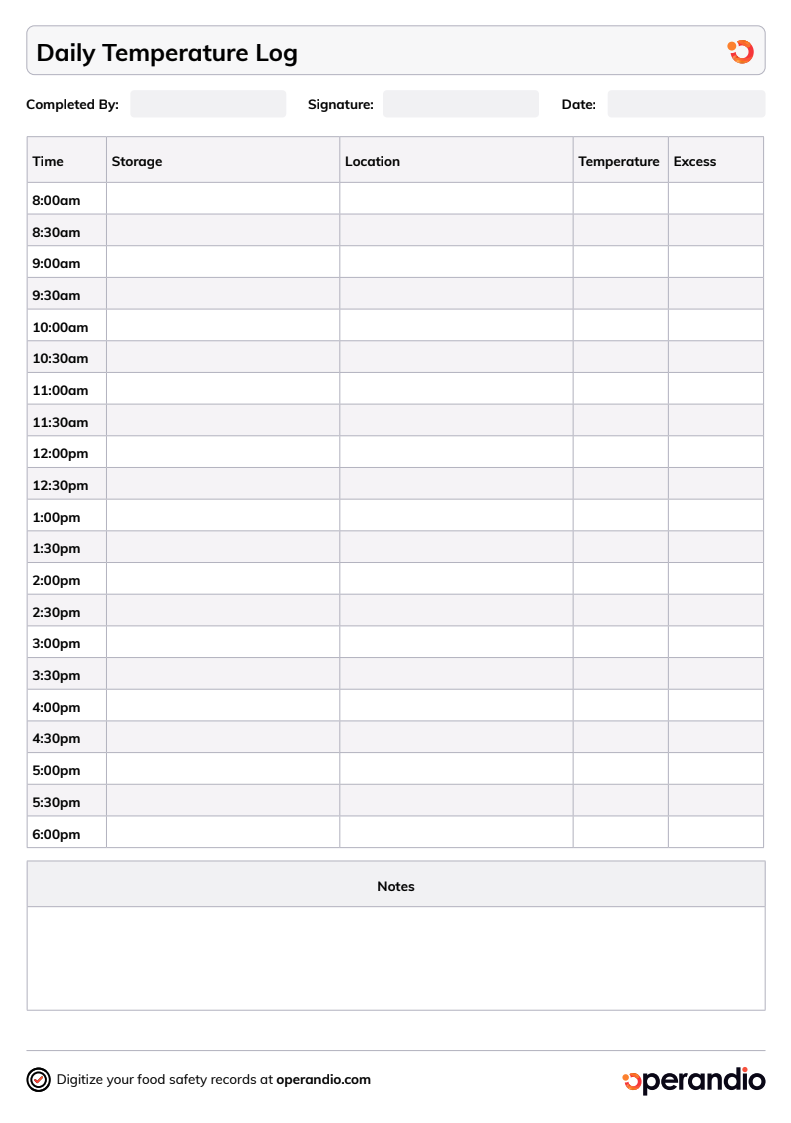
For cold storage, Operandio’s temperature log template can be a practical first step before moving from manual records to continuous monitoring.
Priority 2: Automate the Repetitive Monitoring
Once the process is consistent, automate the parts employees shouldn’t have to remember constantly.
Prioritize:
- High-risk refrigeration
- Critical equipment
- Repeated food-safety checks
- Maintenance triggers
Start with the assets where a missed problem creates the greatest operational or food-safety consequence.
Priority 3: Add AI to Reduce Review Work
AI should come after the data is dependable.
Pilot photo verification, cross-location intelligence, or another narrow AI use case at representative sites. Compare the time managers spend reviewing data, the usefulness of flags, and whether issues are resolved faster.
For a broader view of what can be automated across restaurants, check out this guide to restaurant automation systems.
Run Every 2027 Upgrade From One Platform With Operandio
The strongest back-of-house technology stack is increasingly connected.
Operandio brings sensors, checklists, audits, food safety, training, assets, and corrective actions into one operations execution platform, giving teams one operating record and AI cleaner data to work from.
Super Chix uses Operandio across 60+ U.S. locations, combining scheduled checklists, digital audits, temperature monitoring, training, and remote coaching while giving district managers a network-wide view of performance.
“Being able to see the data remotely is very helpful. It gives our managers a lot more time to do their tasks instead of micromanaging the team,” says Lance Nebeker, Assistant Director of Operations at Super Chix
If you are planning your 2027 technology roadmap, book a demo to see how those workflows can run together.
FAQs
What is the biggest restaurant technology trend for 2027?
Back-of-house connectivity. Restaurants are increasingly linking tasks, sensors, training, maintenance, and AI instead of running each system separately.
Is restaurant technology replacing kitchen staff?
Mostly no. Current restaurant technology is more commonly reducing manual checking, monitoring, searching, and administrative work than eliminating entire roles.
How much do temperature monitoring sensors cost a restaurant?
It varies by sensor count, gateways, connectivity, and vendor. Ask for the total installed hardware and monitoring cost per location.
Should a restaurant group adopt AI in 2027?
Yes, selectively. Start with narrow use cases where clean operational data already exists and measure the result before expanding.
What technology do multi-unit restaurants need first?
Start with reliable digital operating data: tasks, audits, food-safety records, training, and corrective actions. Sensors and AI work better on top of that foundation.