
- Platform
- Features
 Franchise & Multi-Unit ManagementCentralize oversight and streamline growth across your entire multi location network
 Learning ManagementTrain, verify, and reward your workforce with mobile-first education
 Operations ExecutionStreamlined operations ensuring brand standards, accountability and efficiency
 Asset ManagementOptimize equipment uptime through proactive maintenance and smart tracking
 Digital Food SafetyAutomate compliance and monitor quality with real-time digital precision
 Health & Safety Management (EHS)Mitigate workplace risks and streamline digital incident reporting and investigations
- Platform Essentials
 Powerful ReportingAlign leadership with role-based dashboards and deeper analytics
 Operandio IntelligenceAutomate content, analyze trends, and provide instant answers
 IntegrationsUnify your enterprise tech stack with real-time data
 IoT PlatformDetect anomalies and automate workflows with intelligent sensors
 Mobile & Shared Tablet AppsSecurely empower frontline teams with fast, offline-capable access
- Footer


 Not sure what you need?
Book in a call with the team
- Features
- Solutions
- By Industry
 RestaurantsQSR, fast food and multi-unit restaurants
 Hotels & ResortsHotels, resorts and extended stay hotels
 ChildcareEarly education, childcare, daycare and preschool
 EntertainmentTheme parks, family entertainment centers and play centers
 Fitness Centers & LeisureFitness centers, golf clubs, gyms and sports facilities
 RetailBig-box retailers, franchise stores and supermarkets
- By Use Case
- Operational ExcellenceStreamlined operations ensuring brand standards, accountability and efficiency
- Learning & DevelopmentTrain, verify, and reward your workforce with mobile-first education
- Franchise & Multi-Unit ManagementCentralize oversight and streamline growth across your entire multi location network
- Food Safety ComplianceAutomate compliance and monitor quality with real-time digital precision
- Asset Management & MaintenanceOptimize equipment uptime through proactive maintenance and smart tracking
- Health & Safety Management (EHS)Mitigate workplace risks and streamline digital incident reporting and investigations
- By Industry
- Resources
- Platform
- Features
- Franchise & Multi-Unit ManagementCentralize oversight and streamline growth across your entire multi location network
- Learning ManagementTrain, verify, and reward your workforce with mobile-first education
- Operations ExecutionStreamlined operations ensuring brand standards, accountability and efficiency
- Asset ManagementOptimize equipment uptime through proactive maintenance and smart tracking
- Digital Food SafetyAutomate compliance and monitor quality with real-time digital precision
- Health & Safety Management (EHS)Mitigate workplace risks and streamline digital incident reporting and investigations
- Platform Essentials
- Powerful ReportingAlign leadership with role-based dashboards and deeper analytics
- Operandio IntelligenceAutomate content, analyze trends, and provide instant answers
- IntegrationsUnify your enterprise tech stack with real-time data
- IoT PlatformDetect anomalies and automate workflows with intelligent sensors
- Mobile & Shared Tablet AppsSecurely empower frontline teams with fast, offline-capable access
- Footer
- Not sure what you need?
Book in a call with the team
- Features
- Solutions
- By Industry
- RestaurantsQSR, fast food and multi-unit restaurants
- Hotels & ResortsHotels, resorts and extended stay hotels
- ChildcareEarly education, childcare, daycare and preschool
- EntertainmentTheme parks, family entertainment centers and play centers
- Fitness Centers & LeisureFitness centers, golf clubs, gyms and sports facilities
- RetailBig-box retailers, franchise stores and supermarkets
- By Use Case
- Operational ExcellenceStreamlined operations ensuring brand standards, accountability and efficiency
- Learning & DevelopmentTrain, verify, and reward your workforce with mobile-first education
- Franchise & Multi-Unit ManagementCentralize oversight and streamline growth across your entire multi location network
- Food Safety ComplianceAutomate compliance and monitor quality with real-time digital precision
- Asset Management & MaintenanceOptimize equipment uptime through proactive maintenance and smart tracking
- Health & Safety Management (EHS)Mitigate workplace risks and streamline digital incident reporting and investigations
- By Industry
- Resources
Restaurant Employee Handbook: Benefits, Templates, & More
Key Takeaways
- A restaurant employee handbook explains the workplace policies employees and managers are expected to follow, including conduct, attendance, pay practices, food safety, technology use, complaints, and training.
- A handbook sets the rules and reporting processes, while a restaurant training manual explains how employees perform specific tasks. Most restaurants need both.
- The handbook should be easy to access in print or digitally, reviewed for every jurisdiction where the restaurant operates, and acknowledged by employees during onboarding and after major updates.
- Franchise and multi-unit restaurants also need a consistent way to distribute approved policies, train managers, and keep location teams working from the latest version.
Bureau of Labor Statistics data recorded 686,000 voluntary quits across accommodation and food services in May 2026 alone. The quits rate was 4.7%, compared with 2.2% across the total private sector.
This goes to show just how frequently restaurant teams change. However, workplace rules cannot depend on who happens to be running the shift. A restaurant employee handbook gives every new hire and manager the same starting point.
In this guide, you’ll learn what the handbook should include, why restaurants need one, how it differs from a training manual, and how to keep it useful across shifts and locations.
What Is A Restaurant Employee Handbook?
A restaurant employee handbook is a written guide to the policies, expectations, and reporting procedures employees must follow at work. It commonly covers attendance, pay practices, conduct, food safety, technology use, time off, complaints, and disciplinary procedures.
The handbook works as a shared policy reference. Employees receive it during onboarding, acknowledge that they have read it, and return to it when questions arise. Managers use the same document when explaining or applying restaurant rules for employees.
Restaurants may provide a printed manual, a downloadable file, an employee portal, or a digital employee handbook available through phones and shared workplace devices. Franchise and multi-unit businesses may also issue location-specific addenda when laws or operating requirements differ.
It also complements your knowledge base, giving staff quick access to essential procedures (like knowing who your first aid-trained staff are during emergencies).
Difference Between A Restaurant Employee Handbook And A Restaurant Training Manual
A restaurant employee handbook explains the policies employees must follow. A restaurant training manual teaches employees how to complete their roles safely and correctly.
| Comparison | Restaurant Employee Handbook | Restaurant Training Manual |
|---|---|---|
| Purpose | Sets workplace rules, employee rights, responsibilities, and reporting procedures | Explains how to perform tasks and follow operating procedures |
| Content | Conduct, attendance, pay, leave, safety, complaints, technology use, and discipline | Opening and closing procedures, food preparation, service steps, equipment use, and role-specific workflows |
| Audience | All employees and managers, with addenda where required | Specific roles, departments, or locations |
| Format | Policy document distributed during onboarding and after updates | Instructions, checklists, videos, demonstrations, assessments, and reference guides |
The two documents should support each other. For example, the handbook may require safe food handling, while the training manual explains the exact preparation, cleaning, storage, and temperature-control procedures employees follow.
Restaurants building both resources can use this guide on how to create a training manual to plan the instructional side separately.
Download Your Restaurant Employee Handbook Template
A template gives you a practical starting point for organizing your restaurant policies without beginning with a blank document.
Use Operandio’s restaurant employee handbook template to map sections covering workplace conduct, attendance, pay practices, food safety, employee health, technology use, training, complaints, and policy acknowledgment.
Adapt every section to match how your restaurant actually operates. The final handbook should reflect the states, cities, countries, franchise agreements, collective agreements, and health codes that apply to your locations.
Legal Note: This template is general guidance, not legal advice. Have qualified employment counsel review the handbook before distribution and whenever material policies or legal requirements change.
Why Every Restaurant Needs To Have A Restaurant Employee Handbook
Creating and maintaining a restaurant handbook takes ongoing work. However, clear written restaurant policies reduce avoidable confusion and give employees, managers, and head office a consistent reference when operational or workplace issues arise.
Set Consistent Expectations Across Shifts And Locations
A restaurant handbook gives employees clear answers about punctuality, shift swaps, call-outs, uniforms, phone use, discounts, workplace conduct, and reporting responsibilities. Managers can refer to an approved policy rather than creating a different answer during each shift.
Consistency becomes harder as a restaurant group adds locations. One manager may accept shift-swap requests through a group chat, while another requires a phone call. One store may enforce grooming standards differently from the rest of the network.
A documented restaurant policy for employees establishes the agreed process. For franchise and multi-unit groups, the wider restaurant operations management structure should also define who owns policy updates and how each location receives them.
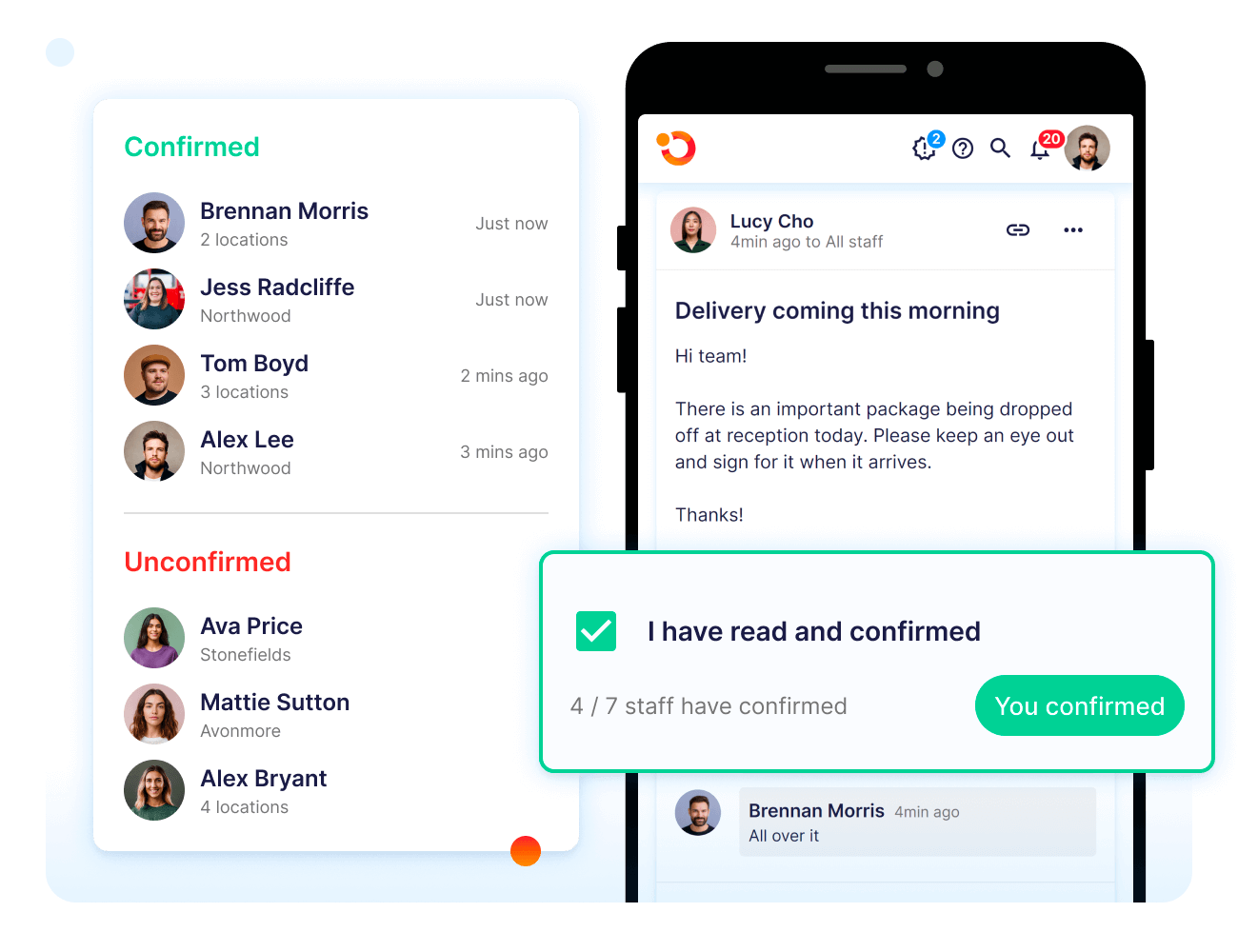
Operandio supports centralized employee communication across locations, allowing head office to distribute updates and request confirmation from the relevant teams.
Reduce Employment, Safety, And Compliance Risk
A handbook records the standards the restaurant expects managers and employees to follow. It should address areas such as wages, overtime, tips, timekeeping, youth employment, discrimination, employee health, food handling, workplace injuries, and complaint reporting.
Written policies do not guarantee legal compliance. The restaurant must apply them consistently, train managers correctly, and update them when requirements change.
The US Department of Labor’s restaurant guidance explains that covered restaurant employers may have obligations involving minimum wage, overtime, records, and child labor. State laws may add further protections.
Employee health policies also need to reflect the health code adopted in each jurisdiction. The FDA’s current guidance covers when ill food employees may need to be restricted from certain work or excluded from the establishment.
Give New Hires A Clear Starting Point
New employees need to understand more than their job tasks. They also need clear guidance on attendance, paydays, breaks, tip practices, employee meals, safety reporting, uniforms, conduct, and who to contact when a problem arises.
An employee handbook for restaurants gives new hires that foundation before managers begin role-specific instruction. It also reduces repeated explanations and gives employees somewhere to check a policy after orientation.
The handbook should still be supported by discussion and training. Asking an employee to sign a document without explaining its key policies gives the restaurant little confidence that the information was understood.
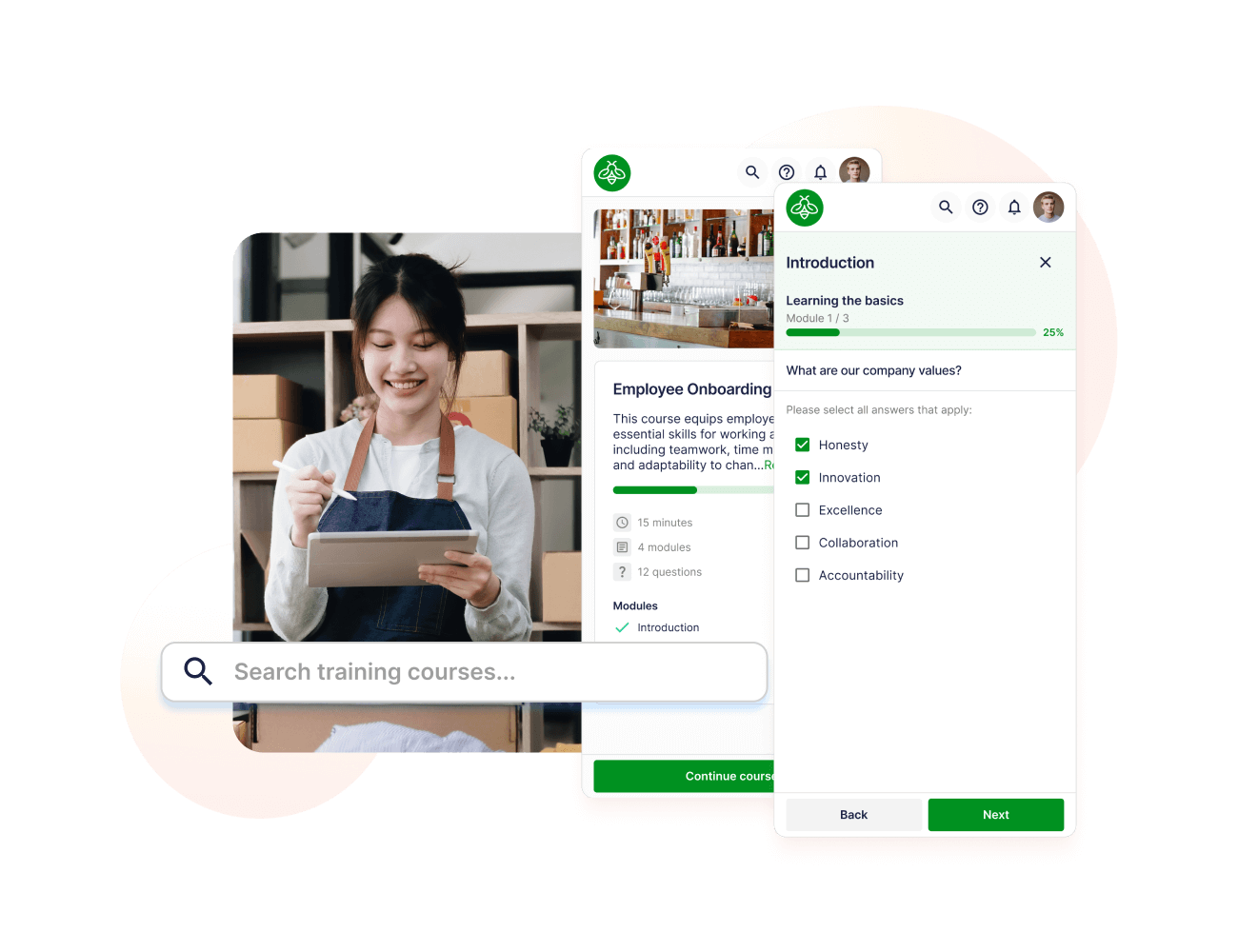
For multi-location teams, digital induction software can connect handbook access with onboarding steps, required learning, and confirmation that each new employee received the current version.
Help Managers Handle Questions And Complaints Consistently
Managers often receive the first call when an employee is late, reports harassment, requests an accommodation, disputes a paycheck, or raises a food-safety concern. The handbook should tell managers what they can handle, what must be documented, and when the issue needs to be escalated.
Clear procedures reduce improvisation. They also give employees more confidence that similar situations will follow the same process, regardless of their role, manager, shift, or location.
The handbook should include multiple reporting routes when possible. An employee needs an alternative contact when the concern involves their direct supervisor.
Manager training remains essential. A written disciplinary or complaint policy has limited value when location leaders interpret it differently or fail to follow its escalation and anti-retaliation requirements.
9 Must-Have Sections In Every Restaurant Employee Handbook
A useful restaurant handbook covers the policies employees need before questions, disputes, or safety problems arise. Restaurant handbook examples provide a starting point, but your final document must reflect your locations, workforce, pay practices, and applicable laws.
1. Employment Basics And Handbook Use
Start by explaining who the handbook applies to and how employees should use it. This section also prevents the document from being mistaken for an employment contract or a complete operations manual.
Employment Status And Classifications
Define full-time, part-time, temporary, exempt, and non-exempt roles where relevant. Explain that classification affects areas such as overtime eligibility and benefits, but avoid promising fixed hours or permanent employment.
Scope, Amendments, And Location-Specific Addenda
State which employees and locations the handbook covers, who can approve changes, and how updates are communicated. Multi-unit groups should use local addenda when state, city, or regional requirements differ.
Pro Tip: A wider franchise operations manual can document brand and operating procedures separately.
Employee Responsibilities And Acknowledgment
Explain that employees must read the handbook, ask questions when a policy is unclear, and follow future updates. Include a signed or digital acknowledgment confirming receipt without implying that employees waive legal rights.
2. Code Of Conduct, Anti-Harassment, And Inclusion
Your code of conduct should define how employees, managers, guests, suppliers, and delivery partners are expected to treat one another. Keep the wording specific enough for managers to apply consistently.
Professional And Respectful Conduct
Cover abusive language, bullying, threats, dishonesty, insubordination, fighting, theft, and inappropriate guest interactions. Include examples relevant to fast-moving front-of-house and back-of-house environments.
Discrimination, Harassment, And Accommodation
Prohibit discrimination and harassment based on legally protected characteristics. Explain how employees request disability or religious accommodations and identify who reviews those requests.
EEOC guidance recommends giving employees clear reporting options and responding promptly once management learns about possible harassment.
Alcohol, Drugs, Violence, And Conflicts Of Interest
Set expectations around impairment, substance use, workplace violence, weapons, personal relationships, vendor gifts, and outside interests. Explain the immediate reporting route for threats or unsafe behavior.
3. Attendance, Scheduling, Breaks, And Time Off
Restaurant schedules change quickly, so this section should remove ambiguity around availability, call-outs, swaps, breaks, and leave. The written policy must match the process managers actually enforce.
Availability, Scheduling, And Shift Changes
Explain how employees submit availability, when schedules are issued, and who approves shift swaps. Make clear that arranging a replacement does not automatically excuse an absence unless management approves the change.
Tardiness, Call-Outs, And No-Shows
State how early employees should report an absence, who they must contact, and which communication channel to use. Include a separate process for emergencies when normal notice is impossible.
Breaks, Leave, And Time-Off Requests
Describe meal and rest periods, sick leave, protected leave, holidays, and request deadlines at a high level. Refer employees to location-specific policies where legal requirements differ.
4. Pay, Timekeeping, Tips, And Benefits
Pay policies require precise language because small misunderstandings create serious disputes. Have qualified counsel review this section against federal, state, and local requirements.
Paydays, Time Records, And Overtime
List pay periods, normal paydays, clock-in procedures, and the process for correcting a time record. Prohibit off-the-clock work and explain that employees must record all hours worked.
The Department of Labor’s restaurant guidance covers federal minimum wage, overtime, timekeeping, and youth-employment requirements.
Tips, Tip Pools, And Service Charges
Explain who participates in the tip pool, how tips are distributed, and how service charges differ from voluntary tips. Under federal rules, managers and supervisors cannot keep employees’ tips, including through a shared tip pool.
The policy must also reflect applicable state law and your restaurant’s pay structure.
Benefits, Meals, Discounts, And Payroll Questions
Identify available benefits, eligibility rules, staff meals, discounts, uniform arrangements, and lawful deductions. Give employees a clear contact and deadline for reporting a missing payment or payroll error.
5. Food Safety, Employee Health, And Workplace Safety
Your employee handbook should establish the restaurant rules and regulations everyone follows. Detailed preparation, cleaning, and equipment instructions belong in training materials and standard operating procedures.
Illness And Symptom Reporting
Tell employees which symptoms, diagnoses, and exposures they must report and who receives the information. Explain that managers will follow the applicable health code when restricting duties or excluding an employee from work.
The FDA’s employee-health guidance provides a framework for illness reporting, restriction, and exclusion decisions.
Food Handling, Hygiene, And Allergen Responsibilities
Set expectations for handwashing, glove use, cross-contamination prevention, allergen controls, safe storage, cleaning, and temperature checks.
A strong food safety culture depends on employees understanding both the rule and the action required during a shift.
Injuries, Hazards, And Emergencies
Explain how employees report burns, cuts, slips, equipment hazards, security incidents, and near misses. Include immediate-response steps, emergency contacts, and the location of first-aid and safety equipment.
6. Uniforms, Grooming, And Personal Hygiene
Uniform and grooming policies should protect food safety, employee safety, and the guest experience. Avoid rules that are more restrictive than the role requires or that fail to account for accommodations.
Required Uniform And Responsibility For Costs
List every required item and explain what the restaurant supplies, what employees purchase, and how replacements are handled. Review any deductions or reimbursement requirements under applicable wage laws.
Grooming, Hair Restraints, And Jewelry
Explain standards for clean clothing, fingernails, facial hair, hair restraints, jewelry, fragrances, and personal hygiene. Connect restrictions to food handling or workplace safety rather than personal preference.
Footwear And Protective Equipment
State whether roles require slip-resistant shoes, gloves, aprons, heat protection, or cut-resistant equipment. Explain where employees obtain each item and how damaged protective equipment is replaced.
7. Technology, POS, Phones, And Social Media
Technology policies should protect restaurant data, guest privacy, payment systems, and brand accounts without imposing overly broad restrictions on lawful employee communication.
POS Access, Discounts, Voids, And Cash Controls
Require employees to use individual credentials and prohibit password sharing. Define approval rules for voids, refunds, discounts, complimentary items, cash drawers, and suspected fraud.
Phones, Photography, Recording, And Guest Privacy
Explain when personal phones can be used and where photography or recording is prohibited. Cover guest payment information, employee records, confidential documents, kitchens, and restricted work areas.
Social Media And Public Communication
Identify who can post through official restaurant accounts or respond publicly for the brand. Avoid language that prevents employees from lawfully discussing pay, benefits, or working conditions with coworkers.
The National Labor Relations Board’s social media guidance explains when online discussions qualify as protected concerted activity.
8. Training And Role Expectations
The handbook should explain which training employees must complete and when. The training itself belongs in role-specific learning materials, demonstrations, assessments, and operating procedures.
Required Onboarding And Certifications
List mandatory induction steps, food-handler certifications, alcohol-service training, safety modules, and completion deadlines. Identify which requirements apply by role and location.
Pro Tip: Before finalizing this section, review the legal requirements for restaurant staff training across every jurisdiction in which you operate.
Role-Specific Skills And Assessments
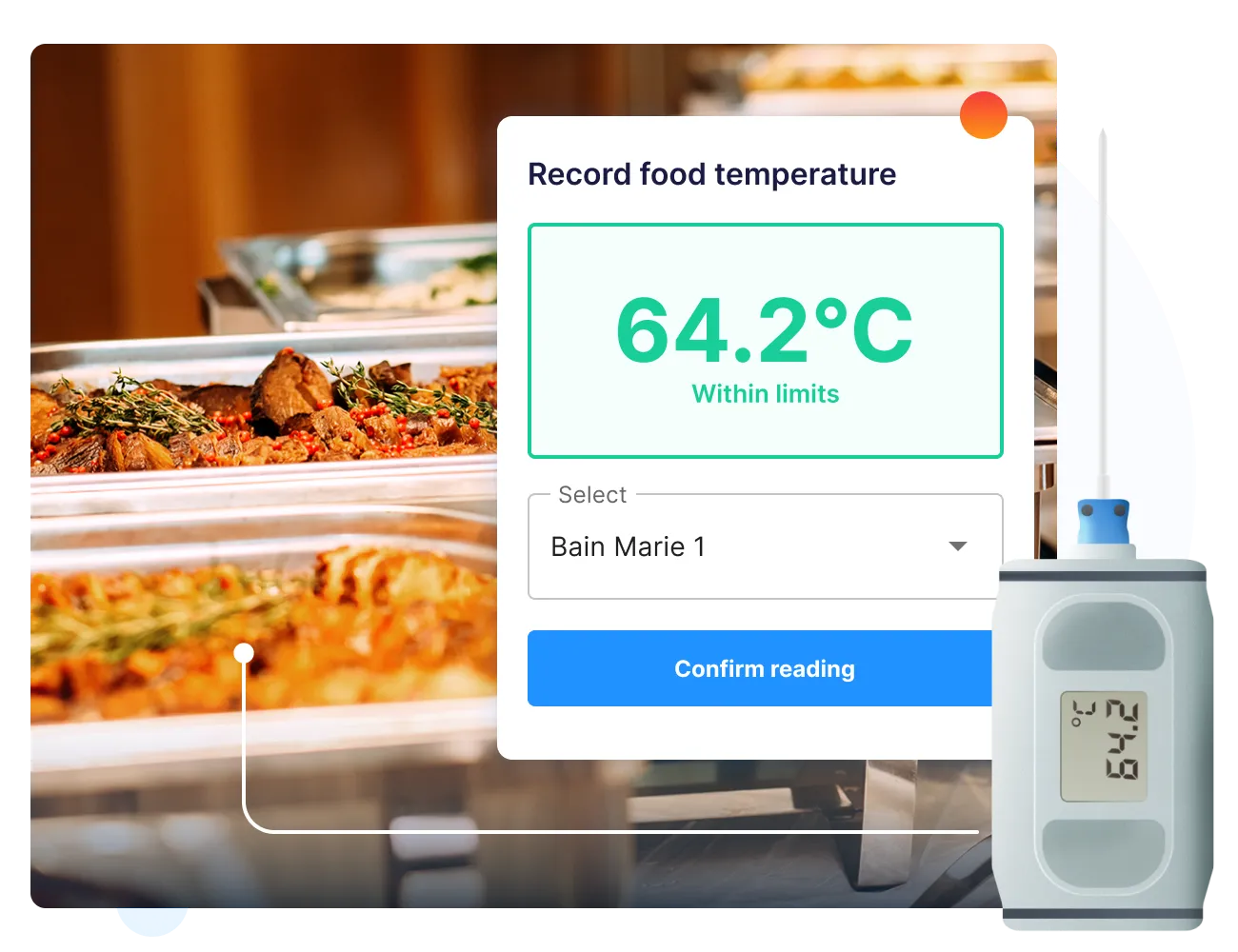
Explain that completing a course does not automatically prove workplace competence. Managers should observe employees performing safety-critical tasks such as using equipment, handling allergens, closing a station, or recording temperatures.
Refresher Training And Policy Changes
State when employees must repeat training after changes to laws, menus, equipment, processes, or restaurant policies. A food safety management system should also connect revised standards to daily procedures and verification.
9. Performance, Discipline, Complaints, And Conflict Resolution
Employees and managers need to understand how performance concerns, misconduct, complaints, and investigations are handled. Avoid promising one rigid disciplinary sequence for every situation.
Coaching And Corrective Action
Describe the normal progression from coaching to written warnings and further action. Reserve discretion to respond immediately to serious conduct, safety breaches, theft, violence, or harassment.
Complaints And Multiple Reporting Channels
Tell employees how to report pay concerns, discrimination, harassment, safety issues, manager conduct, and policy violations. Provide an alternative contact when the concern involves their direct supervisor.
Investigations, Confidentiality, And Anti-Retaliation
Explain that concerns will be reviewed promptly and shared only with people who need the information. Clearly prohibit retaliation against employees who raise a good-faith concern, participate in an investigation, or request an accommodation.
How To Ensure Restaurant Employee Handbooks Are Effective
Publishing your handbook is only the first step. You also need to keep it accurate, accessible, understood, and consistently applied across managers, shifts, and locations.
Have Employment Counsel Review Every Applicable Version
Have qualified employment counsel review your handbook before you distribute it. The review should cover the federal, state, local, and industry-specific requirements that apply to each location.
A multi-unit restaurant group can use one core handbook for brand-wide policies, then add location-specific sections for differences in wages, breaks, leave, scheduling, tip practices, employee health, and other legal requirements.
Repeat the review whenever your operating model or employment policies change. A template gives you a structure, but it cannot account for every jurisdiction, collective agreement, franchise operations arrangement, or workforce practice.
Write Policies Around How Your Restaurant Actually Operates
A policy is only useful when employees and managers can follow it during a real shift. Review each section against the way your restaurants currently handle scheduling, payroll questions, complaints, call-outs, safety issues, and manager approvals.
For example, do not tell employees to email HR if many locations do not have a clear HR contact. Do not require a written form if managers routinely accept requests through a different channel.
Define the actual person, process, deadline, and escalation route. If the process itself is inconsistent, fix it before documenting it.
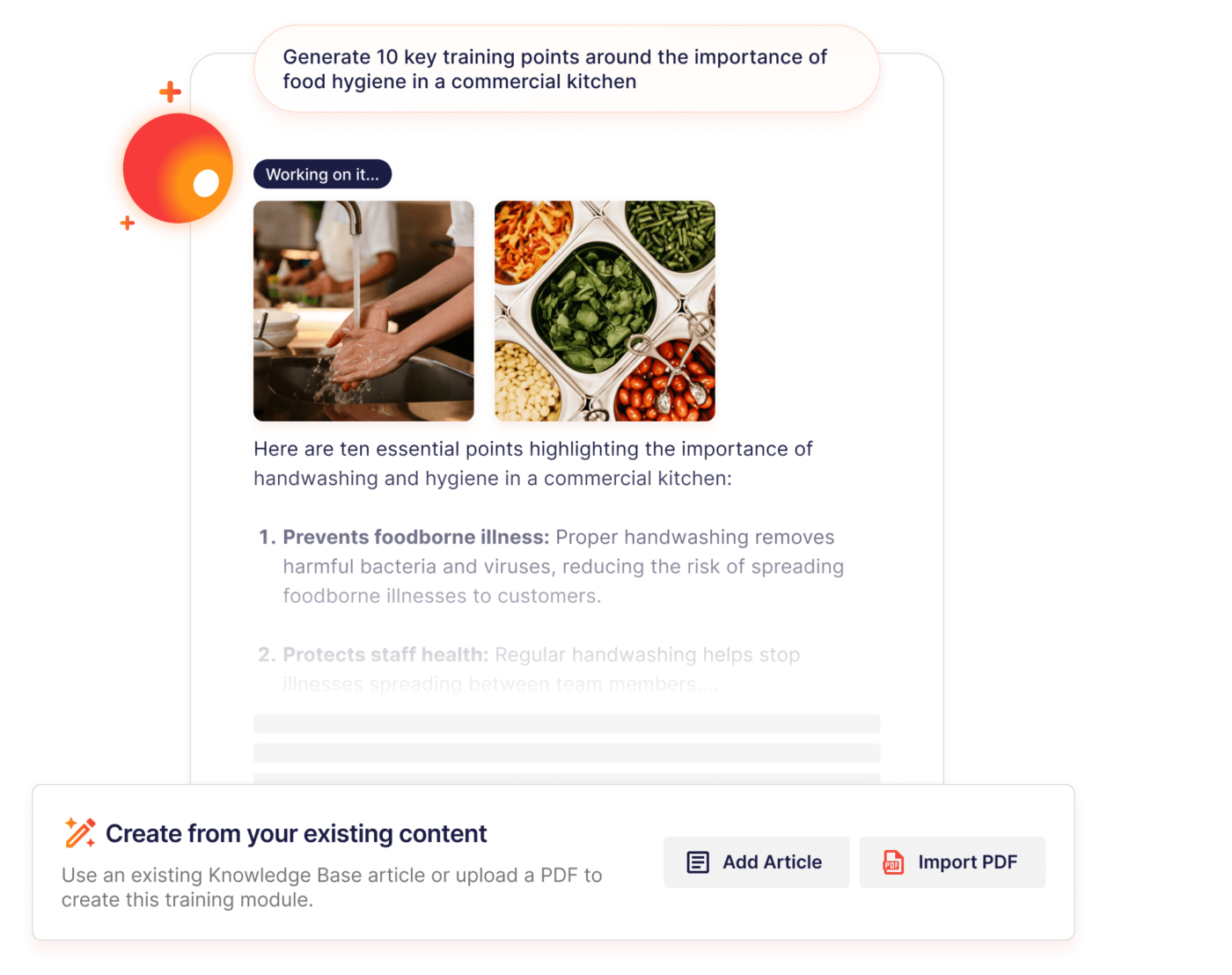
Pro Tip: Operandio’s AI-powered course builder lets you skip the blank document and create up-to-date policy training sequences fast. You can upload your own SCORM content or mix videos, documents images, quizzes, and modules into tailored learning experiences.
Make The Latest Handbook Easy To Find
Employees need access to the current handbook when a question arises, not only during their first day. Provide a dependable access point through a restaurant LMS, employee portal, shared workplace device, printed manual, or a combination of formats.
Remove outdated versions when you issue an update. Otherwise, one location could apply an old attendance rule while another follows the revised policy.
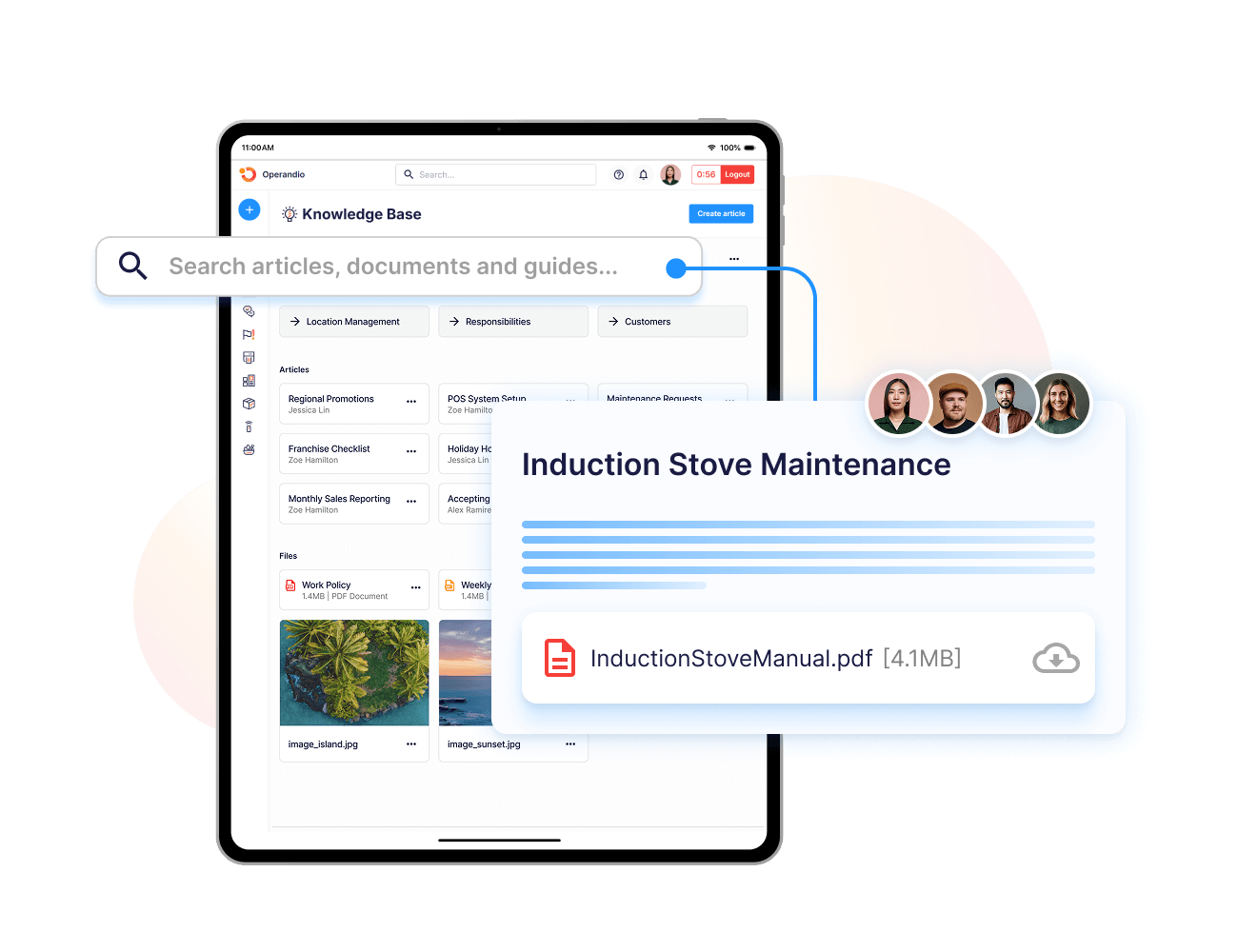
Pro Tip: Operandio’s knowledge & document management gives franchise and multi-unit restaurant groups one searchable library for policies and operational documents. Version control keeps locations on the latest approved copy, while role- and location-based permissions control who can access each document.
Train Managers To Apply Policies Consistently
Employees experience workplace policy through the decisions their managers make. Train location leaders on the handbook’s most sensitive areas, including complaints, accommodations, employee illness, discipline, pay concerns, call-outs, and anti-retaliation requirements.
Use examples and scenarios rather than asking managers to read the handbook alone. A 9pm absence, a harassment complaint involving a supervisor, or an employee reporting illness before a shift each requires a clear response and escalation path.
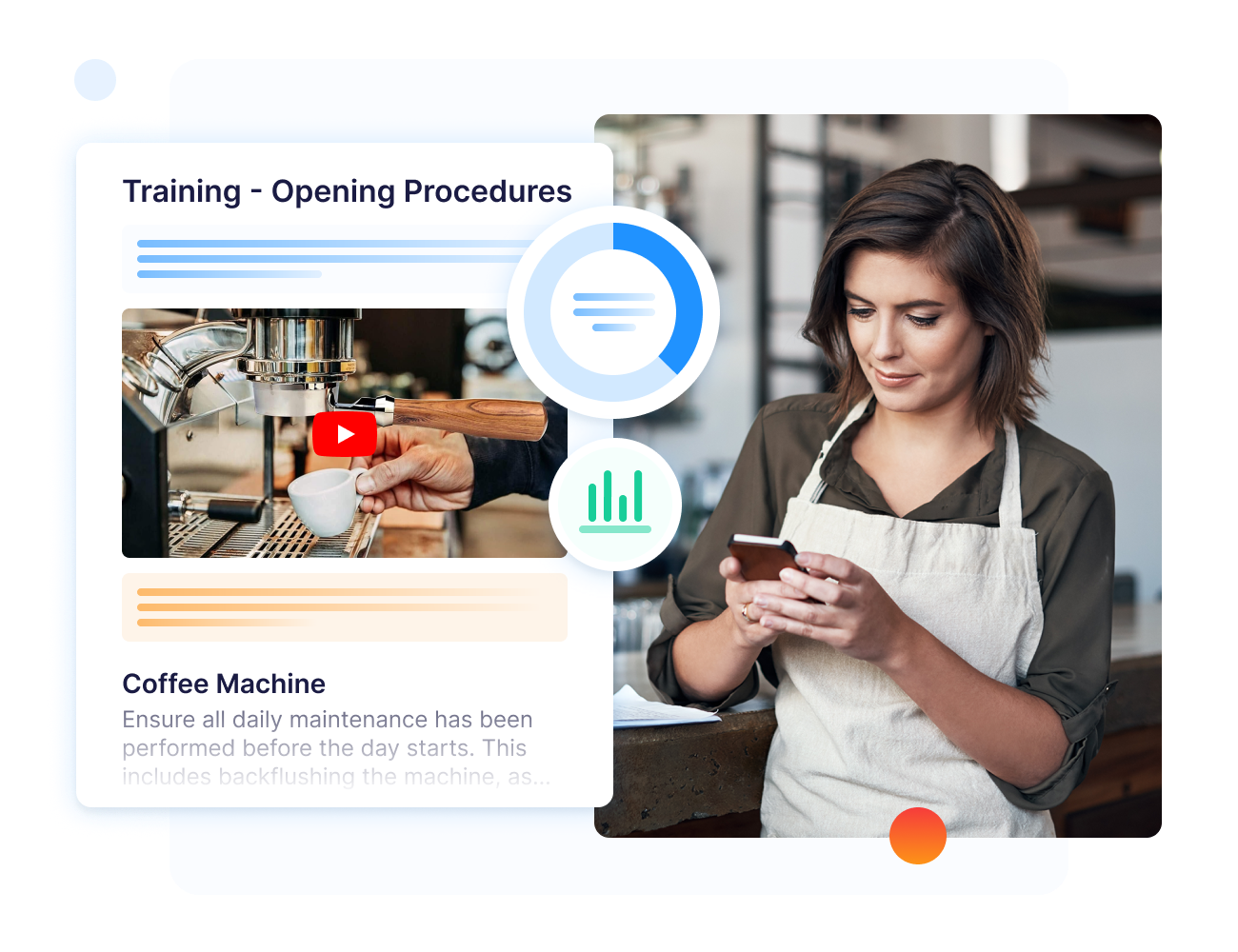
Pro Tip: Operandio’s mobile-first LMS lets you assign manager learning paths, policy refreshers, quizzes, and workplace assessments across locations. Head office can then track completion and identify where follow-up is overdue.
Collect Acknowledgments And Review The Handbook Regularly
Ask each employee to acknowledge receipt during onboarding and after material updates. The acknowledgment should confirm that the employee received the handbook, knows how to access it, and understands where to raise questions.
It should not state that the handbook is an employment contract or that the employee has waived legal rights.
Set a formal review at least once a year. Review it sooner after changes to employment laws, tip structures, benefits, technology, food-safety procedures, scheduling practices, reporting channels, or the way your restaurant group operates.
Bring All Your Operations Knowledge In One Place With Operandio
A restaurant employee handbook works best when every location can find the current policies and managers know how to apply them.
Operandio gives franchise and multi-unit restaurant groups one operating platform for controlled policy access, mobile training, and network-wide visibility. Head office can update approved information centrally while location teams access what they need during daily work.
If your restaurant network is replacing scattered PDFs, paper manuals, shared drives, and inconsistent onboarding processes, request a demo to see how Operandio works.
FAQs
How Long Should A Restaurant Employee Handbook Be?
Generally, it should be long enough to cover essential policies clearly without burying employees in legal language or unnecessary detail.
How Often Should You Update A Restaurant Employee Handbook?
At least annually. Review it sooner whenever laws, pay practices, benefits, technology, safety procedures, or operating processes change.
What Policies Do Restaurants Most Often Get Wrong In Their Handbooks?
Often, restaurants use generic language for tips, breaks, overtime, complaints, illness reporting, and discipline that does not match actual practices.
Can One Employee Handbook Cover Multiple Restaurant Locations?
Sometimes. Use one core handbook for shared standards and location-specific addenda for differences in law, benefits, pay practices, or procedures.